









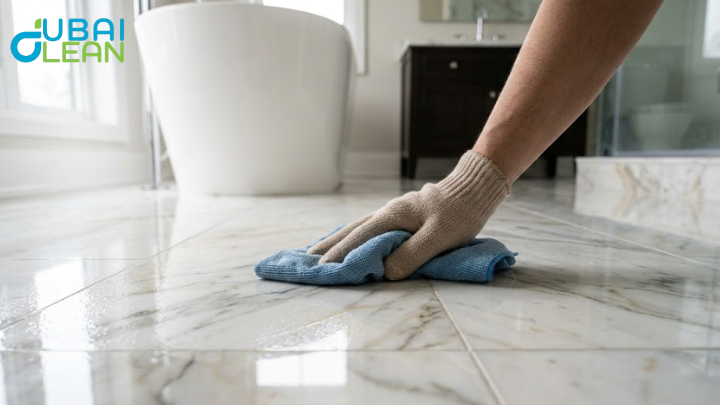

The beauty and ageless sophistication of marble tiles, along with their strength, makes them one of the best options for bathrooms. However, like every other marble product, they need maintenance and care, especially when cleaning them. Due to the scorching hot and humid weather in Dubai, the marble tiles in bathrooms retain steam, soap scum, and other grime, which means that proper maintenance is key to preserving their elegance and preventing deterioration.
Keeping your bathroom tiles clean requires the right tools and safe cleaning products to remove soap scum, mold, and hard water stains effectively. Using gentle yet effective solutions helps protect the tile surface and grout from damage. Regular maintenance prevents buildup and keeps your bathroom looking fresh and hygienic.
| Cleaning Tools | Cleaning Products |
|---|---|
| Soft scrub brush | pH-neutral tile cleaner |
| Microfiber cloth | Baking soda |
| Sponge or non-abrasive pad | White vinegar (for ceramic tiles) |
| Old toothbrush (for grout) | Mild disinfectant solution |
Cleaning marble bathroom tiles requires a gentle approach to preserve their natural shine and prevent etching. Using the right products and proper technique ensures the surface remains smooth and damage-free. Regular care keeps marble looking elegant and extends its lifespan.
Remove loose dust and debris using a soft dry cloth or microfiber mop.
Prepare a bucket of warm water mixed with a pH-neutral marble cleaner.
Gently wipe the marble tiles without applying excessive pressure.
Pay extra attention to grout lines using a soft brush.
Immediately dry the tiles with a clean microfiber towel to prevent water spots.
Avoid acidic cleaners like vinegar or lemon that can damage marble.
Use a soft, dry cloth to buff the tiles after drying to enhance their natural shine.
Apply a marble-safe sealer periodically to protect the surface from stains and moisture.
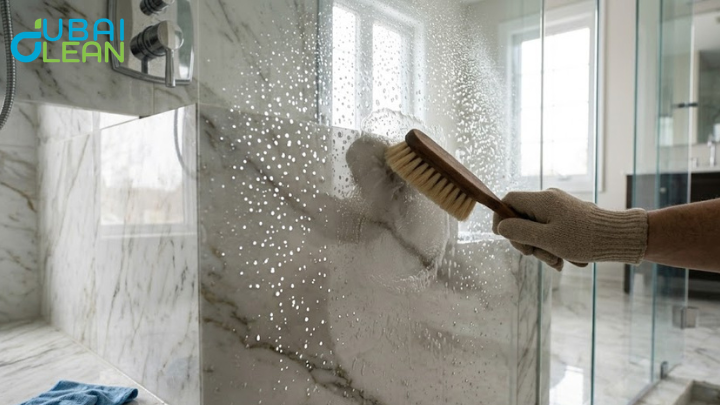
Using natural marble cleaning alternatives for tiles is a safe and eco-friendly way to maintain a spotless bathroom without harsh chemicals. Ingredients like baking soda, vinegar, and lemon are effective at breaking down dirt and grime, making them ideal for both ceramic and marble tiles.
Baking soda acts as a mild abrasive, helping to remove stubborn stains without scratching the tile surface. Mix it with water to form a paste, apply to grout lines or stained areas, scrub gently, and rinse thoroughly for a sparkling finish.
Lemon juice and white vinegar are excellent for tackling soap scum and water stains. Dilute vinegar before using on delicate surfaces like marble to prevent etching, while lemon lifts stains and leaves a fresh scent, making your tiles naturally bright and clean.
Many homeowners unknowingly make mistakes while cleaning tiles, which can damage the surface or reduce their lifespan. Using the wrong products, excessive scrubbing, or neglecting grout lines are common errors. Understanding these pitfalls and how to prevent them ensures your tiles stay beautiful and durable.
Using acidic cleaners like vinegar or lemon on marble can cause etching; always use pH-neutral solutions.
Scrubbing too hard with abrasive tools can scratch tiles; opt for soft brushes or sponges.
Ignoring grout lines allows mold and mildew to build up; clean them regularly with a soft brush.
Leaving tiles wet after cleaning can cause water spots; always dry with a microfiber cloth.
Mixing incompatible cleaning products can damage surfaces or produce harmful fumes; stick to one safe cleaner at a time.
Preventing these common mistakes not only keeps your tiles looking fresh but also extends their lifespan. Regular, careful maintenance preserves both the shine and structural integrity of your flooring. A little attention to detail goes a long way in ensuring your bathroom remains spotless and inviting.
In summary, maintaining marble bathroom tiles requires careful cleaning with the right products and techniques to preserve their natural beauty and prevent damage. DubaiClean brings expert knowledge, professional tools, and safe methods to ensure your tiles stay spotless, hygienic, and long-lasting, making them look pristine while protecting their delicate surface.