


Musty sofa smells are a common problem in many Dubai homes. The city’s high humidity, combined with air conditioning usage, creates the perfect environment for moisture to become trapped in sofa fabrics and cushions. Over time, this dampness encourages mold, bacteria, and dust accumulation, making the odor persistent and difficult to remove. A musty smell isn’t just unpleasant, it can be a sign of hidden hygiene issues that affect indoor air quality and even the health of your family. Understanding why your sofa smells musty is the first step toward maintaining a clean, safe, and comfortable living space in Dubai.
1. Common Causes of Musty Sofa Smells
Musty smells in sofas are a common question for many homeowners, especially why does my sofa smell musty in Dubai homes. These odors often come from moisture trapped in cushions and fabric, caused by spills, sweat, or the city’s high humidity. Over time, foam and padding retain this dampness, allowing mold and bacteria to grow. Dust and dirt settle deep into upholstery, combining with moisture to create a persistent odor. Body oils and food residues also accumulate, providing a breeding ground for microbes and intensifying the musty smell. Regular surface cleaning alone usually cannot remove these hidden causes.
Moisture Buildup in Cushions and Fabric
In Dubai homes, high humidity and AC usage often lead to moisture being trapped inside sofa cushions and fabric. Spills, sweat, and everyday dampness can soak into the padding, allowing mold and bacteria to develop over time. The foam and internal layers of the sofa can retain this moisture for weeks, making the musty smell persistent and difficult to eliminate.
Dust and Dirt Accumulation
Dubai’s dusty environment contributes significantly to sofa odors. Fine dust particles settle deep into upholstery fibers and mix with trapped moisture, creating a musty, stale smell. Even regular surface cleaning may not reach the deeper layers, allowing the odor to linger and worsen over time.
Body Oils and Stains
Daily use introduces body oils, food residues, and sweat into your sofa fabric. These substances can accumulate in hidden areas, providing a breeding ground for bacteria and mold. Over time, even unnoticed spills and minor stains can intensify the musty smell, making the sofa unhygienic and unpleasant.
2. How Dubai’s Climate Worsens Sofa Odors
Dubai’s high humidity traps moisture in sofa fabrics, creating ideal conditions for mildew, mold, and bacteria to grow. Air conditioning adds condensation to cushions, while poor airflow in closed rooms prevents sofas from drying properly. Fine desert dust and sand settle deep into upholstery, mixing with moisture and body oils. Limited ventilation allows the musty smell to linger and intensify, affecting both comfort and indoor air quality.
High Humidity Levels: Dubai’s high humidity traps moisture deep inside sofa fabrics, creating the perfect environment for mildew, mold, and bacteria to grow. Seasonal changes, especially during the hot summer months, can further worsen indoor air quality, making the musty smell more noticeable and persistent.
Air Conditioning Effects: While AC keeps homes cool, it often produces condensation, which adds extra dampness to cushions and padding. Poor airflow in closed rooms prevents sofas from drying completely, allowing moisture to accumulate and odors to return quickly.
Dust Storms and Indoor Dust: Dubai’s fine desert sand and dust easily settle into upholstery fibers. Over time, this dust combines with moisture and body oils, creating a stale, musty smell. Limited ventilation indoors means the odor lingers, affecting both comfort and indoor air quality.
3. Hidden Bacteria and Mold in Sofas
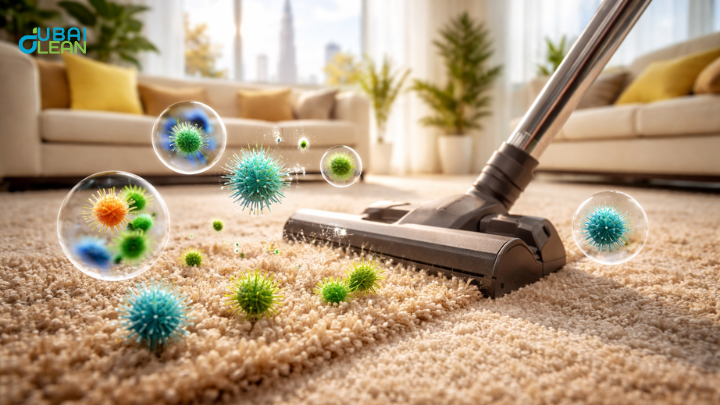
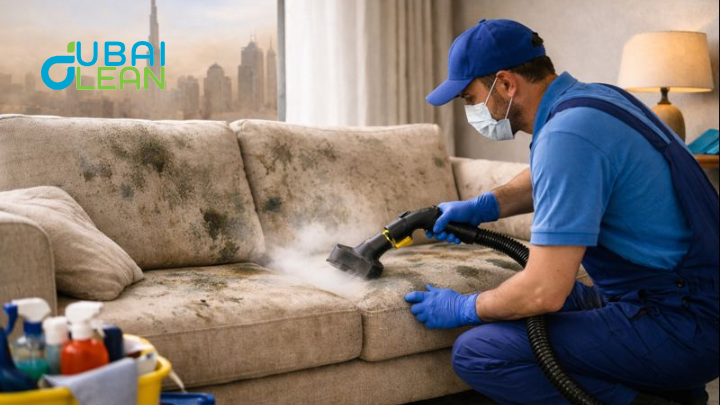
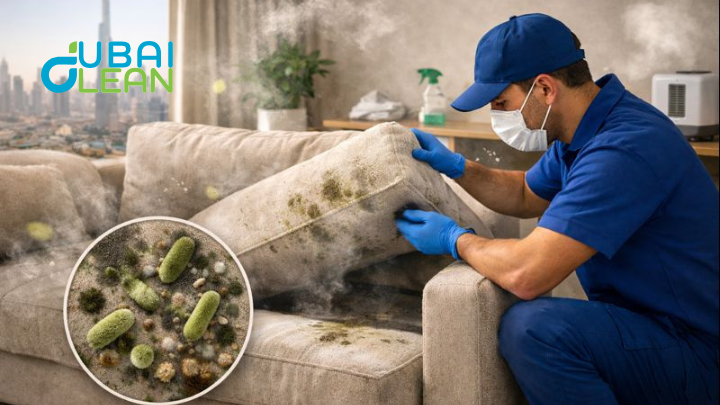
Sofas can harbor hidden bacteria and mold deep inside cushions, padding, and seams, even when no stains or mildew are visible. Damp fabric creates the perfect environment for microbes to thrive, affecting indoor air quality and causing the persistent musty smell. Surface cleaning or sprays often fail to remove these deep contaminants, allowing bacteria and mold to multiply over time. This hidden growth not only worsens odors but can also trigger allergies, respiratory issues, and general discomfort in the home.
Microbial Growth in Damp Upholstery
Damp cushions and upholstery provide the perfect environment for bacteria and mold to thrive, even when no stains are visible. These microbes can multiply inside the fabric and padding, affecting indoor air quality and increasing the musty smell.
Limitations of Surface Cleaning
Sprays and superficial cleaning only treat the surface. Foam and padding can act as reservoirs for microbes, allowing them to persist even after regular cleaning. Over time, this intensifies odors and can pose allergy or respiratory risks.
Visible vs. Invisible Contamination
Not all contamination is obvious. While some sofas show stains or mildew, most microbial growth remains hidden deep inside cushions and seams, making it harder to detect and clean.
| Type of Contamination | Description | Impact on Sofa & Health |
| Visible Contamination | Stains, mildew, or mold spots that can be seen on the fabric surface. | Can be cleaned more easily, but still may harbor microbes underneath. |
| Invisible Contamination | Microbial growth deep inside cushions, padding, and seams, not visible to the eye. | Hard to detect and remove; contributes to musty odors, allergies, and poor indoor air quality. |
4. Health Risks of a Musty-Smelling Sofa
A musty sofa can pose serious health risks for homeowners. Mold, bacteria, and dust trapped in cushions can trigger allergies, asthma, and respiratory problems, particularly in children, the elderly, and sensitive individuals. Prolonged exposure may also cause skin irritation, rashes, headaches, and fatigue, while hidden contamination can spread to other furniture. Over time, this affects overall comfort, indoor air quality, and the hygiene of the entire home, making it more than just an unpleasant odor.
Respiratory Issues: A musty sofa can trigger allergies, asthma, and other respiratory problems, especially in children, the elderly, and sensitive individuals. Mold spores and bacteria released from damp upholstery can worsen breathing difficulties and reduce overall indoor air quality.
Skin and Head Irritation: Microbes, dust, and mold trapped deep in sofa fabrics can cause skin irritation, rashes, or persistent itching, especially for sensitive individuals. The musty odor indicates poor indoor air quality, which can also lead to headaches, fatigue, and general discomfort.
Long-Term Home Health Impact: Prolonged exposure to a contaminated sofa can compromise overall comfort and wellbeing. Hidden bacteria and mold can spread to other furniture, carpets, and curtains, gradually affecting the hygiene of the entire home.
5. Why Sofa Odors Return After Cleaning
Sofa odors often return because cleaning methods only mask the smell rather than remove the root cause. Moisture trapped in cushions and foam allows mold and bacteria to persist, while incomplete drying keeps dampness inside. Even after cleaning, sofas can be re-contaminated by dust, humidity, and airborne microbes, especially in poorly ventilated rooms. Over time, these factors make the musty smell persistent, affecting both indoor air quality and overall home comfort.
Masking Instead of Eliminating
Many DIY sprays and fabric fresheners only cover up the odor temporarily rather than removing the source. Moisture trapped deep in cushions and padding allows mold, bacteria, and dust to continue growing, so the musty smell often returns within days or weeks.
Incorrect Drying Practices
If cushions or upholstery are not completely dried after cleaning, residual dampness remains in foam layers and seams. This untreated moisture becomes a breeding ground for microbes, making odors harder to remove over time and potentially worsening indoor air quality.
Re-contamination Risks
Even after professional or DIY cleaning, sofas can quickly become re-contaminated by dust, humidity, and airborne microbes. Common mistakes, such as leaving sofas in poorly ventilated rooms or skipping deep cleaning of cushions, allow musty smells to linger and intensify, affecting both comfort and home hygiene.
6. When a Musty Sofa Becomes a Serious Hygiene Concern
A musty sofa can cause long-term damage to cushions, fabric, and seams, while trapped moisture promotes mold and bacterial growth. These microbes can spread to nearby furniture, carpets, and curtains, reducing overall home cleanliness and indoor air quality. Persistent odors and hidden contamination may trigger allergies, respiratory issues, and skin irritation, making the problem a serious health and hygiene concern for the entire household.
Long-Term Damage to Upholstery
A musty sofa can weaken fabric, cushions, and seams over time. Continuous dampness encourages mold and bacterial growth, which can cause permanent stains, unpleasant odors, and structural damage. Left untreated, this reduces the lifespan of your furniture and may require costly replacements.
Spread of Mold and Bacteria
Mold spores and bacteria trapped in the sofa can easily spread to nearby furniture, carpets, and curtains, contaminating other areas of the home. This hidden contamination can linger in the air, worsening indoor air quality and increasing allergy and respiratory risks for family members.
Conclusion
Musty sofa smells are more than just unpleasant, they are a warning sign of hidden hygiene and health risks in your home. Trapped moisture, dust, body oils, and microbial growth can lead to mold, bacteria, and poor indoor air quality, which may affect the health of children, elderly family members, and sensitive individuals. Simply masking the odor with sprays or fresheners is ineffective; addressing the root causes is essential. Regular cleaning, proper drying, and good ventilation help prevent the buildup of harmful microbes, eliminate odors, and maintain a safe, comfortable, and healthy living environment in Dubai homes.