


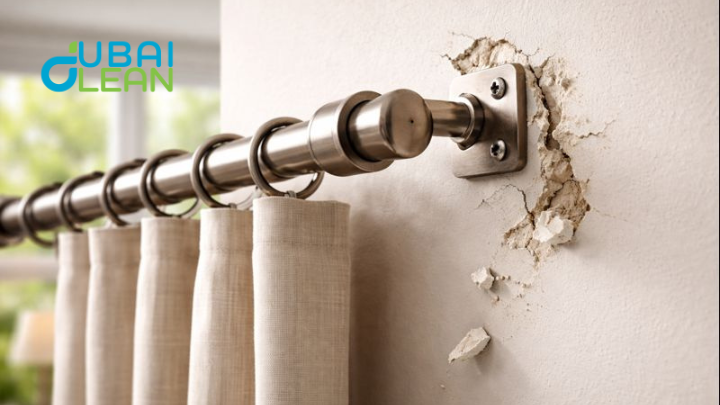
If you’ve ever opened your curtains and heard a sudden crash, you know the frustration of a curtain rod falling from the wall. This common problem in Dubai homes can happen for a variety of reasons from weak wall anchors and heavy curtains to poor installation or the unique wall materials used in modern apartments and villas. Understanding why your curtain rod keeps falling is the first step to a lasting fix. In this guide, we’ll explore the most common causes, practical DIY tips, and professional solutions that ensure your curtains stay securely in place, protecting both your walls and your home decor.
1. Wall Types and Their Role in Curtain Rod Stability
Not all walls are created equal, and the type of wall in your Dubai home plays a huge role in whether your curtain rod stays secure or keeps falling. Using the wrong fixing method for your wall can lead to loose brackets, sagging rods, or even sudden crashes. Let’s break down the common wall types and how they affect curtain rod stability.
Gypsum Board Walls
Gypsum board, also called drywall, is common in Dubai apartments due to its lightweight and modern look. However, it cannot hold heavy curtain rods or blackout curtains without the right anchors. Using standard screws often leads to sagging or falling rods. For gypsum walls, toggle bolts or specialized wall anchors are the safest option to ensure your curtain rod stays firmly in place.
Concrete Walls
Concrete walls are strong and durable, commonly found in villas or older buildings. They can easily support heavy curtains, but incorrect drilling or using the wrong type of screws can cause cracks or weaken the hold. Professional-grade anchors like rawl plugs or concrete screws are recommended for secure installation.
Mixed or Partition Walls
Modern Dubai homes sometimes feature mixed partition walls, a combination of gypsum and metal framing. These walls are lightweight but tricky to fix into because they can’t support weight like solid concrete. For these walls, it’s crucial to locate the studs and use reinforced anchors, or call a professional to prevent repeated rod failures.
2. Safety Considerations for Falling Curtain Rods
A falling curtain rod isn’t just an inconvenience, it can be a real safety hazard in your home. In Dubai, where many homes feature heavy blackout curtains and decorative rods, ignoring early signs of failure can lead to injuries, wall damage, or ruined décor. Understanding the safety risks and taking preventive measures can protect your family, guests, and property.
Risk of Personal Injury
When a curtain rod falls unexpectedly, it can cause serious injuries, especially to children, elderly residents, or pets. Even a rod that seems light can hit someone in the head or hands, leading to cuts, bruises, or worse. In homes with wide windows or double-layered curtains, the added weight increases the risk. Taking timely action like reinforcing brackets or calling a professional reduces the chance of accidents and ensures everyone in your household stays safe.
Potential Wall and Property Damage
A falling curtain rod can leave more than dents or paint scratches; it can damage walls, window sills, and even furniture beneath. In Dubai apartments, gypsum walls are particularly vulnerableloose screws can enlarge holes, create cracks, or even weaken the wall structure over time. Preventive measures, including using the right anchors and evenly distributing curtain weight, can save both money and stress.
Protecting Home Décor and Curtains
Beyond physical safety, falling rods can ruin your curtains and decorative elements. Heavy blackout or designer curtains may tear, stretch, or lose shape after a sudden fall. In addition, decorative rods or finials can get bent or broken, diminishing the aesthetic appeal of your interior. Using properly installed rods and checking the integrity of your fittings regularly ensures your home stays both safe and stylish protecting your investment in premium curtains and décor.
3. DIY vs Professional Curtain Installation
When it comes to hanging curtain rod in Dubai homes, you have two main options: doing it yourself or hiring a professional. While DIY may seem cost-effective, it’s not always the safest or most reliable solution especially for heavy curtains, gypsum walls, or decorative rods. Understanding the pros and cons of each approach can help you make the right decision for long-lasting results.
| Aspect | DIY Installation | Professional Installation |
| Cost | Low, mostly tools and anchors | Moderate, includes labor and materials |
| Skill Level | Requires basic tools and knowledge | Handled by trained experts |
| Time | Can be quick for small, light curtains | Efficient even for large or heavy curtains |
| Durability | May fail if wall type or weight is misjudged | Long-lasting, properly secured rods |
| Safety | Risk of injury or wall damage | Minimizes accidents and property damage |
| Aesthetic Finish | Can be uneven or misaligned | Clean, perfectly aligned, professional look |
| Wall Type Handling | Hard to secure on gypsum or partition walls | Experts use correct anchors for any wall type |
4. Signs Your Curtain Rod Is About to Fall
Your curtain rod might seem secure, but subtle signs can indicate it’s on the verge of falling. Recognizing these early can prevent damage to your walls, curtains, and even injuries. Here are the most common warning signs:
- Loose brackets or screws – If the rod wobbles when touched, the screws may have loosened.
- Sagging rod – A rod that dips in the middle often means it’s struggling to hold the curtain weight.
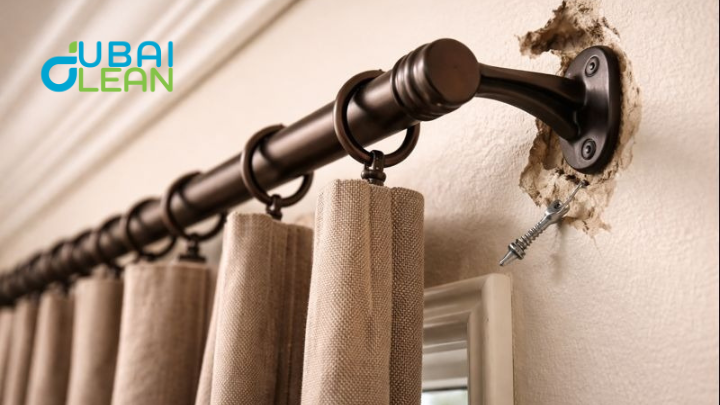
- Cracks around the brackets – Visible wall damage around the mounting points signals weakening support.
- Falling plaster or wall fragments – Indicates that the anchors are pulling out of the wall.
- Difficulty sliding curtains – Resistance or catching may strain the rod and brackets.
- Noise when moving curtains – Creaking or rattling can be a warning of loose fittings.
Conclusion
A falling curtain rod isn’t just an annoyance it can damage your walls, curtains, and even pose safety risks at home. By understanding the common causes, recognizing the warning signs, and taking proactive measures whether through proper DIY installation or hiring a professional you can ensure your curtains stay securely in place. Investing a little time and care in choosing the right brackets, anchors, and installation techniques not only protects your interiors but also enhances the overall safety and aesthetics of your home. For Dubai homeowners, consulting a certified professional can provide added peace of mind and long-term reliability.