



Allergies in Dubai homes are often worsened by something many overlook: dirty sofas. With the city’s high dust levels, sandstorms, and humidity, sofas quickly trap dust mites, pet dander, mold spores, and other allergens. Even if they appear clean, these hidden particles circulate in the air, triggering sneezing, coughing, itchy eyes, and breathing discomfort. Regular sofa cleaning is essential not just for appearance, but for maintaining a healthier indoor environment and reducing allergy symptoms for everyone in the household.
1. How Dubai’s Climate Makes Sofas Collect Allergens Faster
Dubai’s high dust levels, frequent sandstorms, and humidity cause sofas to trap dust, mold spores, and allergens quickly. Poor indoor ventilation in apartments and villas further circulates these particles, making sofas a hotspot for allergens.
Dubai’s Unique Climate
Dubai experiences high temperatures, intense humidity, and frequent sandstorms, creating a challenging environment for keeping homes clean. Even with air conditioning, fine dust and sand particles enter living spaces and settle on furniture, carpets, and especially sofas, which are often overlooked during regular cleaning.
Why Sofas Trap Allergens
Sofas are ideal surfaces for allergens to accumulate. Their soft fabrics, deep cushions, and hidden crevices harbor dust mites, pet dander, pollen, and mold spores, allowing these particles to build up over time. Unlike hard surfaces, sofas are rarely cleaned as thoroughly, making them a hotspot for indoor allergens.
Hidden Dangers for Your Health
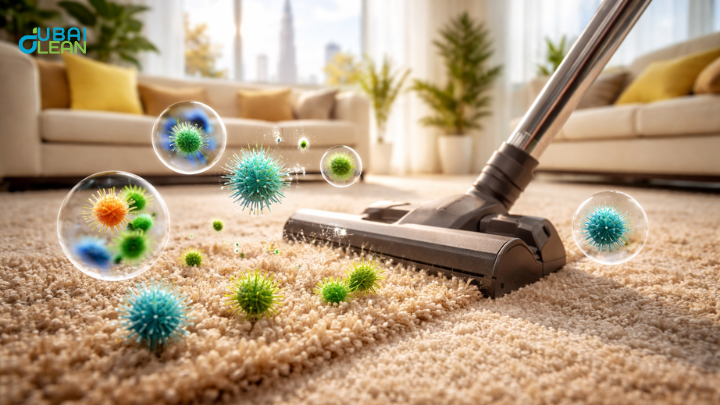
Many people rely on quick vacuuming or surface dusting, but these methods only remove visible dirt, leaving allergens deep inside the cushions. For allergy sufferers, this can lead to sneezing, itchy eyes, coughing, and breathing discomfort, even when the home looks clean.
2. How Dubai’s Climate Makes Sofas Collect Allergens Faster
Dubai’s climate plays a major role in how quickly sofas accumulate allergens. Frequent sandstorms blow fine dust and sand particles into homes, which easily settle on soft surfaces like sofas and curtains. Combined with high humidity, these particles create a favorable environment for dust mites and mold spores to thrive. Even daily cleaning often cannot remove the deeply embedded dust and allergens, making sofas a constant reservoir of particles that trigger allergy symptoms.
Apart from the outdoor elements, indoor air quality in Dubai apartments and villas presents additional challenges. Many homes are tightly sealed to maintain air conditioning efficiency, which limits natural ventilation and allows dust, pet dander, and airborne pollutants to circulate continuously. Over time, sofas act as a sponge, trapping these allergens and reducing overall indoor air quality, especially in high-traffic areas where families spend most of their time.
3. Common Allergens Hiding Inside Sofas
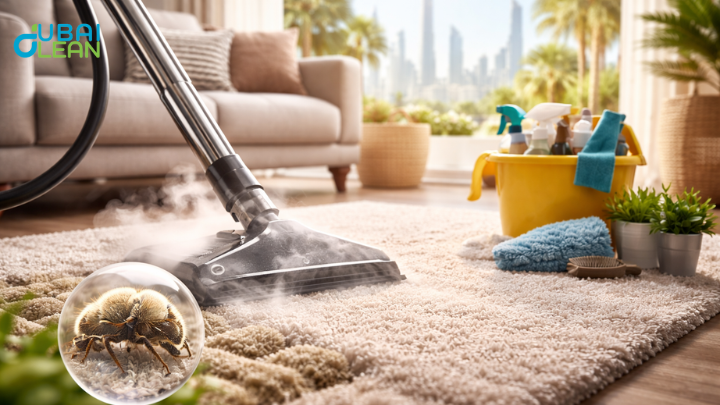
Dust mites are tiny, microscopic creatures that thrive in warm, humid environments like sofa cushions. They feed on dead skin cells and settle deep in the fabric, making them hard to remove with regular cleaning. For allergy sufferers, dust mites can trigger sneezing, itchy eyes, and asthma symptoms, especially in Dubai’s dusty and humid climate.
| Allergen | Description | Impact on Health |
| Dust Mites | Microscopic creatures that thrive in fabric and cushions, feeding on dead skin cells. | Can trigger sneezing, asthma, and itchy eyes. |
| Pet Dander | Small skin flakes naturally shed by cats, dogs, and other household pets that can accumulate on sofas and trigger allergic reactions. | Causes allergies, respiratory irritation, and coughing. |
| Mold Spores from Humidity | Fungi that grow in damp or humid environments inside sofa cushions. | Leads to asthma attacks, skin irritation, and respiratory issues. |
| Food Crumbs and Bacteria Buildup | Leftover food particles that attract bacteria and sometimes insects. | Can cause infections, unpleasant odors, and worsen allergy symptoms. |
4. Signs Your Sofa Is Triggering Allergies at Home
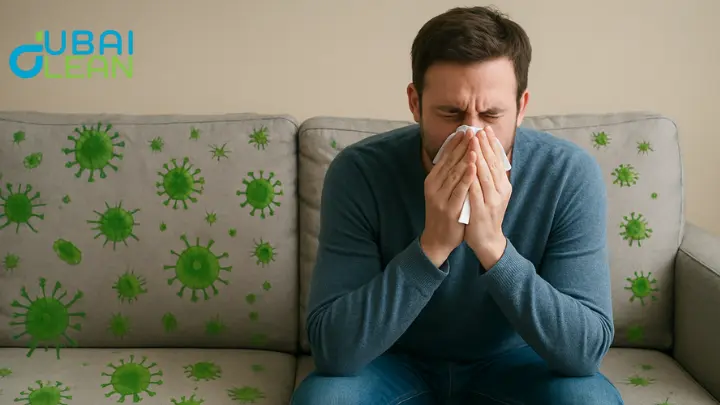
One of the most noticeable signs that your sofa may be affecting your health is frequent sneezing, watery eyes, or persistent coughing when you spend time near it. Dust mites, pet dander, and pollen trapped in the fabric can easily circulate into the air, causing these allergic reactions. Even if your home appears clean, these hidden allergens can trigger symptoms, especially in sensitive individuals or children.
Another common indicator is skin irritation or asthma flare-ups. Dust mites and mold spores hidden inside sofa cushions can lead to rashes, itchy skin, or exacerbate pre-existing asthma conditions. People with respiratory sensitivities may notice that symptoms worsen after sitting or lying on sofas that haven’t been cleaned for a while.
5. Why Regular Sofa Cleaning Is Important for Health
Regular sofa cleaning removes dust mites, pet dander, and bacteria trapped deep in cushions and fabric. It helps improve indoor air quality and reduces allergy symptoms like sneezing, coughing, and itchy eyes. Additionally, cleaning prevents mold growth in Dubai’s humid environment, keeping your home healthier and safer.
- Eliminates Hidden Allergens: Deep cleaning removes dust mites, pet dander, pollen, and bacteria trapped in sofa cushions and fabric.
- Reduces Allergy Symptoms: Minimizes sneezing, itchy eyes, coughing, and respiratory issues caused by accumulated allergens
- Improves Indoor Air Quality: Regular cleaning prevents allergens from circulating in the air, creating a fresher, healthier home environment.
- Prevents Mold and Mildew Growth: Humidity in Dubai can cause mold spores to develop inside sofas; cleaning stops this before it spreads
- Prolongs Sofa Lifespan: Maintaining a clean sofa not only protects health but also keeps your furniture looking and feeling new longer.
6. Recommended Sofa Cleaning Frequency for Homes in Dubai
In Dubai’s dusty and humid environment, it’s recommended to have professional sofa cleaning every 6 to 12 months to remove deep-seated allergens and maintain hygiene. For busy households with children or pets, more frequent maintenance cleaning, such as vacuuming and spot treatment every few weeks, can help prevent allergen buildup. Additional factors like high foot traffic, proximity to open windows or balconies, and pet ownership can increase cleaning needs, making it essential to adjust your cleaning schedule to keep sofas healthy and allergy-free.
Conclusion
Keeping your sofas clean is essential for reducing allergens and maintaining a healthier home environment in Dubai. Regular cleaning both professional deep cleaning and routine maintenance removes dust mites, pet dander, mold, and bacteria, improving indoor air quality and minimizing allergy symptoms. By prioritizing sofa hygiene, you not only protect your family’s health but also extend the life of your furniture, ensuring a fresh, comfortable, and safe living space for everyone.