


In Dubai, water tank cleaning is regulated under strict public health standards set by Dubai Municipality to protect potable water quality in residential and commercial properties. Using the wrong chemical or applying an approved disinfectant incorrectly can lead to drinking water contamination, serious health complications, and even legal penalties for property owners and facility managers.
1. Understanding Dubai’s Water Safety Regulations
Dubai enforces strict potable water safety standards to ensure that stored water in residential, commercial, and high-rise buildings remains safe for human consumption. Compliance is overseen by the Dubai Municipality Public Health & Safety Department, which regulates water tank cleaning chemicals in Dubai, approved disinfectants, and sanitation procedures.
In addition, UAE federal public health laws governing drinking water quality apply across all emirates, reinforcing mandatory hygiene and safety standards for water tank cleaning chemical use in Dubai.
Regulatory Authorities Involved
Water tank cleaning compliance in Dubai is primarily monitored by Dubai Municipality’s Public Health & Safety Department. Their guidelines align with broader UAE federal drinking water safety laws and municipal building health codes. Property owners must ensure maintenance schedules, sanitation practices, and contractor certifications meet these standards to avoid violations.
What the Regulations Actually Require
Dubai regulations require the use of approved disinfectants only, typically those recognized for potable water system sanitation. Chemical concentrations must be carefully controlled to remain within safe limits, preventing toxicity or residual contamination. After disinfection, tanks must be properly rinsed, and residual chlorine or disinfectant levels must be tested to confirm safety before reuse.
2. Which Chemical Meets Dubai Health Regulations?
Selecting the correct disinfectant is critical for meeting Dubai Municipality health requirements and ensuring potable water safety. Dubai’s strict regulations are designed to protect residents from waterborne diseases and maintain high hygiene standards in both residential and commercial properties.
Approved chemicals must effectively eliminate harmful bacteria, viruses, fungi, and biofilm while remaining safe for human consumption when applied at the precise concentration levels mandated by local authorities. Using unapproved or improperly dosed chemicals not only compromises water quality but can also lead to legal penalties.
Sodium Hypochlorite
Sodium hypochlorite is the most widely accepted and commonly used disinfectant for water tank cleaning in Dubai. It is highly effective against bacteria, viruses, fungi, and biofilm buildup commonly found in stored water systems. However, compliance depends on using the correct concentration thresholds approved for potable water systems. Overdosing can cause chemical contamination, while underdosing may fail to eliminate pathogens.
Hydrogen Peroxide-Based Disinfectants
Hydrogen peroxide-based disinfectants are used in specific sanitation cases where low chemical residue is preferred. These are sometimes suitable for sensitive systems or where rapid breakdown into non-toxic byproducts is required. Because dosing accuracy is critical to avoid ineffective disinfection or system damage, professional handling and calibrated application equipment are necessary to meet compliance standards.
Why Bleach or Random Chemicals Are Not Always Safe
It is important to understand that household bleach is not automatically equivalent to regulated water tank disinfection chemicals. Commercial-grade disinfectants used by certified companies are formulated and dosed according to potable water safety standards.
Improper dilution, unverified chemical strength, or the use of unapproved substances can lead to serious contamination risks, toxic residues, corrosion of tank materials, and violations of Dubai Municipality regulations.
3. Chemical Concentration Standards in Dubai
Dubai Municipality sets strict standards for chemical concentrations to ensure that disinfected water remains safe for consumption. For sodium hypochlorite, the safe chlorination range for potable water tanks typically falls within regulated parts-per-million (ppm) levels, preventing both underdosing, which can leave harmful microorganisms, and overdosing, which can contaminate the water.
Proper contact time is essential, allowing the chemical sufficient time to neutralize bacteria, viruses, and biofilm before the tank is rinsed. After cleaning, post-disinfection water testing is mandatory to verify residual chlorine levels and confirm the absence of microbial contamination.
4. How Professionals Ensure Compliance
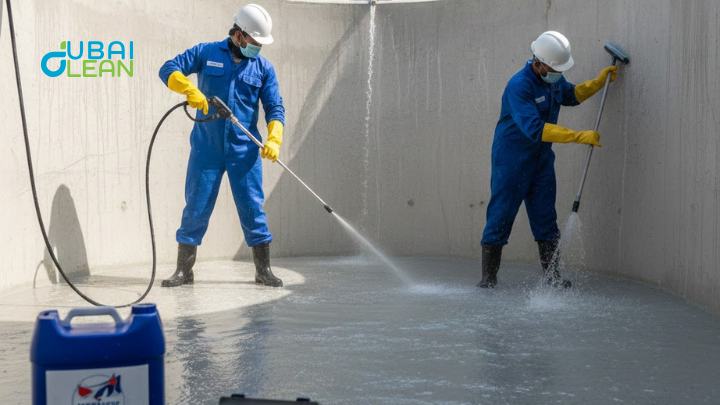
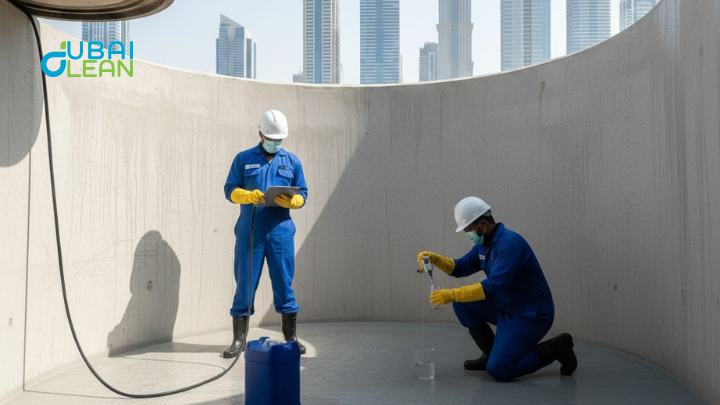
Ensuring compliance with Dubai water safety regulations requires professional expertise, careful testing, and strict safety measures. Certified technicians from municipality-approved companies handle disinfectants at precise concentrations to eliminate harmful microorganisms while keeping water safe for consumption.
After cleaning, they conduct residual chlorine and microbial tests to confirm water quality, maintaining proper documentation for regulatory compliance. Safety protocols, including PPE, proper ventilation, and secure chemical storage, protect both workers and residents, ensuring the entire process meets Dubai Municipality standards.
Certified Technicians
Water tank cleaning must be carried out by municipality-approved companies whose technicians are trained in correct chemical dosing, handling, and safety procedures. Certified professionals understand the precise concentration requirements for approved disinfectants and are equipped to apply them safely to prevent contamination or chemical hazards.
Water Testing After Disinfection
After disinfection, professionals perform residual chlorine testing and microbial safety checks to confirm the water meets potable standards. Proper documentation of these tests is maintained for building records and regulatory compliance, providing legal protection for property owners.
Safety Equipment & Risk Control
Technicians follow strict safety protocols, including the use of personal protective equipment (PPE), proper ventilation during chemical application, and secure storage of disinfectants. These measures minimize exposure risks and ensure that both workers and residents remain safe throughout the cleaning process.
5. Signs Your Water Tank Was Not Properly Disinfected
A poorly disinfected water tank can pose serious health risks, so it’s important to recognize warning signs. Strong chemical odors or a metallic taste in the water often indicate improper chemical use or overdosing. Cloudy or discolored water suggests residual contamination or ineffective cleaning.
Rapid algae or microbial regrowth is another clear sign that disinfection was insufficient. Additionally, if the cleaning company does not provide a compliance certificate or testing documentation, it may indicate that the tank cleaning did not meet Dubai Municipality standards, putting residents’ health at risk.
Conclusion
Sodium hypochlorite remains the most widely approved and effective chemical for water tank disinfection in Dubai, offering reliable protection against bacteria, viruses, fungi, and biofilm that can compromise potable water. Proper professional handling is essential, as certified technicians ensure correct chemical concentrations, safe application, and thorough post-cleaning testing, minimizing any risk of contamination.