


Dubai homes require specialized floor care due to extreme heat, fine desert sand, high humidity, and hard water residue that constantly affect flooring surfaces. Sand can cause tiny scratches, humidity may dull finishes, and mineral deposits often leave cloudy stains issues that become worse with the wrong cleaning methods. This guide helps you choose the right homemade floor cleaning solution for tiles, marble, wood, and vinyl, ensuring effective cleaning without surface damage or long-term wear.
1. Why Floor Type Matters When Using Home made Cleaners
Choosing the right homemade floor cleaning solution depends entirely on your floor type, as each material reacts differently to cleaning ingredients. Acidic or alkaline solutions can etch marble, dull wooden finishes, or weaken grout over time, while improper mixing of household ingredients may leave damaging residues. Beyond surface damage, some DIY homemade floor cleaning solutions release fumes or leave sticky films that affect indoor air quality, posing risks to children, pets, and allergy sufferers. In Dubai homes, where heat, sand, and air conditioning amplify these effects, using the correct homemade floor cleaning solution is essential for both safety and long-term floor care.
Chemical Reactions & Long-Term Damage
Not all floors react the same way to homemade cleaning ingredients, and using the wrong mixture can cause irreversible damage. Acidic substances such as vinegar or lemon juice may seem effective, but they can etch marble and natural stone, leaving dull patches that cannot be polished out easily. Highly alkaline solutions, on the other hand, can weaken grout lines over time and strip protective sealants from tiled surfaces. Wooden and engineered wood floors are especially vulnerable, excess moisture or harsh chemicals can penetrate the finish, causing warping, discoloration, or a permanently dull appearance.
Health & Indoor Air Quality Risks
Improper DIY floor cleaners can also affect indoor air quality, a serious concern in Dubai homes where windows often remain closed and air conditioning runs year-round. Strong-smelling or reactive mixtures may release fumes that linger in enclosed spaces, potentially triggering asthma, allergies, headaches, or throat irritation especially in children and pets who spend more time close to the floor. Residue left behind by poorly diluted cleaners can trap dust and bacteria, worsening air quality over time.
2. Expert-Backed Ingredients: What Is Safe & What Is Not
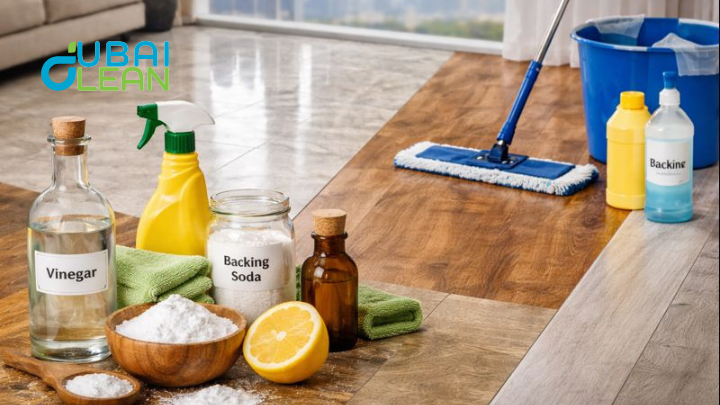
Using the right ingredients is crucial for effective and safe floor cleaning. Distilled white vinegar works well on tiles and vinyl but can damage marble and natural stone, while mild dish soap safely cleans most surfaces without stripping finishes. Baking soda is useful for tough stains but can scratch delicate floors if overused, and warm distilled water prevents hard water residue. Essential oils may add fragrance and mild antimicrobial benefits, but excessive use can leave slippery residue. Conversely, avoid undiluted acids on stone, bleach on colored grout, excess water on wood, and citrus on sealed surfaces, as these can cause lasting damage.
Safe Natural Cleaning Ingredients (Explained Scientifically)
Using the right natural ingredients can effectively clean floors without causing damage. Distilled white vinegar works well on tiles and vinyl but should be avoided on marble, granite, or other natural stones due to its acidity. Mild dish soap in non-degreasing formulas safely removes dirt from most surfaces, including wood and laminate, without stripping protective finishes. Baking soda is useful for scrubbing stubborn stains but must be used cautiously, as its abrasive nature can scratch delicate floors.
Ingredients to Avoid Completely
Certain substances can permanently damage floors if used incorrectly. Undiluted acids such as lemon juice or vinegar can etch natural stone surfaces. Bleach should never be used on colored grout, as it can cause discoloration. Excess water on wooden floors can lead to warping and swelling. Citrus-based cleaners or acidic solutions should be avoided on sealed stone, as they can break down protective coatings and leave dull patches. Following these guidelines ensures both safety and longevity for your floors.
3. Best Homemade Floor Cleaning Solution by Floor Type
The best homemade floor cleaning solution depends on the type of flooring in your home. Ceramic and porcelain tiles respond well to warm water with mild dish soap, effectively removing sand and dust common in Dubai homes. Marble and natural stone need a pH-neutral solution to avoid etching, while wooden floors require low-moisture cleaning to prevent warping in humid, air-conditioned environments. Vinyl, laminate, and PVC floors are best cleaned with a residue-free, mild solution to ensure safety and prevent slippery surfaces. Choosing the right formula preserves your floors, protects health, and maintains long-term beauty.
Ceramic & Porcelain Tiles (Most Common in Dubai)
For ceramic and porcelain tiles, a simple DIY solution of warm distilled water with a few drops of mild dish soap works best. Adding a small amount of vinegar is safe for these floors and helps cut through dust and sand, which accumulate quickly in Dubai’s sandy environment. This solution effectively removes grime without damaging grout or tile glaze. For high-traffic areas, cleaning 2–3 times per week is recommended, while low-traffic zones can be cleaned once a week to maintain shine and hygiene.
Marble & Natural Stone Floors (High-Value Floors)
Marble and natural stone require a non-acidic, pH-neutral solution, such as warm distilled water with a gentle soap designed for stone. Avoid vinegar, lemon, or any acidic cleaners that can etch or dull the surface. Common DIY mistakes include using abrasive scrubs or excessive water, which can weaken sealants and cause long-term discoloration. Experts recommend damp-mopping with a microfiber cloth and drying immediately to preserve the stone’s natural luster. Proper care protects these high-value floors from costly damage and maintains their elegant appearance.
Wooden & Engineered Wood Floors
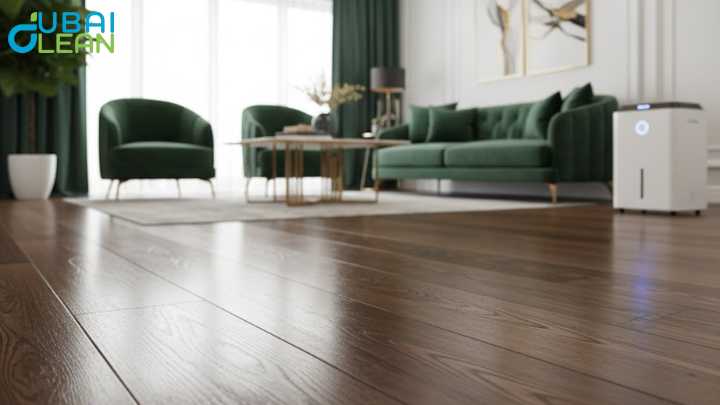
Wooden and engineered wood floors thrive with low-moisture homemade solutions, such as a few drops of mild dish soap diluted in warm distilled water. Excess water can seep into the seams, causing warping, swelling, or finish damage especially in Dubai’s humid, air-conditioned homes. Light mopping once a week is sufficient for regular maintenance, while high-traffic areas may need spot cleaning more often. Always dry the floor immediately and avoid harsh scrubbing to maintain the wood’s finish.
Vinyl, Laminate & PVC Flooring
For vinyl, laminate, and PVC floors, a residue-free homemade solution of warm distilled water with mild soap works best. These floors can become slippery if excess soap or oils are used, so proper dilution is key. Cleaning with a damp mop ensures safety and prevents buildup, while keeping the surface child- and pet-friendly. Regular maintenance, about once or twice a week, keeps these floors looking fresh without risking slips or long-term damage.
4. Step-by-Step: How to Use Homemade Floor Cleaners Safely
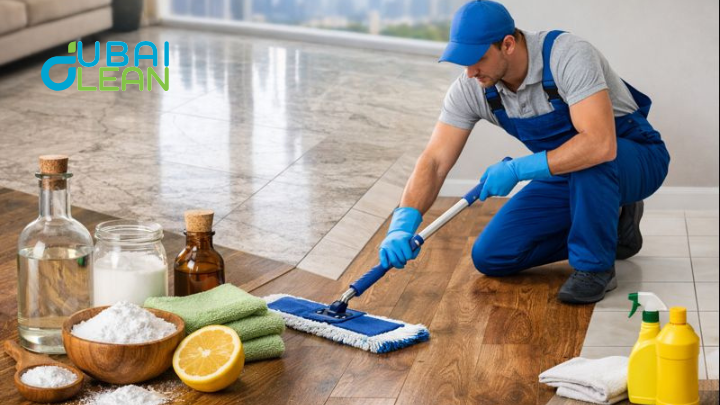
Using homemade floor cleaning solution safely requires both proper dilution and careful application. Over-concentrated solutions can damage finishes, leave residues, or create slippery surfaces, so always measure ingredients for consistency and choose EPA Safer Choice–certified cleaning ingredients to reduce health and surface risks. Opt for microfiber mops over cotton to reduce scratches and trap dust effectively, and use a damp mop rather than soaking the floor, especially on wood or stone. In Dubai’s humid, air-conditioned homes, quick drying is essential to prevent moisture damage and maintain a streak-free, safe surface.
Correct Dilution Ratios
When using homemade floor cleaners, more is not always better. Over-concentrated solutions can leave residue, damage finishes, or create slippery surfaces. Always follow proper dilution ratios and use measuring tools to ensure consistency. This ensures effective cleaning while protecting both your floors and indoor air quality.
Application Methods That Prevent Damage
The method of application is just as important as the solution itself. Microfiber mops are gentler and trap dust better than cotton, reducing scratches, while damp mopping is safer than soaking floors, especially for wood and stone. In Dubai’s humid, air-conditioned homes, allow floors to dry quickly to prevent moisture damage and maintain a streak-free finish.
5. When Homemade Solutions Are NOT Enough
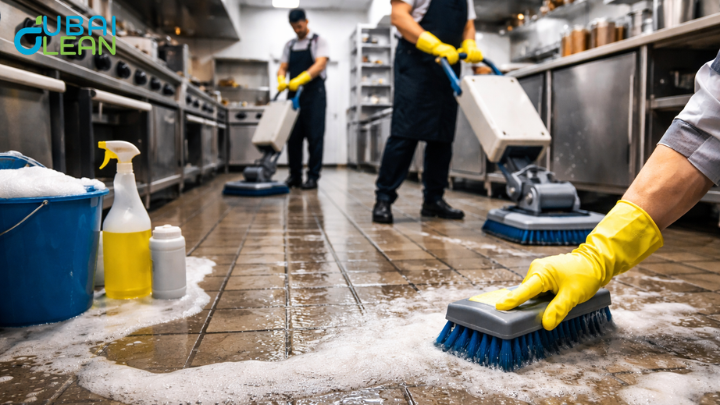
Sometimes, DIY floor cleaners cannot fully tackle tough stains, dull finishes, or ingrained dirt. Signs that professional cleaning is needed include sticky residue, discolored grout, dull stone surfaces, or lingering odors that persist despite regular care. While homemade solutions save money in the short term, improper cleaning can cause long-term damage to high-value floors like marble or wood. Hiring professional services ensures proper maintenance, protects warranties, and prevents costly repairs, making it a safer and more effective choice for Dubai homes.
Signs Your Floor Needs Professional Cleaning
Sometimes, homemade solutions cannot fully restore your floors, and professional care is required. Signs include sticky residue buildup, dull or etched stone surfaces, discolored grout, or lingering odors that persist despite regular DIY cleaning. Recognizing these issues early prevents further damage and preserves the appearance and longevity of your flooring.
Cost vs Risk Comparison
While DIY cleaning may save money initially, improper techniques can lead to costly floor damage over time, especially for high-value surfaces like marble or wood. Hiring professionals may seem expensive, but it ensures floor safety, proper maintenance, and adherence to warranty requirements, ultimately protecting your investment and avoiding long-term repair costs in Dubai’s challenging home environments.
| Aspect | DIY Cleaning | Professional Cleaning | Risk & Considerations |
| Initial Cost | Low – only ingredients and basic tools | Higher – service fees vary by floor type and area | DIY seems cheaper upfront but can be misleading if damage occurs |
| Effectiveness | Moderate – suitable for regular dirt and light stains | High – deep cleaning, stain removal, and surface restoration | DIY may not remove tough stains or protect delicate surfaces |
| Floor Safety | Moderate risk – overuse of chemicals or wrong solutions can damage floors | Low risk – trained professionals use safe methods and correct solutions | DIY mistakes can warp wood, etch stone, or discolor grout |
| Warranty & Maintenance | Not applicable – may void manufacturer warranty if floors are damaged | Maintains warranty – professional care follows manufacturer guidelines | Professional cleaning helps preserve long-term floor value |
| Long-Term Cost | Potentially high – repairs or refinishing may be needed | Lower – protects floors and reduces need for costly repairs | Investing in professionals can save money and protect valuable flooring |
Conclusion
The best homemade floor cleaning solution always depends on your specific floor type, as tiles, marble, wood, and vinyl each require unique care to remain safe, clean, and durable. Prioritizing safety, material compatibility, and long-term cost protection ensures your floors maintain their appearance and functionality without unnecessary damage or expensive repairs. It’s important to make informed choices based on expert guidance, rather than relying on viral DIY trends that may harm delicate surfaces. Regular maintenance with the right solutions, combined with proper application techniques, not only prolongs the life of your floors but also supports a healthy living environment for children and pets.