


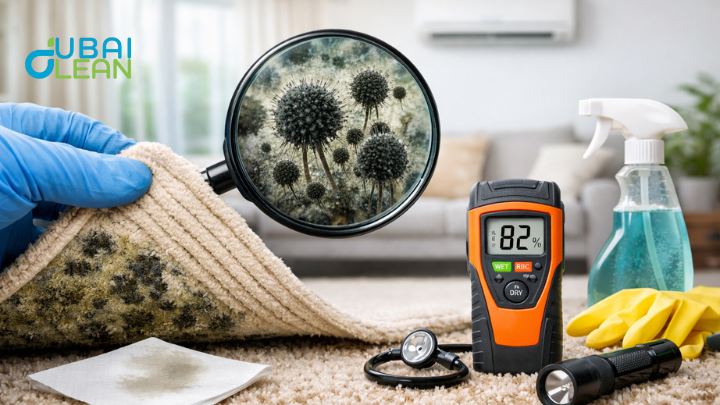
Mold in homes is more than just an aesthetic problem it poses serious health and safety risks. In particular, black mold on carpet can quietly grow in hidden corners, releasing spores that may trigger allergies, respiratory issues, and other health complications. For families in Dubai homes, where high humidity and air-conditioning can create the perfect environment for moisture buildup, early detection is crucial. Carpets often trap water from spills, AC condensation, or cleaning, making them a prime breeding ground for black mold. This guide will show you how to spot black mold on carpets before it spreads, ensuring a safer, healthier home environment in Dubai.
1. Understanding Black Mold
Black mold, scientifically known as Stachybotrys chartarum, is a type of fungus that thrives in damp, poorly ventilated areas. While often found on walls or ceilings, carpets in Dubai homes are particularly susceptible due to spills, AC condensation, and high indoor humidity. Unlike common household mold, black mold can produce toxic spores that, when inhaled, may trigger allergies, respiratory irritation, and other health issues, especially in children, the elderly, or people with asthma.
The growth of black mold in carpets typically requires moisture, warmth, and organic material, making dirty or damp carpets an ideal breeding ground. Even minor water spills left untreated can provide enough moisture for mold colonies to form.
Expert recommendations from home health professionals and UAE authorities stress the importance of regular inspections, prompt drying of wet carpets, and professional mold remediation when signs appear. According to Dubai-based cleaning specialists, addressing mold early prevents both structural damage and serious health risks associated with prolonged exposure to toxic spores.
For homeowners, understanding these conditions is the first step toward preventing toxic mold in carpets and maintaining a safe, hygienic living environment.
2. Is black mold on carpet dangerous
Yes, Black mold on carpet can be dangerous, especially in humid climates like Dubai where moisture gets trapped in carpet fibers and padding. As mold grows, it releases tiny spores into the air that can lower indoor air quality and trigger health issues such as sneezing, coughing, breathing problems, skin irritation, headaches, and ongoing fatigue. Children, elderly residents, and people with asthma or allergies are more vulnerable, making black mold a serious health concern that should not be ignored.
Beyond health risks, black mold can spread underneath the carpet into the underlay and flooring, making surface cleaning ineffective. If left untreated, the problem can worsen and lead to higher repair or replacement costs. Acting early and seeking professional mold inspection or carpet treatment helps prevent further damage, protects your family’s well-being, and keeps your home safe and hygienic.
3. Common Signs of Black Mold on Carpets
Recognizing black mold on carpet early is essential for maintaining a healthy home. Look for dark greenish-black spots, fuzzy patches, or discoloration in damp areas, and be alert for a persistent musty or earthy odor, especially in humid climates like Dubai. Unexplained allergy symptoms such as sneezing, watery eyes, or respiratory irritation may also indicate hidden mold. Early detection allows for prompt cleaning or professional intervention, helping keep your carpets safe and your home hygienic.
Visual Signs of Black Mold
One of the first ways to identify black mold on carpet is through visual inspection. Look for dark greenish-black or grayish-black spots scattered across the carpet fibers. In areas with high moisture, the mold may appear fuzzy or slimy, indicating active growth. Sometimes, previously wet areas show discoloration or shadowing, even after drying, which can be an early warning of mold development beneath the surface.
Smell and Odor
A persistent musty or earthy smell is another common sign of mold. In humid climates like Dubai, this odor can become stronger and more noticeable, especially in rooms with heavy AC use or poor ventilation. Even after cleaning, if the smell lingers, it often indicates hidden mold growth inside the carpet padding or underlay.
Health Symptoms Indicating Mold
Mold exposure can manifest as unexplained allergy symptoms, including sneezing, watery eyes, coughing, or nasal congestion. Children, the elderly, and people with asthma are particularly sensitive to mold spores, making early detection crucial to prevent health complications. Persistent respiratory irritation or frequent allergic reactions after spending time in certain rooms may point to hidden black mold in carpets.
4. Common Causes of Black Mold in Carpets
Understanding what encourages black mold on carpet is key to preventing its growth. In Dubai homes, where high humidity and heavy AC use are common, carpets can easily become a breeding ground for mold. Water damage from leaks, floods, or AC condensation is one of the main causes, as even small, unnoticed moisture pockets can trigger mold development.
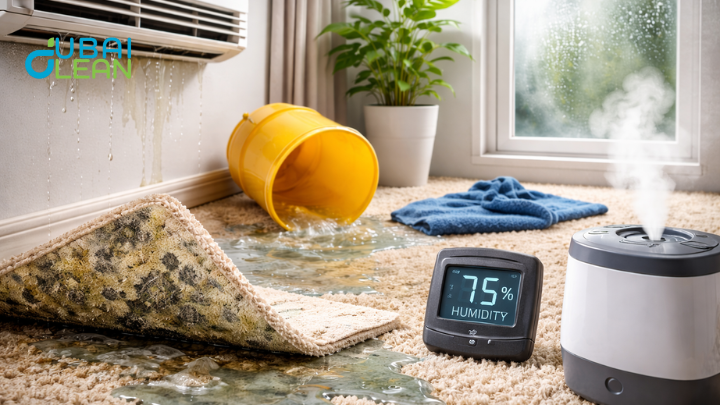
High indoor humidity and poor ventilation further create a favorable environment for spores to multiply. Carpets that are not properly dried after spills or routine cleaning are particularly at risk, as trapped moisture can linger beneath the fibers. Additionally, certain carpet materials, such as thick or densely woven fibers, tend to retain water longer, increasing the likelihood of mold growth.
Expert guidance from indoor hygiene and cleaning professionals emphasizes quick action: addressing water damage immediately, using dehumidifiers in humid areas, and selecting moisture-resistant carpets can significantly reduce the risk of mold. Studies also show that maintaining airflow and regular inspections can prevent toxic mold in carpets and protect both the home and occupants’ health.
5. How to Inspect and Spot Black Mold in Your Carpet
Detecting black mold on carpet early is essential for maintaining a safe and healthy home. Follow these easy, step-by-step methods to inspect your carpets and prevent health risks.
Step 1: Visual Inspection: Begin by lifting carpet edges, corners, and areas under furniture to check for dark spots, discoloration, or fuzzy growth. Pay close attention to previously wet areas from spills, AC leaks, or high-humidity zones, and watch for shadowing on the carpet padding, which can indicate hidden mold.
Step 2: Smell Check: Sniff-test carpets in high-traffic and humid areas for a persistent musty or earthy odor, which often signals hidden mold beneath the fibers. If strong odors linger even after cleaning, it usually indicates a more serious problem that may require professional intervention.
Step 3: DIY Moisture Test: Press a dry paper towel onto the carpet for a few minutes; if it becomes damp, moisture may be trapped underneath. You can also use a moisture meter, if available, to check carpet padding or areas near walls and AC vents. High moisture readings are a warning sign of potential black mold growth.
Step 4: Know When to Call a Professional: Call a professional if mold is spreading visibly or if a persistent musty odor remains. Also seek expert help if household members experience allergy symptoms or respiratory irritation. A professional inspection ensures safe mold removal, prevents spores from spreading, and reduces long-term health risks.
Expert Tip: Dubai cleaning and home health specialists recommend a combination of regular DIY inspections and professional assessments to protect your family from toxic carpet mold. Early detection saves both health and home quality.
6. Health Risks of Black Mold in Carpets
Exposure to black mold on carpet can pose serious health risks, particularly in indoor environments like Dubai homes where humidity and AC use may encourage mold growth. The most common allergic reactions include sneezing, nasal congestion, itchy or watery eyes, and skin irritation.
For individuals with respiratory conditions, such as asthma, mold exposure can trigger flare-ups, coughing, or bronchitis-like symptoms. Even healthy adults may experience mild respiratory discomfort or persistent irritation when exposed to spores over time.
Long-term exposure can stress the immune system, increasing susceptibility to other illnesses and making recovery slower after infections. Children, the elderly, and immune-compromised individuals are particularly at risk, making early detection and removal critical for family safety.
Expert guidance from health professionals in the UAE emphasizes that preventing mold growth in carpets is not just about home hygiene it is a crucial step in safeguarding the health of household members. Regular inspection, proper cleaning, and professional remediation of mold can significantly reduce carpet mold health risks.
7. Prevention Tips for Black Mold in Carpets
Preventing black mold on carpet is far easier than treating it after it appears. In Dubai homes, where humidity and AC condensation are common, following these expert-backed tips can protect both your carpets and your family’s health.
- Keep Carpets Dry: Clean up spills, leaks, or AC condensation immediately. Even small amounts of moisture can create a breeding ground for mold.
- Regular Cleaning and Vacuuming: Use a HEPA-filter vacuum to remove dust, dirt, and potential mold spores before they take hold. Professional deep cleaning periodically can also help maintain hygiene.
- Dehumidifiers and AC Maintenance: Running dehumidifiers in humid rooms and maintaining your AC system prevents moisture buildup that encourages mold growth. Dubai-based home hygiene specialists recommend checking AC drip pans and ducts regularly.
- Use Mold-Resistant Carpets and Pads: Carpets made from synthetic fibers or mold-resistant materials reduce the risk of moisture retention. Mold-resistant underlays further enhance protection.
- Avoid High-Moisture Areas: Refrain from placing carpets in bathrooms, kitchens, or near AC vents where humidity is higher.
Expert Advice: UAE cleaning professionals emphasize that combining preventive maintenance, regular inspections, and prompt action against spills or leaks is the most effective strategy to safeguard your home and family from toxic carpet mold. Following these steps not only preserves your carpet’s lifespan but also minimizes health risks for all household members.
Conclusion
Early detection and prevention of black mold on carpet are key to maintaining a safe and healthy home in Dubai. By regularly inspecting carpets, promptly cleaning spills, managing humidity and AC systems, and addressing discoloration or persistent odors quickly, homeowners can reduce health risks and prevent long-term damage. Sensitive individuals, including children and the elderly, are especially at risk from mold exposure, making timely action essential. For effective and professional support, contact DubaiClean experts for carpet mold inspection and cleaning, ensuring your home stays hygienic, safe, and comfortable.