


Mold can grow very quickly. Experts say that wet surfaces can develop mold in just 24 to 48 hours. This is called the 48-Hour Rule. In Dubai, where humidity is often above 60%, mold can appear even faster. A wet rug is more than a small problem; it can harm the air in your home and damage your investment. Acting fast is essential. In this article, we will explain easy steps to handle wet rugs, show how to prevent mold from spreading, and share safe ways to clean and save your rug without harming its fibers or colors.
1. Quick Help for Wet Rugs (Safety Comes First)
Begin by extracting or eliminating the maximum amount of water. Gently blot the wet areas using white cotton towels never rub, as this can spread the water and damage the fibers. After blotting, improve air circulation by turning on the AC or ceiling fans. This helps dry the rug faster and reduces the chance of mold growth. If the rug is very wet, lift the damp section using a plastic stool or another non-porous object to protect the floor underneath.
Important Safety Warnings
Some common DIY methods can make things worse. Do not use a hair dryer or heater, as heat can shrink natural fibers like wool and set stains permanently. Avoid household bleach, which can damage rug fibers and won’t reach mold deep in the layers. Following these steps carefully gives your rug the best chance to recover while waiting for professional carpet cleaning in Dubai. Acting fast and safely is key to saving both your rug and your home’s air quality.
2. Understanding the Risk: Why Just Drying Isn’t Enough
Even after a rug looks dry, water trapped in the backing can slowly move up to the surface. This “wicking” brings dirt, bacteria, and mold with it, creating hidden damage. Microbial growth can trigger respiratory issues like asthma or allergies if left untreated. Synthetic rugs are usually tougher, while natural fibers like wool and silk are more likely to suffer from mildew and “dry rot,” making quick action essential.
Key Points:
- Wicking Risk: Trapped moisture can resurface days later, carrying dirt and bacteria.
- Health Concern: Mold growth may worsen allergies and asthma.
- Fiber Differences: Synthetic rugs resist mold better than wool or silk.
- Long-Term Damage: Natural fibers can weaken or rot if not treated quickly.
3. The Professional Protocol: How Experts Dry Rugs Differently
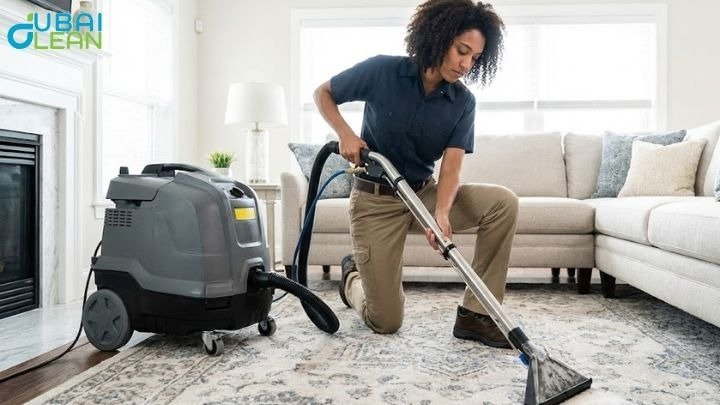
Experts use tools like hygrometers and thermal imaging to locate water trapped deep in rugs and padding places the eye can’t see. Standard shop-vacs remove surface water, but professional extraction tools, like water claws, pull moisture from the rug backing and padding. This step is essential to prevent mold from starting and to protect the fibers. Proper moisture mapping ensures that no hidden wet spots remain, which could cause long-term damage.
Stopping Mold and Drying Safely
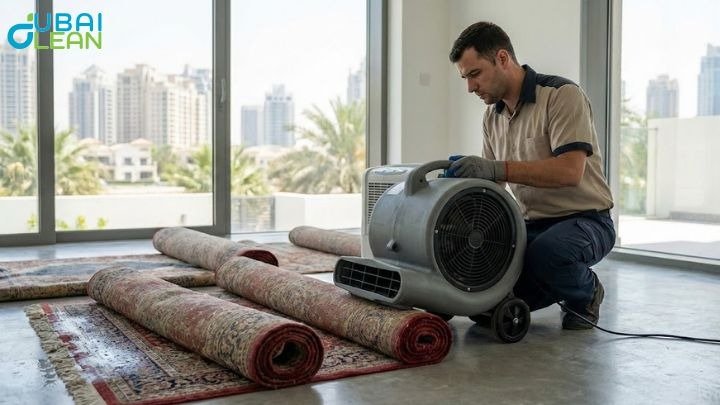
Once the water is removed, antimicrobial treatments are applied to kill mold spores before they grow. Plant-based or hospital-grade products are used depending on the rug and risk level. Controlled drying follows, using industrial air movers to circulate air and LGR dehumidifiers to remove moisture from the room. This creates a closed system that dries the rug thoroughly without damaging fibers, reducing the chance of mildew and protecting indoor air quality.
4. Honest Comparison: When to DIY vs Call a Professional
How to clean my area rug? Not every wet rug needs professional help, but knowing when to call an expert can save you time, money, and stress. For small spills with clean water on synthetic rugs, simple DIY steps usually work. However, if your rug is soaked, made of wool, silk, or hand-woven, or exposed to dirty water or a musty smell, it’s time to call the pros.DubaiClean offers fast, expert rug cleaning and restoration services, using safe techniques that protect fibers and indoor air quality, giving your rugs a second life.
5. Long-Term Care: Preventing Sick Rug Syndrome
Keeping your rugs safe starts with good habits. Humidity Control: Try to keep indoor humidity between 40–60% to slow mold growth. Regular Inspections: Check under heavy furniture for hidden damp spots or leaks that can trap moisture. Routine Professional Cleaning: Schedule deep cleaning every 12–18 months to remove hidden dirt, dust, and dormant mold spores. Following these steps helps protect your rugs, fibers, and indoor air quality while extending the life of your investment.
Humidity Control: Keep indoor humidity between 40–60% to slow mold growth.
Regular Inspections: Look under heavy furniture for hidden damp spots or leaks.
Routine Professional Cleaning: Deep clean every 12–18 months to remove dirt and dormant mold spores.
Conclusion
Time is the biggest enemy when it comes to wet rugs. The longer water sits, the more likely mold will grow, damaging fibers and affecting indoor air quality. Quick action blotting, air circulation, and proper drying can save your rug and protect your health. Don’t wait and risk permanent damage or respiratory problems.
Call DubaiClean Today: Don’t gamble with your health or your valuable rugs. For fast, professional help, call our Emergency Water Damage Assessment line. Our IICRC certified technicians are ready 24/7 to extract water, prevent mold, and restore your rugs safely. Trust DubaiClean to protect your investment with expert care and immediate response.