


In Dubai’s hot climate, underground water tanks are vital for a constant water supply in homes and commercial buildings. Over time, they can accumulate sediment, algae, and bacteria, posing health risks. Many residents overlook these tanks, but unclean water can lead to unpleasant odors, strange tastes, and illnesses. This guide helps Dubai residents understand the cleaning process, its importance, and professional tips to keep underground water tanks safe year-round.
Why Underground Water Tank Cleaning is Essential in Dubai
The UAE’s water supply is generally safe, but storage tanks can compromise water quality if left unmaintained. Factors that make cleaning especially important in Dubai include:
- High Temperatures – Heat encourages algae and bacterial growth.
- Dust and Sandstorms – Fine particles can enter through vents or faulty covers.
- Water Stagnation – Long storage periods allow sediment buildup.
- Chlorine Dissipation – Stored water loses disinfectant strength over time.
Health risks include stomach infections, skin irritations, and even serious waterborne diseases. By keeping your underground water tank clean, you reduce these risks and extend the life of your plumbing system.
How Often Should You Clean Your Underground Water Tank?
In Dubai, water authorities and health experts recommend cleaning tanks at least once every 6 months. However, if you notice any of the following, schedule cleaning immediately:
- Strange smell or taste in tap water
- Visible particles or discoloration
- Reduced water pressure (possible sediment blockage)
- Recent sandstorm or flooding
Tip: Even if water appears clean, microorganisms may still be present. Preventive cleaning is always better than reacting after a problem occurs.
Step-by-Step Underground Water Tank Cleaning Process
While small surface tanks may be cleaned by homeowners, underground tanks require trained professionals due to confined space hazards and specialized equipment needs. Here’s how the process should be done:
Step 1: Inspection and Preparation
Before cleaning starts, a full inspection is necessary. Professionals check for:
- Cracks or leaks
- Damaged manhole covers
- Signs of rust or corrosion in metal tanks
- Evidence of pest entry
Preparation includes:
- Shutting off the water supply
- Draining the tank completely
- Securing safety equipment
Step 2: Sludge and Sediment Removal
Over time, heavy particles settle at the bottom of the tank. Using submersible pumps and manual tools, cleaners remove all accumulated sludge. This is the most crucial step because sludge harbors bacteria and biofilms.
Step 3: Scrubbing and High-Pressure Cleaning
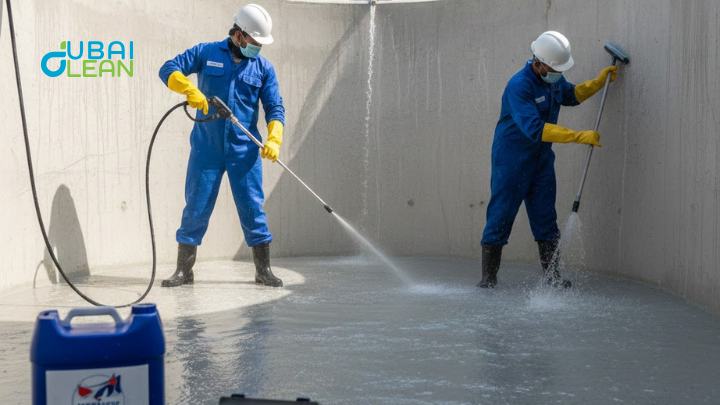
All internal surfaces – walls, floors, and ceiling – are scrubbed to loosen stubborn dirt, algae, and mineral deposits. High-pressure water jets are used for thorough cleaning without damaging tank surfaces.
Step 4: Disinfection
Professionals use safe, approved disinfectants to kill bacteria, viruses, and fungi. The choice of disinfectant depends on tank material (plastic, concrete, or metal) to avoid damage.
Step 5: Final Rinse and Drying
The tank is flushed with clean water until no traces of cleaning agents remain. In dry climates like Dubai, air drying is quick, but forced ventilation may be used for safety.
Step 6: Refill and Testing
After cleaning, the tank is refilled, and water quality testing is done to ensure compliance with health standards.
DIY vs Professional Underground Water Tank Cleaning
| Aspect | DIY Cleaning | Professional Cleaning |
| Safety | High risk in confined space | Trained in confined space entry |
| Effectiveness | Limited tools & chemicals | Advanced equipment & safe disinfectants |
| Time Required | Long & exhausting | Quick & efficient |
| Water Quality Guarantee | No official testing | Testing and certification possible |
While DIY may work for small, above-ground tanks, underground tank cleaning in Dubai is best left to experienced professional cleaners.
Safety Precautions During Underground Tank Cleaning
Because underground tanks are confined spaces with limited oxygen and possible toxic gases, safety is critical. Professional teams follow:
- Ventilation setup before entry
- Gas detection to ensure safe breathing conditions
- Harnesses and lifelines for worker safety
- PPE including gloves, masks, and waterproof boots
Never allow untrained workers to enter a water tank without proper equipment.
Common Problems Found in Underground Water Tanks
| Problem | Cause | Solution |
| Algae Growth | Sunlight leaks or stagnant water | Seal openings & regular cleaning |
| Sediment Buildup | Sand/dust infiltration | Install high-quality inlet filters |
| Rust & Corrosion | Metal tank oxidation | Apply protective coatings |
| Pest Infestation | Unsealed manhole | Secure with gasket-fitted covers |
Tips to Keep Your Underground Water Tank Clean for Longer
- Seal All Openings – Prevent dust, insects, and debris from entering.
- Install Inlet Filters – Trap sediment before it enters the tank.
- Use Chlorination – Keep bacteria under control.
- Monitor Water Quality – Check for color, smell, and taste changes.
- Schedule Regular Cleaning – Book a professional cleaning every 6 months.
Cost of Underground Water Tank Cleaning in Dubai
Costs vary based on:
- Tank size
- Level of contamination
- Accessibility
On average, expect AED 900 – 1300 for residential tanks and higher for large commercial tanks. Investing in cleaning prevents costly plumbing repairs and health issues.
Environmental Responsibility in Tank Cleaning
Professional companies in Dubai often use eco-friendly disinfectants and water-saving methods during cleaning. Wastewater is disposed of safely, avoiding contamination of the environment.
5 Common Myths About Underground Water Tank Cleaning
- “Clear water means clean water” – Wrong. Harmful bacteria are invisible.
- “Cleaning once a year is enough” – Dubai’s climate demands more frequent cleaning.
- “Any cleaning chemical works” – Only approved disinfectants are safe.
- “Small tanks don’t need cleaning” – Size doesn’t matter; all tanks get dirty.
- “DIY saves money” – Poor cleaning can lead to costly repairs and health bills.
FAQs
Conclusion
Keeping your underground water tank clean isn’t just a matter of convenience; it’s a critical health and safety responsibility. In Dubai’s unique climate, tanks are more prone to contamination from dust, heat, and stagnant water.
By scheduling regular professional cleaning, using proper filtration, and monitoring water quality, you can ensure your family, tenants, or employees enjoy safe, clean water every day.
If you want peace of mind, work with experienced professional tank cleaners who understand Dubai’s climate, follow municipal guidelines, and use the right equipment for the job. The result is pure, healthy water and a longer lifespan for your tank system.