


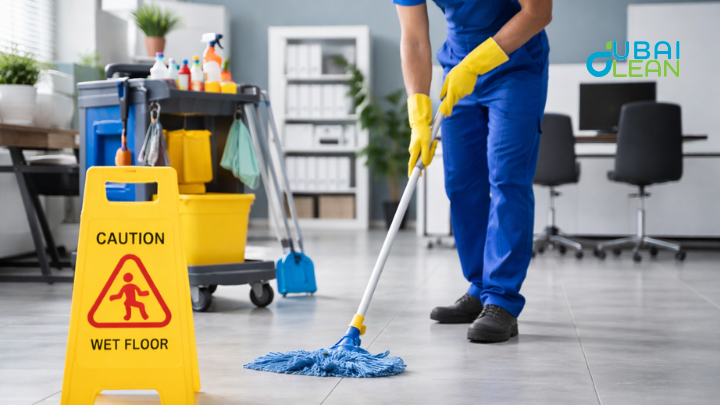
Maintaining clean floors in Dubai goes beyond simple sweeping and mopping, as dust, humidity, and heavy foot traffic quickly lead to dirt buildup and surface wear. Using the wrong floor cleaning chemicals can damage flooring, leave harmful residues, and affect indoor air quality, creating health and safety risks. This guide explains the main types of floor cleaning chemicals, such as alkaline and acidic cleaners, their proper uses, and best practices to help Dubai homeowners and professionals keep floors clean, safe, and durable.
1. Types of Floor Cleaning Chemicals
Types of floor cleaning chemicals are specially formulated solutions designed to remove dirt, stains, and contaminants from various flooring surfaces. These types of floor cleaning chemicals are classified based on their pH levels into alkaline, acidic, and neutral cleaners, each suited for specific surfaces and cleaning tasks.
Choosing the right type of floor cleaning chemical is essential to maintain floor hygiene, protect surfaces from damage, and ensure safety, especially in Dubai’s dusty, high-traffic, and humid environment.
What Are Floor Cleaning Chemicals?
Floor cleaning chemicals are specialized solutions designed to remove dirt, stains, and contaminants from various types of flooring. They play a crucial role not only in maintaining hygiene but also in preserving the appearance and longevity of floors. In Dubai, where dust, sand, and humidity constantly affect indoor surfaces, using the right chemical ensures floors remain clean, safe, and visually appealing while reducing the risk of damage or discoloration.
How Floor Cleaning Chemicals Are Classified
Floor cleaning chemicals are generally classified based on their pH level, which determines their strength and suitability for different surfaces. They fall into three main categories, alkaline cleaners, which are effective against grease, oils, and organic dirt; acidic cleaners, designed to remove mineral deposits, hard water stains, and scale; and neutral cleaners, which are gentle and safe for delicate surfaces like marble, polished wood, or natural stone.
- Alkaline cleaners – Effective at removing grease, oils, and organic residues. They are commonly used on ceramic tiles, concrete, and industrial floors.
- Acidic cleaners – Designed to dissolve mineral deposits, hard water stains, and scale. These are often used in bathrooms, kitchens, and post-construction cleaning.
- Neutral cleaners – Mild formulas suitable for delicate surfaces such as marble, natural stone, and polished wood, providing general cleaning without damaging finishes.
Why Choosing the Right Floor Cleaning Chemical Matters
Selecting the correct floor cleaning chemical is essential for both floor durability and safety. Using the wrong type can lead to surface dullness, scratches, residue buildup, or even structural damage over time. Additionally, inappropriate chemicals may affect indoor air quality, causing irritation to occupants.
In Dubai’s climate, where floors are exposed to heavy dust and humidity, making an informed choice ensures efficient cleaning, long-lasting floors, and a healthier indoor environment.
2. Alkaline Floor Cleaner Explained
Alkaline floor cleaners are high-pH solutions designed to remove tough dirt, grease, oils, and organic residues from floors. They work effectively on durable surfaces such as ceramic tiles, concrete, and industrial vinyl, which are common in Dubai homes and commercial spaces.
Using them correctly helps maintain floor hygiene and appearance, but misuse can cause surface dullness, residue buildup, or safety hazards. Proper dilution, application, and surface selection are essential to ensure effective cleaning without damaging floors.
What Is an Alkaline Floor Cleaner?
An alkaline floor cleaner is a basic chemical solution with a high pH level, typically ranging from 9 to 12, designed to break down tough soils and organic residues. Its chemical composition allows it to react with grease and oils, loosening them from floor surfaces without extensive scrubbing. Understanding the pH and strength of these cleaners is essential to ensure they are applied safely and effectively on the right types of floors.
What Types of Dirt Do Alkaline Cleaners Remove?
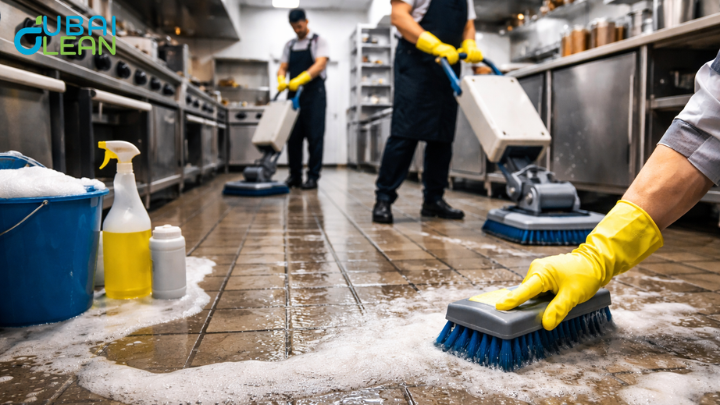
Alkaline cleaners are particularly effective against grease, cooking oils, food spills, and other organic contaminants. They are widely used in kitchens, restaurants, and industrial areas where these types of dirt accumulate. By neutralizing and lifting stubborn grime, alkaline cleaners restore floor hygiene and reduce the risk of sticky or slippery surfaces, which is especially important in busy Dubai homes and commercial spaces.
Suitable Floor Surfaces for Alkaline Cleaners
These cleaners are generally safe for durable surfaces such as ceramic tiles, concrete, and industrial-grade vinyl floors, which are common in Dubai’s residential, commercial, and industrial spaces. However, they should be used cautiously on delicate materials like marble, polished stone, or wood, as their high pH can cause surface dullness or etching if applied excessively or left on too long.
Risks of Misusing Alkaline Floor Cleaners
Improper use of alkaline cleaners can lead to residue buildup, streaks, and dulling of floor finishes. Over-concentration or prolonged contact with sensitive surfaces may damage the flooring material, while neglecting safety precautions, such as gloves or ventilation, can cause skin irritation or respiratory issues. Correct dilution, application, and surface selection are crucial to avoid these risks and maintain both safety and floor longevity.
3. Acidic Floor Cleaner Uses
Acidic floor cleaners are low-pH solutions designed to dissolve mineral deposits, hard water stains, and construction residue that build up on floors. They are ideal for areas like bathrooms, kitchens, and commercial spaces where water and scale accumulation is common.
While highly effective, acidic cleaners require caution on delicate surfaces such as marble, natural stone, or polished tiles. Proper dilution, safe application, and surface selection are essential to ensure floors are cleaned efficiently without damage or safety risks.
What Makes Acidic Floor Cleaners Different?
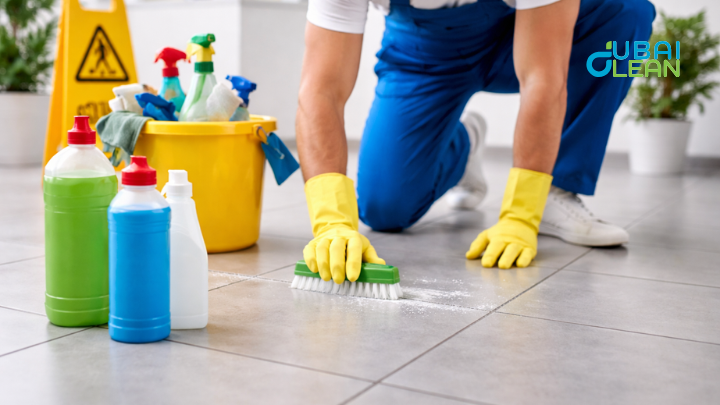
Acidic floor cleaners are low-pH solutions that react with minerals and deposits, making them highly effective at dissolving hard water stains, lime scale, and mineral buildup. Their chemical action is different from alkaline cleaners, targeting inorganic contaminants rather than grease or organic dirt, which makes them essential for certain cleaning tasks in bathrooms, kitchens, and commercial spaces in Dubai.
Common Acidic Floor Cleaner Uses
These cleaners are commonly used to remove mineral deposits, hard water stains, and post-construction residue from floors. They are ideal for surfaces exposed to water deposits or scale, such as bathroom tiles, kitchen floors, and industrial areas. By breaking down tough stains, acidic cleaners help maintain both the appearance and hygiene of the flooring.
Floors That Require Caution With Acidic Cleaners
Acidic cleaners can damage delicate surfaces such as marble, natural stone, polished concrete, or certain types of tile. Excessive use or high concentration can etch or dull these floors. Understanding which surfaces are sensitive ensures that acidic cleaners are applied safely, preserving the beauty and durability of expensive or fragile flooring.
Safe Application Practices for Acidic Cleaners
To use acidic cleaners safely, always follow proper dilution guidelines and avoid prolonged contact with floors. Wear protective gloves and ensure good ventilation to prevent skin irritation or respiratory discomfort. Applying the cleaner correctly minimizes risks and ensures that floors are effectively cleaned without damage, maintaining both safety and hygiene in Dubai’s indoor environments.
4. Alkaline vs Acidic Floor Cleaning Chemicals
Alkaline and acidic floor cleaners serve different cleaning purposes and are suitable for specific surfaces. Alkaline cleaners are strong against organic dirt, grease, and oils, making them ideal for kitchens, industrial, and high-traffic areas. Acidic cleaners are effective against mineral deposits, hard water stains, and scale, commonly used in bathrooms and post-construction cleaning.
Choosing the correct cleaner based on floor type, dirt type, and Dubai’s environmental conditions ensures safe, efficient, and long-lasting cleaning.
| Feature | Alkaline Cleaner | Acidic Cleaner |
| pH Level | High (9–12) | Low (1–4) |
| Best For | Grease, oils, organic dirt | Mineral deposits, hard water stains |
| Suitable Surfaces | Tiles, concrete, industrial vinyl | Bathroom tiles, kitchen floors, scale-prone areas |
| Risk if Misused | Surface dullness, residue buildup | Etching, damage to marble/natural stone |
| Dubai-Specific Use | High-traffic kitchens and industrial areas | Areas affected by hard water and dust accumulation |
Key Differences Between Alkaline and Acidic Cleaners
Alkaline and acidic floor cleaners differ mainly in cleaning function, strength, and surface compatibility. Alkaline cleaners are strong against organic dirt, grease, and oils, making them suitable for kitchens and industrial floors. Acidic cleaners target inorganic residues, such as mineral deposits and hard water stains. Understanding these differences helps prevent floor damage and ensures that the right cleaner is used for the right type of dirt.
How Dubai’s Environment Affects Cleaner Selection
Dubai’s dusty climate, high humidity, and hard water influence floor cleanliness and chemical effectiveness. Hard water can leave mineral deposits that require acidic cleaners, while high traffic areas accumulate grease and dirt best treated with alkaline solutions. Considering indoor conditions, surface type, and local environmental factors is crucial for efficient and safe cleaning.
Which Floor Cleaning Chemical Should Be Used When?
Choosing the correct floor cleaner depends on floor material and type of dirt. Alkaline cleaners are ideal for tiles, concrete, and commercial vinyl floors with organic grime, while acidic cleaners should be used on bathroom tiles, kitchen areas, and hard water-affected surfaces. Neutral cleaners are ideal for sensitive surfaces such as marble, natural stone, or polished wood. Making informed choices ensures floor longevity, cleanliness, and safety.
5. Safety Guidelines for Using Floor Cleaning Chemicals
Using floor cleaning chemicals safely is essential to protect both floors and indoor health. Ensure proper ventilation when cleaning, especially in enclosed Dubai apartments or offices, and always wear gloves or protective gear to avoid skin or eye irritation. Store chemicals in secure, labeled containers away from children and pets, and never mix different cleaners, as this can cause hazardous chemical reactions.
Health and Indoor Air Safety Considerations
Proper ventilation is essential when using floor cleaning chemicals to prevent fumes from building up indoors. In Dubai’s enclosed apartments or offices, stagnant air can increase the risk of respiratory irritation or headaches. Always open windows or use exhaust fans during and after cleaning to maintain safe indoor air quality while ensuring effective cleaning results.
Safe Handling and Storage Practices
Floor cleaning chemicals should be handled with care using gloves, protective clothing, or eye protection when necessary. Store all chemicals in secure, labeled containers, away from children and pets. Following proper storage and handling reduces the risk of accidental spills, injuries, or contamination, which is especially important in homes and commercial spaces in Dubai.
Conclusion
Understanding the types of floor cleaning chemicals is essential for maintaining floors that are both clean and durable. Selecting the right chemical for each surface not only ensures effective dirt and stain removal but also prevents damage to flooring materials and reduces health risks from chemical exposure. Following proper safety guidelines, correct dilution, and careful application allows homeowners and cleaning professionals in Dubai to achieve hygienic, polished floors without compromising safety.