


Marble has always been a symbol of luxury in Dubai’s homes, villas, hotels, and commercial spaces. From countertops to grand lobbies, it adds timeless beauty – but keeping it spotless can be a challenge. Spills and daily wear often leave marks that dull its shine.
A simple yet effective solution for many stains is hydrogen peroxide. When used correctly, it can restore marble’s look without causing damage. Let’s explore how to safely and effectively clean marble using hydrogen peroxide.
Why Marble Requires Special Care
Marble is a calcium carbonate stone, which makes it sensitive to acidic and harsh chemicals. Common cleaning agents like vinegar, bleach, or lemon juice can etch its surface, leaving permanent marks.
Here’s why marble needs extra care:
- Porous nature: Marble absorbs liquids, which can lead to stains.
- Acid sensitivity: Even mild acids can cause etching.
- Delicate finish: Scratches and abrasions are more visible on polished marble.
This is why hydrogen peroxide, when used properly, becomes an excellent solution. It’s powerful enough to remove stains but safer than harsher chemicals.
What is Hydrogen Peroxide?
Hydrogen peroxide (H₂O₂) is a mild antiseptic commonly used for disinfection and cleaning. For household use, it is usually available in a 3% concentration.
Why it works for marble:
- Acts as a natural oxidizer.
- Breaks down organic stains like coffee, tea, or wine.
- Evaporates without leaving residue.
- Safe on light-colored marble when diluted and applied properly.
However, it’s important to note that prolonged or excessive use can cause slight fading on darker marbles.
When to Use Hydrogen Peroxide on Marble
Hydrogen peroxide is ideal for:
- Organic stains: Coffee, tea, juice, and food spills.
- Bathroom stains: Soap scum, mildew, and toothpaste.
- Kitchen mess: Food residue and light grease marks.
Not recommended for:
- Oil-based stains (like cooking oil).
- Rust stains (require different treatments).
- Very dark marble (risk of lightening the stone).
Step-by-Step: Cleaning Marble with Hydrogen Peroxide
Here’s a safe method for using hydrogen peroxide on marble surfaces:
Materials You’ll Need
- 3% hydrogen peroxide solution
- Soft microfiber cloth
- Distilled water
- Spray bottle
- Plastic wrap (for tough stains)
- Non-abrasive sponge
Method
- Prepare the Surface
- Wipe away dust or loose dirt using a dry microfiber cloth.
- Wipe away dust or loose dirt using a dry microfiber cloth.
- Dilute (if needed)
- Mix equal parts of hydrogen peroxide and distilled water in a spray bottle. For light stains, dilution is recommended.
- Mix equal parts of hydrogen peroxide and distilled water in a spray bottle. For light stains, dilution is recommended.
- Apply Gently
- Spray directly on the stained area or dab using a soft cloth.
- Spray directly on the stained area or dab using a soft cloth.
- Let it Sit
- For light stains, 5-10 minutes is enough. For stubborn stains, cover with plastic wrap to slow evaporation and leave for a few hours.
- For light stains, 5-10 minutes is enough. For stubborn stains, cover with plastic wrap to slow evaporation and leave for a few hours.
- Wipe and Rinse
- Use a damp cloth with distilled water to wipe the area.
- Use a damp cloth with distilled water to wipe the area.
- Dry Properly
- Buff the surface dry with a clean microfiber cloth to prevent water spots.
- Buff the surface dry with a clean microfiber cloth to prevent water spots.
Table: Quick Guide to Stain Types & Hydrogen Peroxide Use
| Type of Stain | Recommended Approach |
| Coffee/Tea/Wine | Apply diluted hydrogen peroxide, let it sit for 10 mins, rinse with distilled water. |
| Soap Scum/Mildew | Spray solution, leave 15 minutes, wipe with sponge, rinse well. |
| Food stains (Tomato, Juice) | Dab hydrogen peroxide, cover with plastic wrap, leave for 1 hour, then rinse. |
| Grease/Oil | Avoid hydrogen peroxide, use baking soda poultice instead. |
| Rust | Hydrogen peroxide is not effective. Consider professional help. |
Common Mistakes to Avoid
- Using high concentrations: Stronger hydrogen peroxide (above 10%) can etch marble.
- Scrubbing with abrasive pads: This leaves scratches.
- Leaving solution too long: Can lighten dark marble.
- Skipping rinsing: Residues may attract more dirt.
Professional vs. DIY Cleaning in Dubai
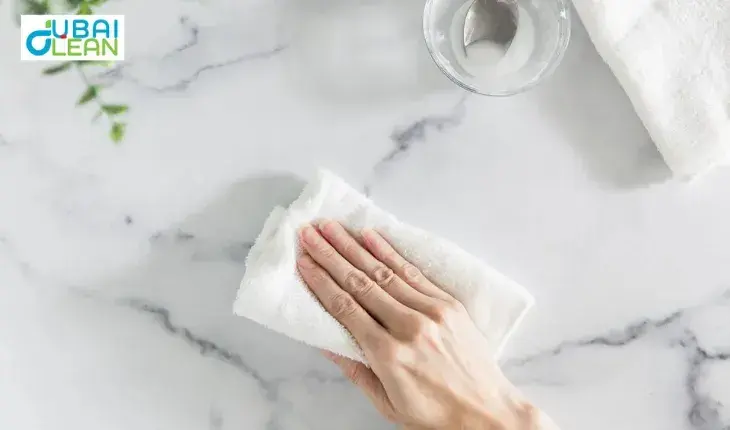
While hydrogen peroxide is great for at-home stain removal, professional marble cleaning services in Dubai offer deeper restoration.
| DIY Cleaning with Hydrogen Peroxide | Professional Marble Cleaning |
| Removes surface stains. | Deep cleaning and polishing. |
| Low cost and convenient. | Restores shine and removes etching. |
| Suitable for regular upkeep. | Handles stubborn or old stains. |
| Limited to mild solutions. | Uses advanced, marble safe equipment |
For homeowners, the ideal approach is regular DIY maintenance combined with occasional professional care to preserve marble’s original beauty.
Extra Tips for Maintaining Marble in Dubai Homes
- Wipe spills immediately – don’t let liquids sit.
- Use coasters and mats – especially under coffee cups and oil bottles.
- Regular dusting – keeps grit from scratching surfaces.
- Avoid acidic cleaners – vinegar, citrus, and bleach are marble’s worst enemies.
- Polish periodically – maintain the shine with professional polishing services.
FAQs
Conclusion
Marble deserves proper care to maintain its timeless elegance, especially in Dubai’s luxurious homes and businesses. Hydrogen peroxide is a safe and effective solution for tackling common stains when used correctly. However, it is not a one-size-fits-all cleaner, and some stains or dullness require professional help.
By combining at-home maintenance with occasional professional services, you can enjoy stunning, flawless marble for years to come.
For homeowners who want the best results without risk, turning to experts ensures your marble surfaces are cleaned and polished with the utmost care.