


A clean pool filter is the heart of a well-maintained swimming pool. It ensures proper water circulation, removes debris, and keeps your pool water crystal clear and safe for swimming. Without regular cleaning, filters can become clogged with dirt, oils, and other contaminants, reducing efficiency and compromising water quality.
Dirty filters often lead to common pool problems such as cloudy water, algae growth, unpleasant odors, and chemical imbalances that make maintaining the right pH and chlorine levels difficult. Ignoring filter maintenance can also put extra strain on your pool pump, leading to costly repairs.
In this guide, we’ll share expert tips and recommend safe, effective chemicals to clean your pool filters. Whether you have a sand, cartridge, or DE filter, these insights will help you keep your pool sparkling clean, balanced, and ready for a refreshing swim all year round.
1. Understanding Pool Filters
A pool filter is an essential component of your swimming pool system, designed to remove dirt, debris, and microscopic contaminants from the water. Understanding how your filter works and the different types available can help you maintain optimal water quality and prolong the life of your pool equipment.
Types of Pool Filters
Pool filters are essential for keeping your swimming pool clean by removing dirt, debris, and microscopic contaminants. The main types include sand filters, cartridge filters, and diatomaceous earth (DE) filters, each offering different levels of filtration, maintenance needs, and efficiency to suit various pool sizes and preferences.
Sand Filters: Sand filters use a bed of specially graded sand to trap debris as water passes through. They are durable, easy to maintain, and ideal for medium to large pools. Periodic backwashing is required to remove trapped particles.
Cartridge Filters: Cartridge filters consist of pleated polyester material that captures dirt and debris. They offer excellent filtration, require less water for cleaning compared to sand filters, and are relatively easy to maintain by simply removing and rinsing the cartridge.
Diatomaceous Earth (DE) Filters: DE filters provide the highest level of filtration, using a fine powder made from fossilized diatoms to coat grids inside the filter. They can trap extremely small particles, ensuring crystal-clear water. Regular cleaning and recharging with DE powder are necessary for optimal performance.
How Filters Work
Pool filters operate by circulating water through a medium sand, cartridge material, or DE powder that traps debris, oils, and microorganisms. This process not only keeps the water visually clean but also reduces the risk of bacterial growth and chemical imbalances. A well-functioning filter ensures even distribution of pool chemicals, maintaining safe and healthy water for swimmers
Why Regular Cleaning is Crucial
Regular filter maintenance is vital to prevent clogs, which can restrict water flow and strain the pool pump. Clogged filters reduce filtration efficiency, resulting in cloudy water and the potential buildup of algae and harmful bacteria. Consistent cleaning ensures proper circulation, extends the life of your equipment, and keeps your pool water clear, balanced, and safe for swimming.
2. Chemicals Used for Cleaning Pool Filters
Using the right chemicals is key to keeping your pool filters clean and efficient. Selecting suitable cleaning agents not only ensures better filtration but also prolongs the life of your filter while maintaining safe, balanced pool water.
Filter Cleaning Solutions
Commercial Filter Cleaners: Specially formulated commercial cleaners are designed to break down oils, grease, and mineral deposits in pool filters. They are convenient, effective, and safe when used according to the manufacturer’s instructions. However, they can be more expensive than DIY options and may contain strong chemicals, so proper handling is essential.
DIY Solutions: For those who prefer homemade solutions, mild acids (such as diluted muriatic acid) or gentle detergents can help remove debris and scale from filters. Always follow safety guidelines, wear protective gear, and ensure the solution is properly diluted to avoid damaging the filter media.
Algaecides and Preventive Chemicals
Algaecides help prevent algae growth not just in pool water but also inside filters, where organic matter can accumulate. Regular use of preventive chemicals ensures filters remain free of biofilm and algae buildup. Follow manufacturer-recommended dosages and application frequency to maintain safe chemical levels while preventing overuse, which can affect water balance.
pH Adjusters and Descalers
Maintaining the correct pH balance is crucial during filter cleaning. Imbalanced water can reduce the effectiveness of cleaning chemicals and damage the filter media. pH adjusters help bring the water to an optimal range, ensuring safe and effective cleaning.
Descaling agents are particularly important in areas with hard water. They remove mineral deposits that accumulate over time, preventing clogging and extending the filter’s lifespan. Using descalers according to instructions ensures your filter stays in peak condition without causing corrosion or damage.
3. Step-by-Step Guide to Cleaning Pool Filters with Chemicals
Cleaning your pool filter with the right chemicals can dramatically improve water clarity and system efficiency. Follow these steps carefully to ensure effective and safe maintenance.
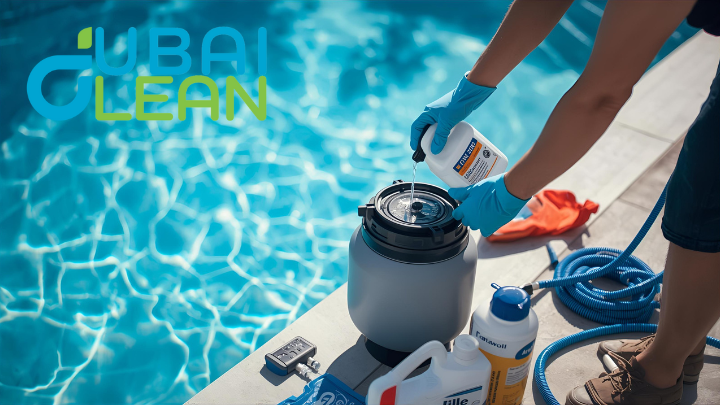
Preparing Your Pool Filter: Before applying any cleaning chemicals, proper preparation is essential. Always switch off your pool pump and any connected equipment to prevent accidents and ensure the filter can be safely removed. Once the equipment is turned off, take out the filter and remove any loose debris, leaves, or dirt. A gentle rinse with a garden hose helps dislodge surface particles, preparing the filter for chemical treatment.
Applying Cleaning Chemicals: When applying cleaning chemicals, it is important to follow the manufacturer’s instructions for commercial cleaners or DIY solutions. Using the correct dilution ensures the chemical is effective while preventing damage to the filter media. Different filter types require varying soaking durations. Sand filters generally need four to six hours of soaking, cartridge filters require six to twelve hours depending on dirt and oil buildup, and DE filters should be soaked for eight to twelve hours to ensure the DE grids are fully saturated. This soaking process allows the chemicals to break down oils, minerals, and other contaminants for a thorough cleaning.
Rinsing and Reassembling: After soaking, rinse the filter thoroughly with clean water to remove all chemical residues, ensuring that no debris or leftover solution remains. Once rinsed and, if applicable, dried, reassemble the filter according to the manufacturer’s guidelines. Reinstall it securely, check all connections, and restart the pump to resume normal pool circulation. Proper reinstallation ensures optimal filter performance, extends the life of the equipment, and keeps your pool water clean and safe for swimming.
4. Safety Tips When Handling Pool Cleaning Chemicals
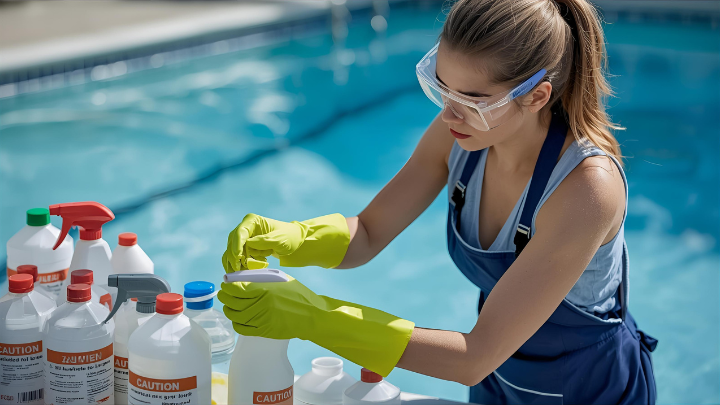
Handling pool cleaning chemicals safely is essential to protect yourself, your family, and your pool equipment. Follow these expert guidelines to ensure a safe cleaning process:
- Wear Gloves and Eye Protection: Always use chemical-resistant gloves and protective eyewear when handling pool cleaners, pH adjusters, or descaling agents. This prevents skin irritation, chemical burns, and eye injuries.
- Proper Storage of Chemicals: Store all pool chemicals in a cool, dry, and well-ventilated area, away from direct sunlight and moisture. Keep containers tightly sealed and out of reach of children and pets to avoid accidental exposure.
- Avoid Mixing Incompatible Chemicals: Never mix different pool chemicals unless explicitly instructed. Incompatible chemicals can produce dangerous reactions, release toxic fumes, or damage your pool filter and plumbing. Always read product labels and follow manufacturer instructions carefully.
By following these safety practices, you can maintain your pool filters effectively without risking health or equipment damage.
5. Maintaining a Clean Pool Beyond Filter Cleaning
Keeping your pool sparkling clean requires more than just maintaining the filter, as a comprehensive pool care routine ensures the water stays balanced, clear, and safe for swimming. Regular water testing, at least once a week, helps monitor pH, chlorine, alkalinity, and other chemical levels, which not only protects swimmers but also ensures your filter operates efficiently.
Removing leaves, insects, and other debris daily or as needed through skimming and vacuuming prevents organic matter from reaching the filter and reduces the risk of algae growth. Additionally, adjusting chemical treatments according to the season is essential; for instance, algae and bacteria are more likely to develop in warmer months, necessitating preventive algaecides and shock treatments. By combining consistent filter cleaning with these additional maintenance practices, you can enjoy a consistently DubaiClean, safe, and inviting swimming pool throughout the year.
6. Conclusion
Chemical-assisted filter cleaning is an essential part of maintaining a healthy, clear, and safe swimming pool. By using the right cleaning solutions, algaecides, pH adjusters, and descalers, you can effectively remove debris, oils, and mineral buildup, ensuring your filters perform at their best.
Regular maintenance not only prolongs the life of your pool filter but also keeps your water balanced, reduces the risk of algae and bacteria, and ensures a consistently sparkling swimming environment. Incorporating these practices into your pool care routine will save you time, money, and hassle while providing a safe and enjoyable experience for everyone who uses your pool.