

Keeping a swimming pool clean and safe is essential for both health and enjoyment. Pools that are not maintained properly can quickly turn into a breeding ground for bacteria, algae, and harmful germs. Regular cleaning ensures crystal-clear water, prevents infections, and makes swimming a refreshing experience. It also protects your investment by extending the life of pool equipment, tiles, and filters while reducing the chances of costly repairs.
There are different swimming pool cleaning methods available, ranging from simple manual tools to advanced robotic systems and eco-friendly solutions. Each method offers unique benefits, whether it’s removing floating debris, balancing chemicals, or eliminating algae growth. Understanding these cleaning techniques helps pool owners choose the right approach, keeping the water sparkling, hygienic, and inviting all year round.
1. Manual Swimming Pool Cleaning Methods
Manual cleaning is the most traditional way to maintain a swimming pool and involves simple yet effective tools. Skimming the surface helps remove leaves, insects, and floating debris before they sink. Brushing the pool walls and floor prevents algae buildup and keeps surfaces clean and safe. Vacuuming the bottom ensures deep cleaning by removing dirt and debris that settle over time. Though it requires effort, manual cleaning keeps the pool fresh, hygienic, and inviting.
Skimming the Surface
One of the simplest and most effective ways to keep a pool clean is by skimming the surface daily. Using a handheld skimmer net, you can remove leaves, insects, and floating debris before they sink to the bottom. This quick task not only keeps the water looking clear but also prevents clogs in the pool’s filter system. Regular skimming is a cost-free way to maintain pool hygiene and reduce the need for heavy cleaning later.
Brushing Pool Walls and Floor
Brushing the walls, steps, and floor of the swimming pool is another crucial cleaning step. Over time, algae, dirt, and calcium deposits build up on these surfaces, creating stains and making the pool slippery. A strong pool brush helps scrub away these deposits and prevents algae from spreading. Brushing at least once a week ensures smooth, clean walls and a healthier swimming environment.
Vacuuming the Pool
Vacuuming is essential to clean dirt and debris that settle at the bottom of the pool, which skimming and brushing cannot fully remove. Manual pool vacuums are easy to use and allow for deep cleaning of hard-to-reach areas. Regular vacuuming keeps the pool water crystal clear, reduces strain on the filter, and prevents bacteria buildup. Doing this once a week is recommended to maintain a sparkling pool ready for safe swimming.
2. Automatic Swimming Pool Cleaning Methods
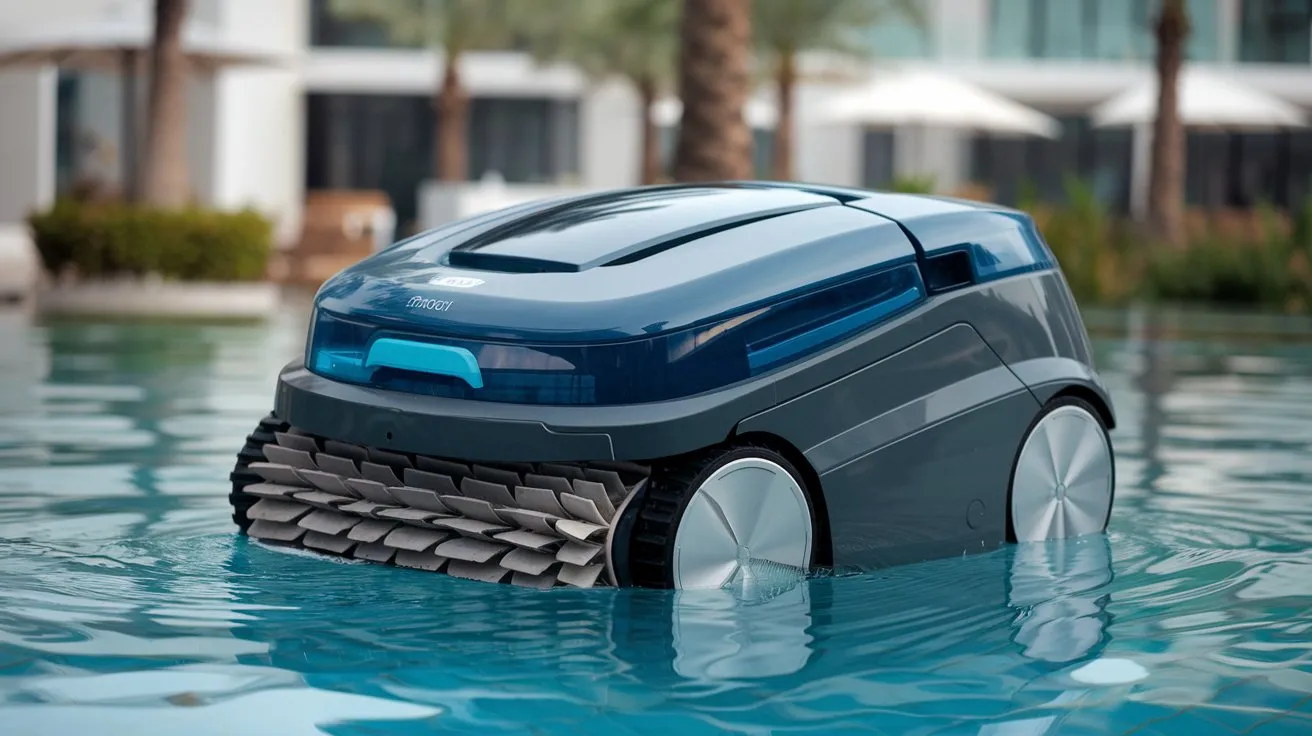
Automatic pool cleaning methods are designed to save time and reduce the effort of manual maintenance. Suction-side cleaners connect to the pool’s filtration system, sucking up dirt and debris efficiently. Pressure-side cleaners use water pressure to push debris into a separate filter bag, keeping the pool clear without overloading the filter. Robotic pool cleaners are the most advanced option, operating independently to scrub floors, walls, and steps while filtering debris. These systems provide consistent cleaning and are a convenient choice for busy pool owners who want sparkling water with minimal effort.
Suction-Side Cleaners
Suction-side cleaners work by connecting directly to the pool’s filtration system. As they move around, they vacuum dirt, dust, and small debris, sending it straight to the filter. They are cost-effective and simple to use, making them a popular choice for regular pool maintenance.
Pressure-Side Cleaners
Pressure-side cleaners rely on water pressure from the pool’s pump to function. Instead of sending dirt to the main filter, they collect debris in a separate filter bag. This prevents clogging and reduces strain on the pool’s filtration system, while keeping the water clear and safe for swimming.
3. Chemical Cleaning Methods
Chemical methods are vital for keeping swimming pools safe, clean, and hygienic. Chlorination is the most common approach, killing harmful bacteria and maintaining clear water. pH balancing ensures the water stays comfortable for swimmers while protecting pool equipment from damage. Shock treatment is used to restore cloudy or contaminated pools, eliminating stubborn algae and bacteria. Algaecides provide an extra layer of defense by preventing algae growth on walls and floors. Together, these methods keep pools sparkling, safe, and inviting.
Chlorination
Chlorination is the most common and effective way to disinfect pool water. By adding chlorine, harmful bacteria, viruses, and germs are eliminated, ensuring safe swimming conditions. It also helps control algae growth and keeps the water looking clear. Chlorine is available in liquid, tablet, or granular form, making it flexible for different pool types.
pH Balancing
Balanced pH levels are essential for both swimmer comfort and pool longevity. If the water is too acidic, it can cause skin and eye irritation, while high alkalinity can lead to scaling on tiles and equipment damage. Regular pH testing ensures that chlorine works effectively and the water stays safe and comfortable.
Shock Treatment
Shock treatment, often called “super chlorination,” is used when the pool water becomes cloudy, green, or contaminated after heavy use or bad weather. This method involves adding a large dose of chlorine to kill stubborn bacteria, algae, and organic waste. It restores clarity and freshness to the pool, making it safe for swimmers again.
Algaecides
Algaecides are chemical solutions designed to prevent and control algae growth in swimming pools. They act as a backup to chlorine, stopping algae from spreading on walls, floors, and steps. Regular use of algaecides keeps pool water sparkling clear and reduces the chances of slippery, unsafe surfaces caused by algae buildup
4. Natural & Eco-Friendly Pool Cleaning Methods
Natural and eco-friendly pool cleaning methods offer a safer and chemical-reduced alternative for maintaining clean water. Saltwater systems generate chlorine naturally, providing soft water that is gentle on the skin and eyes. UV pool cleaning uses ultraviolet light to kill bacteria and germs without harsh chemicals, while ozone systems disinfect water effectively and reduce chemical use. These methods not only keep pools sparkling and hygienic but also create a healthier swimming environment for swimmers. By combining efficiency with eco-friendliness, they are ideal for those looking for sustainable pool maintenance.
Saltwater Systems
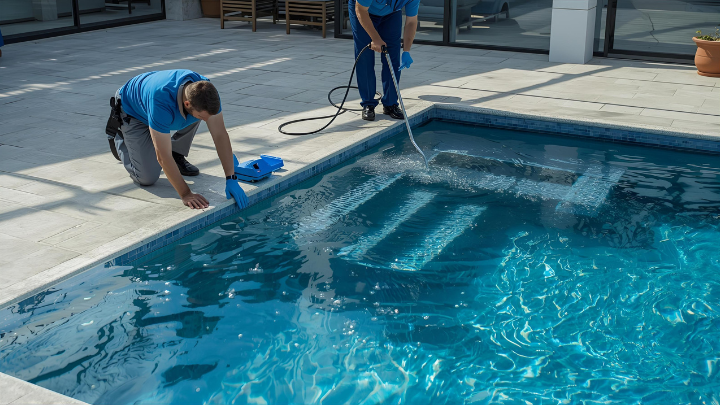
Saltwater systems use salt generators to produce chlorine naturally, keeping the pool clean and sanitized without relying on strong chemical treatments. The water feels softer on the skin and is gentler on the eyes, making it more comfortable for swimmers. This method also reduces chemical storage needs and creates a more natural swimming experience.
UV Pool Cleaning
UV pool cleaning uses ultraviolet light to destroy bacteria, germs, and other harmful microorganisms in the water. Since it works without adding chemicals, it minimizes skin irritation and unpleasant chlorine odors. UV systems are eco-friendly, effective, and a great way to maintain safe, clear water while reducing the pool’s overall chemical usage.
Ozone Pool Cleaning
Ozone pool cleaning relies on ozone gas to disinfect water quickly and effectively. It breaks down organic matter, bacteria, and viruses, leaving the water fresh and crystal clear. This system reduces the need for chlorine and other chemicals, making it healthier for swimmers and better for the environment. Ozone cleaning also helps maintain long-term water balance.
5. Advanced Professional Swimming Pool Cleaning Methods
Advanced professional cleaning methods ensure a deep and thorough maintenance of swimming pools. Pressure washing removes tough stains, dirt, and algae from tiles, walls, and floors, restoring a clean and safe surface. Filter backwashing flushes out accumulated debris, improving water circulation and keeping the filtration system efficient. Drain and deep cleaning completely empties the pool for scrubbing all surfaces, removing stubborn dirt and mineral buildup. These methods are ideal for heavily used pools or seasonal maintenance, ensuring sparkling, hygienic water and extending the life of pool equipment.
Pressure Washing Pool Surfaces
Pressure washing is a professional technique used to remove tough stains, dirt, and grime from pool walls, tiles, and floors. It restores the pool’s appearance, prevents algae buildup, and ensures a clean, safe surface for swimmers.
Filter Backwashing
Filter backwashing is an essential maintenance step to keep the pool’s filtration system working efficiently. By reversing water flow through the filter, accumulated debris and dirt are flushed out, improving water circulation and overall pool hygiene.
Drain & Deep Cleaning
Drain and deep cleaning involves completely emptying the pool and thoroughly scrubbing all surfaces, including floors, walls, and steps. This method removes stubborn dirt, algae, and mineral buildup, ensuring the pool is spotless and ready for safe, enjoyable swimming.
6. Signs That Your Pool Needs Immediate Cleaning
Several signs indicate that a swimming pool needs immediate cleaning to maintain safety and hygiene. Cloudy or green water often points to algae growth or bacterial contamination, making swimming unsafe. A strong chemical or unpleasant odor can signal chemical imbalance or organic buildup in the water. Slippery walls and floors caused by algae or biofilm create safety hazards for swimmers. Frequent filter clogs show that debris is accumulating faster than the filtration system can handle, reducing water circulation and cleanliness.
Cloudy or Green Water
Water that looks cloudy or has turned green usually indicates algae growth or bacterial contamination. Immediate cleaning and chemical adjustment are needed to restore safe swimming conditions.
Unpleasant Odor from the Pool
A strong chlorine smell or foul odor can signal chemical imbalance, organic buildup, or bacteria growth. This requires thorough cleaning and proper chemical treatment.
Slippery Walls and Floor
Algae or biofilm buildup can make pool walls and floors slippery, increasing the risk of accidents and injuries. Regular scrubbing and chemical treatment are essential.
Filter System Clogging Frequently
Frequent filter clogs show that debris and dirt are accumulating faster than the system can handle. This reduces water circulation and cleanliness, signaling the need for deep cleaning and maintenance.
7. Danger & Safety Risks of Swimming Pool Cleaning
Cleaning a swimming pool comes with several safety risks if not done properly. Overuse of chemicals like chlorine can cause skin irritation, eye problems, and respiratory issues. Poor mixing of chemicals may release toxic gases or cause burns, while neglecting regular cleaning allows bacteria, algae, and parasites to grow, making the pool unsafe. Electrical hazards from robotic or electric cleaning equipment are also a concern if precautions are not taken. Following proper safety guidelines and using professional methods helps prevent these dangers and ensures a safe swimming environment.
Overuse of Chemicals
Using too much chlorine or other pool chemicals can cause skin irritation, eye discomfort, and respiratory problems. Proper measurement and handling are essential to avoid health risks.
Poor Chemical Mixing
Incorrect mixing of pool chemicals can release toxic gases or cause chemical burns. Always follow instructions and handle chemicals with care.
Neglected Cleaning
Skipping regular cleaning allows harmful bacteria, algae, and parasites to grow in the water, making the pool unsafe for swimming.
Electrical Hazards from Equipment
Robotic or electric pool cleaners can pose serious risks if used incorrectly. Water and electricity are a dangerous combination, so proper precautions are necessary.
Conclusion
Regular and proper swimming pool cleaning is essential for maintaining crystal-clear, safe, and healthy water. Manual, automatic, chemical, natural, and advanced professional cleaning methods all play a role in keeping your pool hygienic, inviting, and enjoyable for swimmers of all ages. Ignoring maintenance can lead to algae growth, bacteria contamination, unpleasant odors, slippery surfaces, and costly equipment damage. Following safe cleaning practices, monitoring water quality, and scheduling regular maintenance ensures your pool stays sparkling, safe, and long-lasting. By taking action today, pool owners can protect their investment and provide a refreshing, worry-free swimming experience all year round.