




Marble floors are a symbol of elegance in many Dubai homes. From luxury villas to modern apartments, marble adds sophistication and charm. But over time, dust, foot traffic, and stains can dull the shine, leaving your marble floor looking lifeless.
Most homeowners assume that restoring marble’s brilliance requires heavy machines and professional tools. The good news? You can polish marble floors at home without a machine, with the right methods and care.
Why Avoid Machines for Marble Polishing?
While machines are effective, they aren’t always practical for every Dubai household:
- Costly equipment: Not everyone wants to invest in professional machines.
- Space limitations: Apartments may not accommodate large polishing machines.
- DIY convenience: Many homeowners prefer simple, hands-on solutions.
- Risk of damage: Incorrect machine use can scratch or permanently damage marble.
That’s why knowing manual polishing techniques becomes valuable for homeowners.
Common Reasons Marble Floors Lose Shine
Dubai’s unique environment accelerates wear and dullness on marble surfaces.
- Dust storms: Fine sand particles scratch the surface.
- High humidity: Moisture creates dull water spots.
- Foot traffic: Shoes drag in grit that reduces shine.
- Spills and stains: Coffee, oil, or juices can penetrate porous marble.
- Improper cleaning products: Acidic cleaners like vinegar or bleach etch marble.
Understanding these causes helps in preventing future damage once your floor is polished.
Tools and Materials You’ll Need
Before polishing, gather these simple items:
- Soft microfiber cloths
- Warm water
- pH-neutral marble cleaner (or mild dish soap)
- Baking soda (for stains)
- Marble polish powder (optional)
- Dry cotton towels
- A soft sponge
- Bucket
Tip: For long-term results, consider professional products recommended by experts.
Step-by-Step Guide: How to Polish Marble Floor at Home Without a Machine
Step 1: Clean the Surface Thoroughly
- Remove dust using a vacuum or soft broom.
- Mop with warm water and a pH-neutral cleaner.
- Dry completely with a cotton towel (never leave water spots).
Step 2: Remove Stains (Spot Treatment)
- Oil stains: Sprinkle baking soda + water paste, leave for 24 hours, then wipe.
- Coffee/wine stains: Apply a poultice paste (baking soda + water).
- Rust stains: Use a marble-safe stain remover.
Step 3: Apply Homemade Polishing Paste
- Mix baking soda and water into a thick paste.
- Gently rub the paste onto marble in circular motions using a microfiber cloth.
- Leave for 5 hours, then rinse with clean water.
- Dry thoroughly.
Step 4: Buff the Floor by Hand
- Use a clean, dry microfiber cloth or towel.
- Buff the surface in circular motions until it shines.
Step 5: Optional – Use Marble Polish Powder
- Sprinkle a small amount on the floor.
- Dampen with water and gently rub with a sponge.
- Rinse and dry completely.
Before and After: Manual Polishing Results
| Aspect | Before Polishing | After Polishing (Without Machine) |
| Appearance | Dull, streaked, stained surface | Glossy, smooth, reflective finish |
| Texture | Rough, uneven | Soft, luxurious touch |
| Ambiance | Room looks tired | Fresh, elegant, welcoming |
Natural Alternatives for Polishing Marble
Dubai homeowners who prefer eco-friendly methods can try:
- Cornstarch: Sprinkle and buff for mild shine.
- Mild soap solution: Safe for everyday cleaning.
- Chalk powder: A traditional method for gentle polishing.
Note: Always test natural solutions on a small corner before full application.
Mistakes to Avoid When Polishing Without a Machine
- Using vinegar, lemon, or acidic cleaners.
- Applying too much water (causes stains).
- Using steel wool or rough scrubbers.
- Forgetting to dry the floor properly.
How Often Should You Polish Marble Floors at Home?
- Light use areas (bedrooms): Every 8 – 12 months.
- High traffic areas (living rooms, kitchens): Every 3 – 6 months.
- Bathrooms: More frequently due to humidity.
Regular cleaning combined with occasional polishing ensures long-lasting shine.
When to Call Professionals
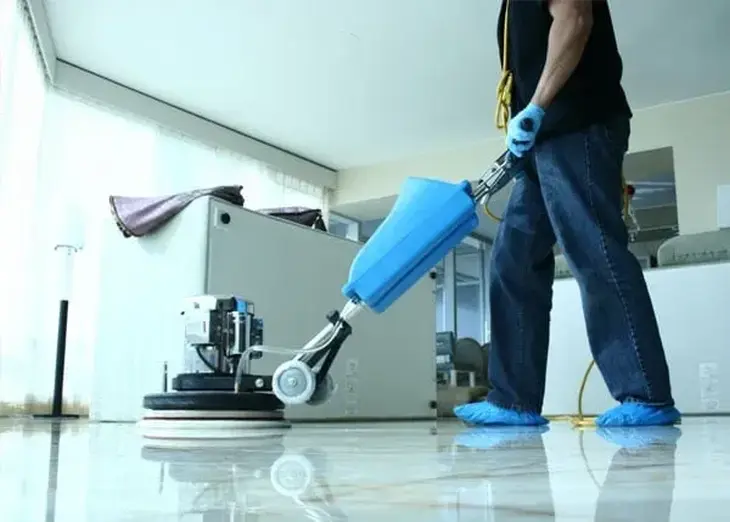
While DIY polishing works well, some situations require expert help:
- Deep scratches or etching.
- Large areas of dull, damaged marble.
- Antique or luxury marble that needs expert handling.
For such cases, services from DubaiClean ensure professional-grade results with specialized equipment and safe agents.
Extra Care Tips for Dubai Homes
- Place rugs/mats near entryways to reduce dust.
- Clean spills immediately to prevent stains.
- Avoid dragging furniture across marble floors.
- Use marble-safe sealants annually for extra protection.
FAQs on Polishing Marble Without a Machine
Final Thoughts
Marble floors can be polished beautifully at home without the need for heavy machines. With a little time, the right cleaning agents, and gentle techniques, you can restore the natural shine of your marble and keep your Dubai home looking elegant.
Still, when marble floors face deep stains or heavy dullness, professional services provide a safe and long-lasting solution. By combining regular DIY care with occasional professional maintenance, your marble floors will continue to sparkle for years to come.