


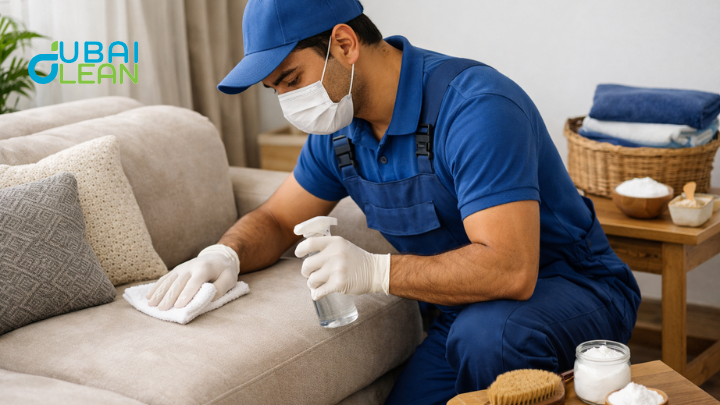
Many Dubai households prefer manual sofa cleaning because apartment living often comes with noise restrictions, limited space, and the need for quick, low-disruption maintenance. While online DIY hacks may seem convenient, random methods especially those using excess water or mixed chemicals can damage fabric, trap moisture, and negatively affect indoor air quality in air-conditioned homes. Safe sofa care isn’t just about appearance; it directly impacts hygiene, fabric longevity, and family health, particularly for children and allergy-sensitive residents.
1. Understanding Sofa Fabric Before You Clean
Before attempting sofa cleaning at home without equipment, it’s essential to identify the fabric type, as woven, synthetic, natural, and blended materials react differently to moisture and cleaning agents. Dubai’s heat, humidity, and fine dust can weaken fibers or trap dirt, making some sofas unsuitable for wet cleaning. Signs like color bleeding, stiffness, or delicate weaves indicate that aggressive cleaning could cause damage. Simple at-home checks, such as testing colorfastness in a hidden area and feeling the fabric for absorbency and texture, help ensure safe sofa cleaning at home without equipment.
Why Fabric Identification Matters More Than Products
Before attempting any manual cleaning, it’s crucial to identify your sofa’s fabric type, because the wrong approach can cause permanent damage. Woven fabrics, synthetics, natural fibers like cotton or linen, and blended materials each react differently to moisture, friction, and cleaning agents.
Simple At-Home Fabric Safety Checks
Even without specialized tools, you can quickly assess your sofa’s cleaning readiness. Colorfastness can be checked by lightly dabbing a hidden area with a damp cloth if color transfers, wet cleaning may be unsafe. Feeling the fabric can also reveal texture and absorbency, helping you decide whether moisture can be safely applied.
2. Health & Hygiene Risks of Incorrect Sofa Cleaning
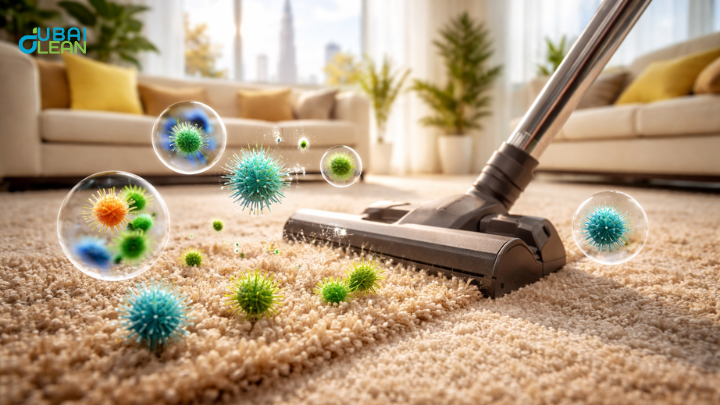
Even sofas that look clean can hide dust mites, skin flakes, and allergens, which are common in Dubai homes due to dust and frequent use. Improper cleaning such as over-wetting or harsh scrubbing can spread bacteria instead of removing it, increasing health risks for children, the elderly, and asthma-sensitive residents. Overusing cleaning chemicals can also harm indoor air quality, leave residues, and cause odors, reducing hygiene and comfort. Using controlled, safe cleaning methods protects both your family’s health and your sofa’s longevity.
Hidden Health Concerns Inside Sofas
Even sofas that appear clean can harbor dust mites, skin flakes, and allergens, which are particularly common in UAE homes due to dust and high occupancy. Using improper cleaning methods like over-wetting, scrubbing harshly, or skipping thorough rinsing can spread bacteria and allergens instead of removing them.
Chemical Overuse Risks in Closed Indoor Spaces
Many people assume that more cleaning products equals better results, but overusing chemicals can be harmful. In air-conditioned Dubai homes, excessive chemicals can linger, affecting indoor air quality and causing odors or sticky residues on fabric. These residues not only reduce hygiene but can also irritate sensitive skin or trigger allergic reactions.
3. Professional-Grade Preparation Without Equipment
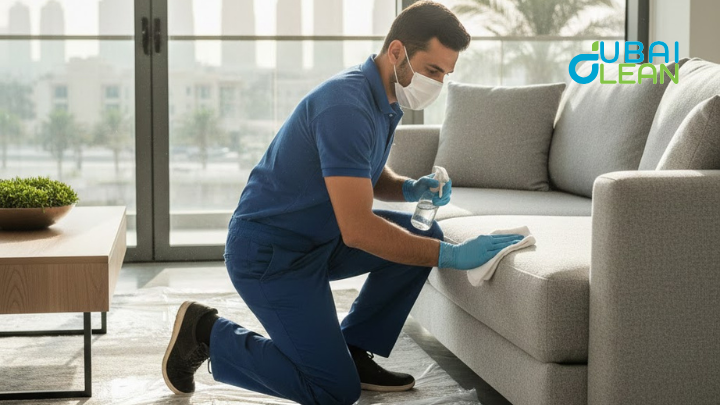
Proper preparation is key to safe, effective sofa cleaning without equipment. Start by removing dust and debris using gentle, fabric-safe motions and separate cushions to ensure even hygiene. Cleaning in the direction of the fabric weave helps preserve texture and prevent damage. Create a safe home environment by ventilating the area, protecting nearby floors and furniture, and choosing the cooler parts of the day to clean, as Dubai’s heat and humidity can affect fabric drying. These steps lay the foundation for a professional-grade, risk-free cleaning process.
Dry Surface Preparation Techniques
Before cleaning, it’s important to remove surface dust and debris using gentle, fabric-safe motions that protect the fibers. Separating cushions allows for even hygiene across all areas, ensuring hidden dust or crumbs don’t remain. Cleaning in the direction of the fabric weave preserves texture and prevents wear, an often-overlooked step in many DIY methods.
Creating a Safe Cleaning Environment at Home
A safe cleaning environment is essential for both your sofa and your home. Make sure the area is well-ventilated to avoid spreading dust, and protect nearby floors and furniture from accidental spills or residues. Additionally, plan cleaning for the cooler parts of the day, as Dubai’s heat and humidity can affect fabric drying and cleaning efficiency. Proper preparation ensures a risk-free, professional-level cleaning result.
4. Safe Manual Sofa Cleaning Methods Used by Professionals
Safe manual sofa cleaning relies on low-moisture techniques that protect the fabric and structure. By gently refreshing the surface, professionals remove dust and light stains without soaking the material, preventing shrinkage or warping. Maintaining fabric tension ensures the sofa keeps its shape and durability over time. These controlled, minimal-moisture methods are especially important in Dubai’s heat and humidity, where over-wetting can damage the fibers. The result is a clean, hygienic sofa without risking structural or fabric harm.
Low-Moisture Fabric Refreshing Techniques
Using minimal moisture is essential to protect the sofa’s structure and prevent fabric shrinkage or warping. Professionals focus on surface-level sanitation, gently removing dust, dirt, and light stains without soaking the material. Preserving fabric tension ensures the sofa maintains its shape and durability over time, while still achieving a clean, hygienic surface. These controlled, low-moisture methods are particularly effective in Dubai homes, where heat and humidity can make over-wetting risky.
5. Maintaining Hygiene Without Overcleaning
Maintaining sofa hygiene without overcleaning is key to preserving both fabric and indoor health. Overcleaning can weaken fibers, while neglect allows dust, allergens, and bacteria to build up especially in Dubai’s dusty environment. Light cleaning weekly, with deeper refreshes every few months, helps maintain cleanliness. For persistent stains or odors, professional intervention is safer than aggressive home methods. Using neutral odor control instead of fragrances protects family health and keeps the sofa fresh without chemical risks.
How Often Is Safe for Manual Sofa Cleaning?
Finding the right cleaning frequency is essential to protect both fabric and hygiene. Overcleaning can weaken fibers, while neglect allows dust, allergens, and bacteria to accumulate. In Dubai, the frequent dust cycles make weekly light cleaning ideal, with deeper refreshes every few months. Watch for signs like persistent stains, odors, or fabric stiffness.
Odor Control Without Artificial Fragrances
Masking odors with fragrances may temporarily hide smells but can pose health risks, especially for children or allergy-sensitive residents. Professionals prefer neutralization techniques that eliminate odors without harmful chemicals. Ensuring proper ventilation and using safe, natural solutions helps maintain a fresh, safe indoor environment, protecting both family health and sofa integrity.
6. When Home Cleaning Is Not Enough
Sometimes, home cleaning isn’t enough to keep your sofa safe and hygienic. Persistent odors, skin irritation, fabric stiffness, or mold growth are signs that professional cleaning is needed. Delaying intervention can increase health risks for children, elderly family members, and allergy-sensitive residents, while also accelerating fabric damage. In Dubai’s dusty and humid environment, timely professional care ensures your sofa remains clean, safe, and durable for the long term.
Warning Signs Your Sofa Needs Professional Help
Sometimes, home cleaning isn’t enough to maintain hygiene and fabric health. Persistent odors, skin irritation after use, fabric stiffness or discoloration, or signs of mold in humid areas are clear indicators that professional intervention is necessary. Ignoring these issues can worsen allergens and bacteria accumulation, posing health risks for families.
Health-First Decision Making for Families
Delaying professional sofa cleaning may save time or money initially, but it can increase health risks and accelerate fabric wear and damage. For families in Dubai, where dust, humidity, and frequent use are common, choosing timely professional care ensures both long-term fabric longevity and a safe, hygienic indoor environment.
Conclusion
Cleaning your sofa at home without equipment can be both safe and effective when proper care is taken to prioritize health, hygiene, and fabric protection. By using professional-inspired, low-moisture techniques and fabric-safe methods, you can maintain a clean and comfortable sofa without causing damage. Making informed, cautious decisions rather than following risky online shortcuts or overusing chemicals protects your family from allergens, bacteria, and indoor air hazards. This approach also preserves the durability and appearance of your sofa over time.