


Maintaining hygienic washrooms in Dubai restaurants is a critical business responsibility, as poor sanitation can lead to Dubai Municipality fines, negative reviews, and lost revenue. Strict local regulations require regular disinfection, proper ventilation, and waste management to prevent odors, bacteria, and other hazards. This article explores the causes of washroom odors, associated health and compliance risks, and how professional deep cleaning can keep restaurants safe, compliant, and trusted by customers.
1. Why Washroom Sanitation is Critical for Restaurants
Washroom sanitation in restaurants goes beyond appearances, it directly affects health, safety, and customer trust. Poorly maintained washrooms can harbor bacteria, viruses, and mold, which may spread to dining and food preparation areas, increasing the risk of foodborne illnesses and infections.
Customer perception is equally important. Even if the dining area is spotless, a dirty or foul-smelling washroom can erode trust, leading to negative reviews on platforms like Google and Zomato. Dubai Municipality inspections require washrooms to be free of odors, grime, and bacteria, and non-compliance can result in fines, warnings, or temporary closures, making proper sanitation a critical regulatory and business requirement for restaurant owners.
2. Common Causes of Washroom Odors & Poor Sanitation
Understanding the root causes of washroom odors and poor sanitation is essential for maintaining a safe and compliant restaurant environment in Dubai. Several factors contribute to persistent hygiene issues:
Accumulation of Bacteria, Mold, and Biofilm
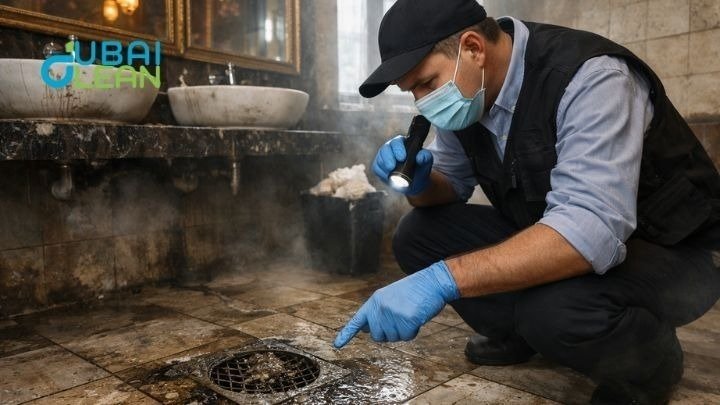
Over time, moisture and organic residues in drains, tiles, and grout can lead to the growth of bacteria, mold, and biofilm. These microorganisms are often the primary source of persistent odors, and they can also contaminate surfaces, posing health risks to both staff and customers. According to professional cleaning standards, deep sanitation of drains and tiles is necessary to eliminate these hidden hazards rather than just masking odors with air fresheners.
Inadequate Cleaning Schedules or Staff Training
Restaurants that rely solely on daily staff cleaning may face recurring sanitation problems. Improper techniques or insufficient training can leave behind bacteria and waste, allowing odors to return quickly. Dubai Municipality emphasizes staff competence and proper cleaning protocols as part of inspection compliance, highlighting the importance of both frequency and quality in washroom maintenance.
Poor Ventilation and High Foot Traffic
Washrooms in busy restaurants often suffer from insufficient ventilation, trapping moisture and odors. High foot traffic accelerates the buildup of germs and makes it difficult for standard cleaning to keep up. Experts recommend proper air circulation systems and periodic deep cleaning to maintain hygiene standards and minimize odors effectively.
Temporary Fixes vs. Root-Cause Solutions
Temporary fixes only mask odors, while root-cause solutions like professional deep cleaning eliminate bacteria and biofilm for lasting hygiene and compliance.
| Approach | Description | Effectiveness |
| Temporary Fixes | Use of air fresheners, surface wipes, or quick cleaning methods | Only masks odors; does not remove bacteria or biofilm |
| Root-Cause Solutions (Deep Cleaning) | Professional deep cleaning targeting drains, tiles, biofilm, and bacterial buildup | Eliminates underlying problems; ensures long-lasting results and regulatory compliance |
3. Consequences of Poor Washroom Sanitation in Dubai Restaurants
Poor washroom sanitation in Dubai restaurants goes beyond unpleasant odors, it poses significant health, regulatory, reputation, and financial risks. Unsanitary washrooms harbor bacteria, viruses, and foodborne pathogens, which can spread to dining and kitchen areas, increasing the likelihood of illness outbreaks, customer complaints, and legal claims. Dubai Municipality enforces strict hygiene standards, conducting thousands of inspections annually. Non-compliance can result in fines, warnings, or temporary closures, and historical data shows that many establishments face penalties when sanitation standards are not met.
Reputation and financial impacts are equally critical. Dirty or foul-smelling washrooms can trigger negative online reviews, social media complaints, and reduced customer retention, damaging a restaurant’s local reputation in a review-driven market like Dubai. Financially, poor sanitation can lead to lost revenue, fines, and indirect legal costs, while unhappy customers may choose competitors. Addressing sanitation proactively protects health, compliance, reputation, and profitability.
4. How Professional Restaurant Deep Cleaning Solves These Problems
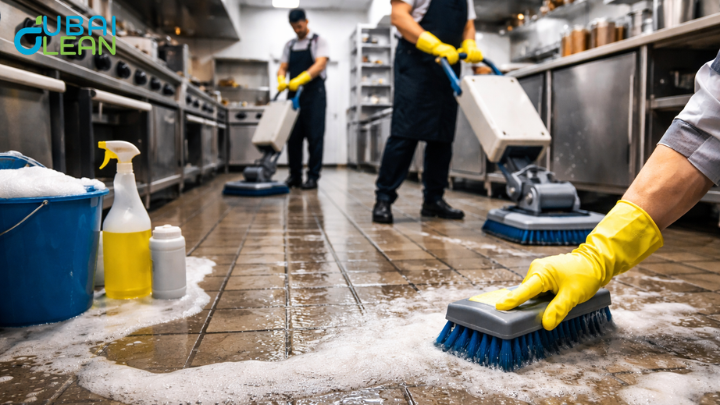
When washroom sanitation issues persist, professional restaurant deep cleaning is the most effective solution. Unlike daily staff cleaning, which often only masks odors, professional deep cleaning eliminates bacteria, mold, and biofilm at the source, ensuring lasting hygiene and compliance.
Deep Cleaning Benefits
- Odor Removal: Eliminates the root causes of foul smells rather than temporarily masking them.
- Bacteria & Pathogen Elimination: Targets harmful microorganisms on drains, tiles, partitions, and fixtures, reducing health risks.
- Compliance Assurance: Ensures adherence to Dubai Municipality hygiene standards, helping restaurants avoid fines, warnings, or closures.
Process Highlights
Professional services typically include:
- Drain sanitation: Clearing biofilm and trapped debris that harbor bacteria and odors.
- Tile and partition cleaning: Deep scrubbing of grout lines and walls for long-term cleanliness.
- Ventilation cleaning: Removing trapped moisture and preventing odor buildup.
- Use of approved disinfectants: Food-safe chemicals compliant with Dubai health regulations to ensure effective sanitation without compromising safety.
5. Best Practices for Maintaining Washroom Sanitation
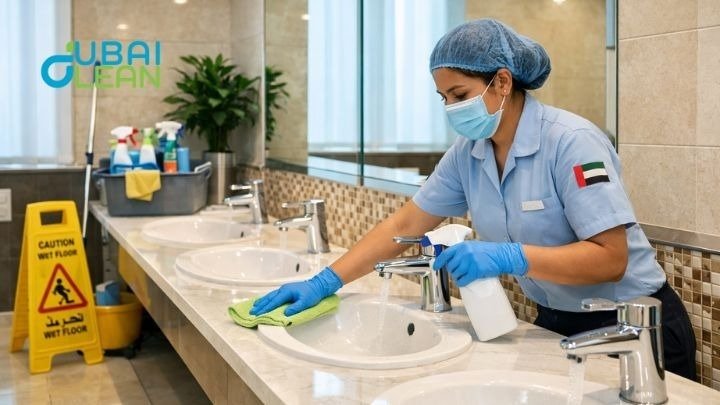
Maintaining a clean and hygienic washroom is an ongoing responsibility that extends beyond daily cleaning. Routine staff cleaning is essential for wiping surfaces, restocking supplies, and keeping floors dry, but it cannot fully eliminate bacterial buildup, biofilm, or persistent odors. Scheduling professional deep cleaning on a regular basis quarterly or bi-annually depending on traffic addresses these issues at the root. Proper ventilation, plumbing inspections, and odor prevention measures such as clean exhaust fans or dehumidifiers further ensure washrooms remain fresh and hygienic.
Equally important is staff training and monitoring, which equips employees to follow proper cleaning techniques, maintain hand hygiene, and detect early signs of odor or bacterial growth. Aligning cleaning schedules with Dubai Municipality-approved hygiene standards ensures compliance and demonstrates a commitment to health, safety, and customer trust. By combining routine cleaning, professional deep cleaning, effective ventilation, and trained staff, restaurant owners in Dubai can maintain consistently hygienic washrooms, minimize odors, and reduce the risk of fines or negative reviews.
6. Conclusion
Maintaining clean and hygienic washrooms in Dubai restaurants is more than just aesthetics; it is essential for health, regulatory compliance, reputation, and financial stability. Poor sanitation can expose customers and staff to bacteria and pathogens, lead to fines or warnings from Dubai Municipality, damage your restaurant’s reputation through negative reviews, and result in lost revenue or legal issues.
For restaurants in Dubai’s highly competitive and regulated market, proactive measures are crucial. Regular professional deep cleaning, combined with daily staff maintenance, proper ventilation, and trained personnel, ensures washrooms remain odor-free, hygienic, and compliant with local health standards. Following Dubai Municipality Food Safety guidelines protects customers while safeguarding your business. Taking action before complaints or inspection failures occur helps maintain safety, compliance, and trust, reinforcing your restaurant’s reputation in Dubai’s thriving dining industry.