


Wallpaper is a timeless way to add personality, color, and texture to your home walls. But nothing ruins a beautifully designed room faster than peeling edges in wallpaper. If you live in Dubai, the hot, humid climate combined with dust and occasional moisture can make your wallpaper edges lift, bubble, or curl over time. In this guide, we’ll explore why wallpaper edges peel, how to fix them effectively, and what preventive measures you can take to enjoy flawless walls for years.
1. Why Do Wallpaper Edges Peel?
Peeling wallpaper edges are not just a cosmetic issue; they often indicate underlying problems with installation, materials, or environmental conditions. Understanding the causes can help you prevent further damage and maintain flawless walls.
Poor Adhesive Quality
If the adhesive used during wallpaper installation is of low quality or has dried out over time, it may fail to hold the wallpaper firmly against the wall. In Dubai’s humid climate, some adhesives lose their effectiveness faster, causing edges to lift or curl. Even self-adhesive wallpapers can weaken, especially if applied incorrectly or on uneven surfaces.
Humidity and Moisture
Moisture is one of the most common reasons for wallpaper edges peeling. Bathrooms, kitchens, and areas exposed to occasional water leaks are particularly vulnerable. High humidity levels in Dubai can weaken the adhesive bond and make the wallpaper susceptible to bubbling, lifting, or curling along the edges.
Improper Wall Preparation
A wall that isn’t cleaned, primed, or smoothed before wallpaper installation can prevent proper adhesion. Dust, oil, or leftover paint can create barriers between the adhesive and the wall surface. Additionally, textured or uneven walls may cause certain areas of the wallpaper to lift, resulting in peeling edges over time.
2. How to Fix Peeling Edges in Wallpaper
Fixing peeling edges in wallpaper is easier than replacing the entire wall covering, especially when addressed early. With the right tools, techniques, and a little patience, you can restore your wallpaper to its original flawless appearance. Follow these expert tips to repair the peeling edges effectively and ensure they stay secure for years.
Inspect and Assess the Damage
Before attempting any repairs, it’s crucial to carefully inspect the affected areas. Check for edges that are curling, lifting, or forming bubbles, and determine whether the problem is localized or widespread. Look for any signs of moisture or underlying wall damage, as these issues must be addressed to prevent future peeling. By assessing the severity of the damage, you can decide whether a small touch-up will suffice or if a larger repair is needed.
Clean the Area Thoroughly
Once you’ve assessed the peeling, the next step is to prepare the surface for repair. Gently clean the wall and the wallpaper edge using a damp cloth to remove dust, dirt, or grease that could interfere with adhesion. For kitchen or high-traffic areas, use a mild soap solution to eliminate stubborn residues. Be careful not to oversaturate the wallpaper, as excess moisture can further loosen the adhesive.
Apply Adhesive and Secure the Edge
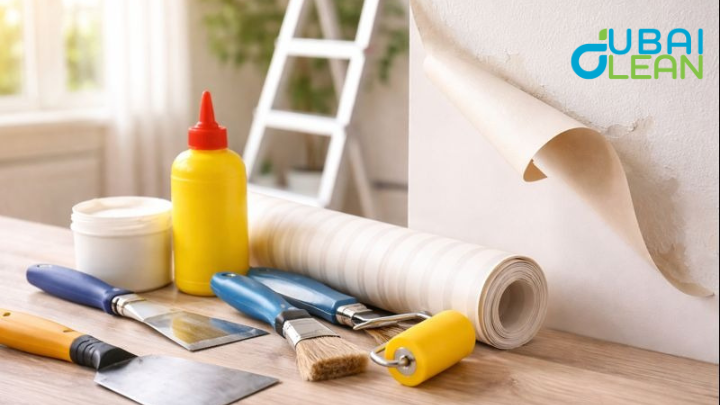
After cleaning, carefully lift the peeling edge using a flat spatula or a butter knife, and apply a high-quality wallpaper adhesive underneath. Press the edge firmly back into place, smoothing out any air bubbles with a clean cloth or a wallpaper roller. For optimal results, you can use masking tape or light weights to hold the edge in position while the adhesive dries. Allow at least 24 hours for the repair to set completely.
3. DIY vs Professional Wallpaper Repair in Dubai
When wallpaper edges start peeling, Dubai homeowners often wonder whether to fix it themselves or hire a professional. Both approaches have benefits, but choosing the right one depends on the severity of the damage, your skills, and the desired finish.
| Aspect | DIY Repair | Professional Repair |
| Cost | Low | Higher |
| Time | Quick for small areas | May take longer but thorough |
| Skill Required | Basic DIY skills | No skills needed, expert finish |
| Durability | Short-term solution | Long-lasting, high-quality |
| Tools Needed | Adhesive, roller, scraper | Professional tools & materials |
4. Common Causes of Peeling Edges in Wallpaper
Understanding why wallpaper edges peel is the first step to preventing damage and maintaining beautiful walls. Several factors, from installation errors to environmental conditions, can contribute to peeling edges.
- Poor Adhesive Quality: Using low-quality glue or incorrect application can cause the wallpaper to lose its grip over time.
- High Humidity and Moisture: Bathrooms, kitchens, and areas with occasional water leaks are especially prone to peeling due to weakened adhesive bonds.
- Improper Wall Preparation: Dusty, oily, or unprimed walls prevent proper adhesion, leading to curling or lifting edges.
- Temperature Fluctuations: Rapid changes in temperature can expand or contract wallpaper materials, causing seams to separate.
- Sunlight Exposure: Direct sunlight can dry out adhesive and fade wallpaper, making edges more likely to lift.
Conclusion
Peeling edges in wallpaper can be frustrating, but with the right knowledge, it’s entirely fixable. Proper wall preparation, moisture control, and timely repairs can keep your wallpaper looking fresh and elegant for years. For Dubai residents looking for hassle-free, professional wallpaper repair and cleaning services, DubaiClean provides expert solutions tailored to your home’s needs. Don’t let peeling wallpaper ruin your interiors now and enjoy flawless walls!