


Wallpaper adds elegance, texture, and personality to any space especially in Dubai, where luxury interiors are a trend, not a rarity. But even the most beautifully applied wallpaper can begin to peel, bubble, or come loose over time due to humidity, poor adhesion, or structural settling.
If you’ve noticed corners lifting or seams parting, don’t panic. Whether you live in a stylish apartment in Downtown Dubai or a spacious villa in Jumeirah, this guide walks you through exactly how to fix wallpaper that is coming off, prevent it from happening again, and maintain a flawless finish.
Common Reasons Wallpaper Starts Coming Off
Understanding why wallpaper detaches is half the solution.
| Cause | Explanation |
| High humidity | Moisture in the air loosens wallpaper adhesive (common in Dubai bathrooms) |
| Poor surface prep | Dust, dirt, or uneven walls prevent strong initial adhesion |
| Low-quality glue or paste | Some wallpapers are applied with weak or improper adhesives |
| Temperature fluctuations | Air conditioning on/off cycles cause expansion and contraction |
| Water damage | Leaky pipes or windows lead to bubbling and peeling |
| Time and age | Adhesive loses strength over time especially in older properties |
What You’ll Need to Fix Peeling Wallpaper
Here’s a list of tools and supplies you may need to repair wallpaper effectively:
- Wallpaper adhesive or glue (preferably clear or made for the type of wallpaper)
- Small paintbrush or artist brush
- Seam roller or a clean, dry cloth
- Wallpaper smoothing tool or plastic scraper
- Sponge and clean water
- Utility knife (optional)
- Small bowl for mixing paste (if powdered)
Optional: Blow dryer or heat gun (on low) to soften stubborn old glue.
How to Fix Wallpaper That’s Coming Off (Step-by-Step)
Step 1: Identify the Problem Area
Is the wallpaper:
- Peeling from a corner or edge?
- Bubbling in the middle of a panel?
- Separating at a seam?
Each issue might need slightly different attention.
Step 2: Gently Lift the Loose Section
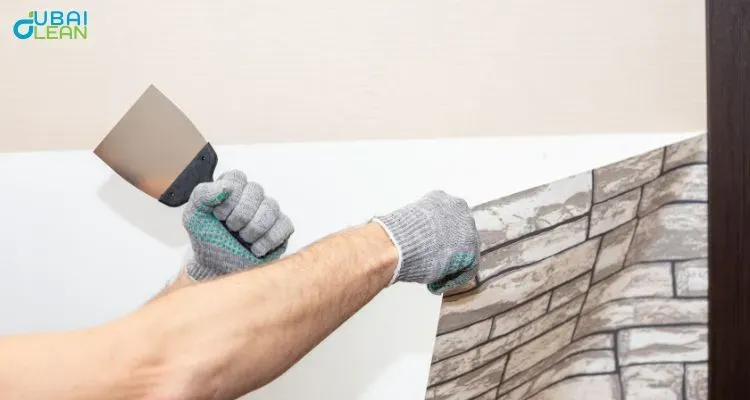
- Use your fingers or a plastic scraper to lift the peeling section carefully without tearing.
- Don’t yank – be slow and deliberate.
- For seams, just open the gap slightly enough to access the area beneath.
Dubai Tip: In warm weather, the wallpaper may be more pliable – don’t attempt in extreme cold (like under heavy air conditioning), as that can cause cracking.
Step 3: Clean the Wall Behind the Lifted Area
Before reapplying adhesive, ensure the wall underneath is clean and dry.
- Use a damp sponge to wipe away any old glue, dust, or debris.
- Let it fully dry, this is critical in humid Dubai bathrooms or kitchens.
Step 4: Apply Wallpaper Adhesive
- Use a small brush to apply a thin, even layer of adhesive to the back of the lifted wallpaper and directly onto the wall.
- Don’t overdo it, excess glue can create wrinkles or leaks.
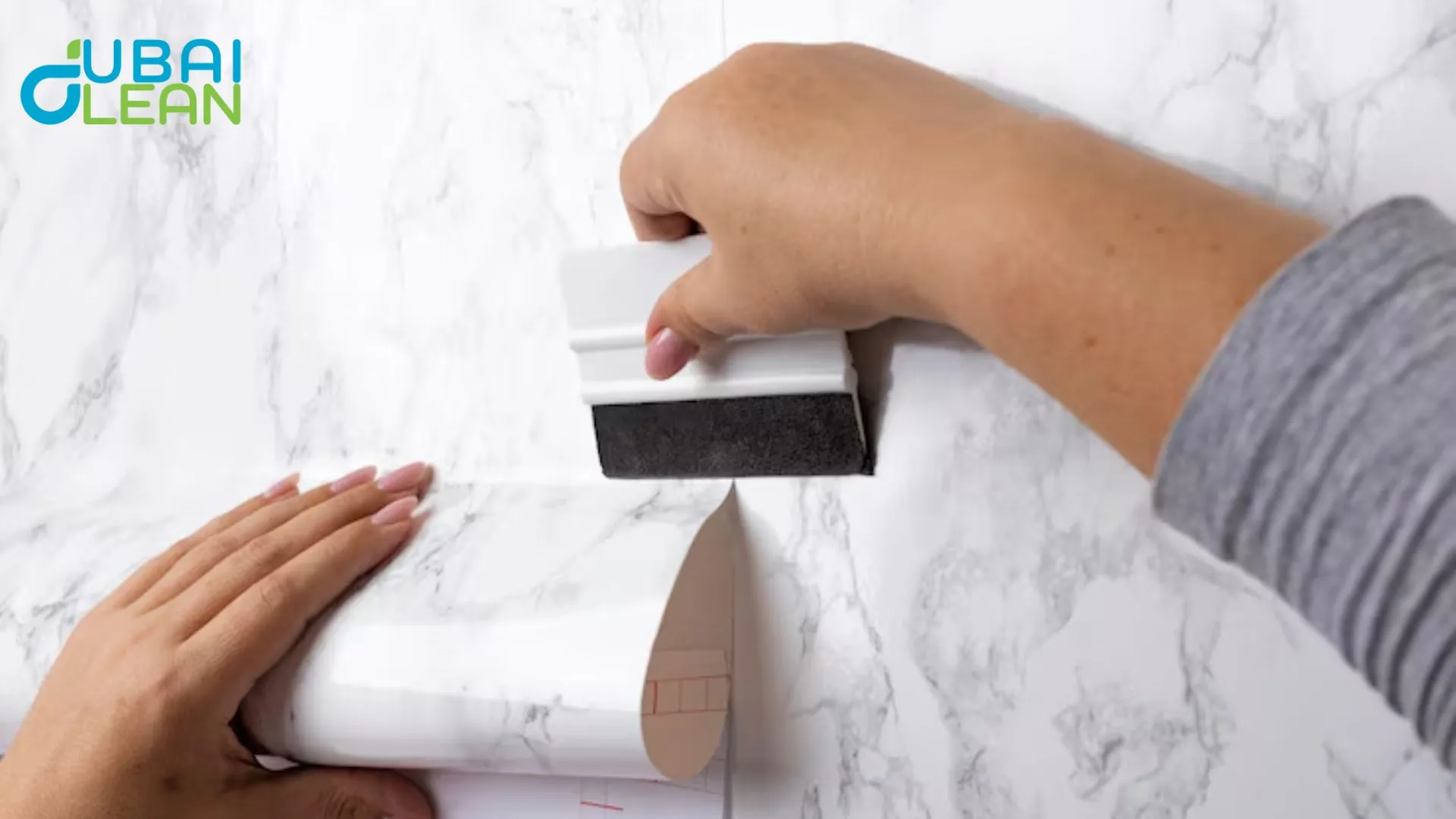
Step 5: Press and Smooth the Wallpaper
- Gently press the paper back into place, starting from the center and working outwards to remove air bubbles.
- Use a seam roller or dry cloth to firmly seal the edges.
- For seams, run the roller gently over the line to blend it smoothly.
Step 6: Wipe Away Excess Glue
- Use a clean damp sponge to immediately wipe away any glue that oozes from the sides.
- Don’t scrub; dab softly to avoid damaging the design.
Step 7: Let It Set
- Allow at least 12–24 hours for the glue to fully bond.
- Avoid using air conditioning, exhaust fans, or opening windows directly on that wall for a day.
Common Wallpaper Repair Scenarios & Solutions
| Problem | Fix |
| Corner lifting | Clean, apply adhesive, smooth with cloth, and hold in place with tape |
| Seam separation | Apply glue to both sides and press with seam roller |
| Large air bubbles | Puncture with a pin, inject glue using a syringe, and press flat |
| Wrinkled wallpaper | Gently lift, reapply glue, and smooth out (if paper isn’t damaged) |
| Damaged or torn section | Consider patching with a leftover roll or move furniture to hide it |
Wallpaper Repair Tips for Dubai Residents
Dubai’s climate creates unique conditions that can accelerate wallpaper issues. Here are local-specific tips:
Ventilate Regularly
- Especially after showers or mopping, keep bathrooms and kitchens ventilated to reduce moisture buildup.
Avoid Harsh Chemicals
- Clean wallpapered walls with mild, non-abrasive cleaners, harsh chemicals weaken glue.
Choose Wallpaper Wisely
- For high-moisture areas, opt for vinyl or moisture-resistant wallpaper, especially in villas and kitchens.
Schedule Regular Inspections
- Like cleaning AC filters, check corners and seams monthly for signs of peeling.
What NOT to Do When Fixing Wallpaper
| Don’t | Why It’s a Problem |
| Use random glue (e.g., wood glue) | May stain or damage wallpaper |
| Skip wall cleaning | Dust or grime prevents adhesive from bonding |
| Press too hard with scraper | Can stretch or rip delicate wallpaper |
| Overload with glue | Leads to bubbling and seeping |
| Ignore moisture issues | Problem will keep coming back |
When to Call a Professional
While many peeling issues are DIY-fixable, you should consider calling experts if:
- The peeling is extensive or involves multiple walls
- The wallpaper is expensive, antique, or custom-designed
- There’s water damage or mold behind the wallpaper
- You need to remove and reapply entire panels
Professional repair ensures the integrity of the design is maintained without risk of further damage.
FAQs
Conclusion
Wallpaper can elevate the look of any room but peeling or bubbling can quickly spoil the effect. Fortunately, with the right tools and techniques, you can easily repair minor issues and extend the life of your wallpaper.
If you notice signs of deeper damage, humidity issues, or large-scale detachment, it’s always wise to consult professionals, who understand the unique challenges of Dubai interiors and climate.Take the right steps now, and your walls will stay flawless and fabulous for years to come.