


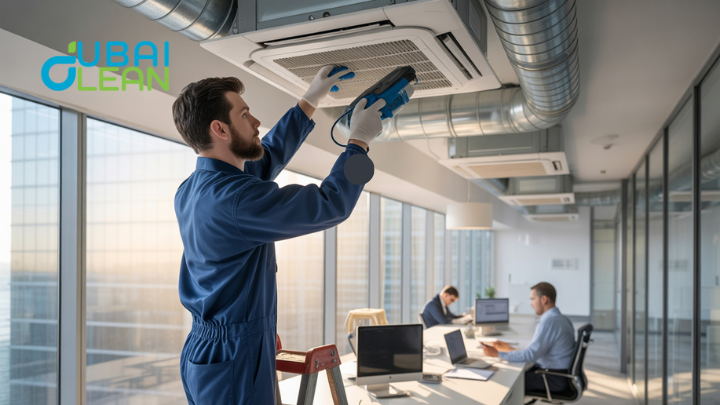
In Dubai’s hot and humid climate, office HVAC systems can harbor hidden mold on coils, ducts, and vents, posing serious health risks like allergies, asthma, and fatigue that reduce employee productivity. Proactive identification and professional cleaning are essential to protect employee health, improve AC efficiency, prevent costly repairs, and maintain a safe, comfortable workplace.
1. Understanding HVAC Mold: What It Is and Why It Grows
HVAC mold is the growth of fungi within heating, ventilation, and air conditioning systems, commonly developing on evaporator coils, air ducts, vents, and drip pans where moisture and dust accumulate. Often invisible to the naked eye, this mold releases spores into the air, quietly compromising indoor air quality and putting employee health at risk. Prolonged exposure can lead to allergies, respiratory irritation, and general discomfort, making it a serious concern for office environments.
In Dubai offices, several factors accelerate mold growth. The city’s high humidity, combined with consistently air-conditioned interiors, creates condensation on AC components, ideal conditions for mold to thrive. Poor ventilation in older or tightly sealed buildings traps moisture and stale air, while irregular AC maintenance, such as skipped coil cleaning or neglected duct inspections, allows mold colonies to grow unchecked. These hidden spores circulate throughout the office, affecting workspaces and contributing to sick building syndrome, highlighting the critical need for regular inspections and professional mold neutralization to maintain a safe and healthy workplace.
2. Health Implications for Employees
Mold in office HVAC systems doesn’t just affect equipment it directly impacts employee health. Exposure can trigger allergies, respiratory issues, fatigue, and other symptoms that reduce productivity and workplace well-being.
Common Health Issues from HVAC Mold
Exposure to mold in HVAC systems can directly affect employee health, causing sneezing, nasal congestion, itchy eyes, asthma flare-ups, fatigue, and persistent headaches. In more severe cases, prolonged exposure may lead to long-term respiratory problems, such as chronic bronchitis or worsening of pre-existing conditions, making it a serious concern for workplace wellness.
Impact on Productivity and Workplace Safety
In commercial offices, these health effects have significant YMYL implications. Employee well-being is closely tied to productivity, absenteeism, and compliance with Dubai’s workplace safety regulations. Ignoring hidden mold not only jeopardizes individual health but also increases operational disruptions, financial loss, and potential reputational damage for businesses.
Importance of Proactive Monitoring and Standards Compliance
Global health authorities and indoor air quality standards emphasize that mold in workspaces should be treated as a serious hazard. The World Health Organization highlights that damp indoor environments with mold contribute to respiratory illnesses and allergies, underscoring the need for proactive monitoring and remediation. Dubai-specific building maintenance standards further recommend regular AC inspections and cleaning to maintain indoor air quality, protect employee safety, and ensure a productive, comfortable work environment.
3. Identifying Signs of Mold in Office HVAC Systems
Musty or Unpleasant Odors: A persistent musty smell coming from air vents or directly from the air conditioning units is often the first indicator of hidden mold growth. Even if the office appears clean, this odor signals that moisture and fungal colonies may be present inside the system.
Uneven Cooling or Frequent AC Breakdowns: Mold and debris buildup on evaporator coils and ducts can restrict airflow, causing some areas of the office to feel warmer or cooler than others. Frequent AC malfunctions or reduced efficiency may indicate that the system is compromised and requires professional cleaning.
Visible Mold Growth: In some cases, mold may be visible near duct openings, vents, or drip pans. Dark spots, fuzzy patches, or discoloration around AC components are clear signs that mold remediation is needed.
Sick Building Syndrome Symptoms: Employees may experience recurrent allergies, headaches, fatigue, or respiratory irritation without a clear cause. When multiple staff members report similar symptoms, it may indicate that indoor air quality is being affected by hidden mold in the HVAC system.
4. The Risks of Ignoring HVAC Mold in Dubai Offices

Neglecting mold growth in office HVAC systems can have serious consequences for both employee health and business operations. In Dubai’s commercial environment, these risks are heightened due to the city’s hot and humid climate, which accelerates mold proliferation.
- Increased Absenteeism and Decreased Productivity: – Employees exposed to mold may suffer from allergies, respiratory irritation, fatigue, and headaches, leading to frequent sick days and lower overall productivity. Over time, this can affect project timelines, client satisfaction, and workplace morale.
- Escalating Maintenance and Repair Costs – Mold and debris accumulation on AC coils, ducts, and vents reduces system efficiency, causing frequent breakdowns and higher energy consumption. Delaying remediation often results in costly repairs or even full system replacement, making proactive maintenance far more economical.
- Potential Liability Under UAE Workplace Health Regulations – Dubai office managers and facility owners are responsible for providing a safe working environment. Ignoring HVAC mold could violate workplace health and safety regulations, exposing businesses to fines, legal action, or reputational damage.
- Long-Term Impact on Air Quality and Office Reputation – Persistent mold issues lead to poor indoor air quality, which not only affects health but also tarnishes the company’s image. Employees, clients, and visitors may associate the workspace with unhygienic or unsafe conditions, undermining trust and confidence in the organization.
5. Benefits of Mold-Free HVAC Systems for Dubai Offices
Maintaining a mold-free HVAC system provides Dubai offices with numerous benefits, from improving employee well-being to enhancing operational efficiency. A clean system prevents the circulation of mold spores and allergens, reducing the risk of allergic reactions, respiratory irritation, and sick building syndrome, while creating a safer and more comfortable work environment. Additionally, removing mold and debris from AC coils and ducts optimizes airflow and cooling performance, lowering energy consumption and utility costs, a crucial advantage in Dubai’s hot climate.
Regular HVAC maintenance and professional mold neutralization also help offices comply with UAE workplace safety and health regulations, reducing legal risks and demonstrating responsible facility management. A healthy, well-ventilated workspace improves employee focus, efficiency, and morale, fostering higher productivity and overall workplace satisfaction. By investing in professional HVAC mold management, Dubai offices safeguard employee health while achieving long-term operational and financial benefits, making it an essential part of sustainable facility management.
6. Conclusion
Mold in office HVAC systems is more than a simple maintenance concern; it presents serious health risks for employees, including allergies, respiratory issues, fatigue, and reduced productivity. Ignoring these hidden problems can also result in higher energy bills, costly repairs, regulatory complications, and potential damage to the office’s reputation.Proactive monitoring, professional mold neutralization, and preventive measures such as regular coil cleaning, duct inspections, and humidity control are essential to maintain efficient AC performance and safeguard employee health. Dubai office managers and facility decision-makers should act promptly, as addressing HVAC mold early protects employee well-being, ensures compliance with regulations, and preserves workplace comfort and productivity.