



In Dubai, AC systems run almost year-round, creating conditions where hidden mold can grow inside ducts due to humidity, dust, and condensation. This mold can circulate spores through indoor air, affecting air quality and potentially causing minor irritation. This guide raises awareness of early signs, health considerations, and practical prevention tips to help residents maintain cleaner, healthier indoor environments.
1. How Mold Grows in AC Ducts
Mold grows in AC ducts when moisture, dust, and organic debris accumulate in areas with poor airflow. In Dubai, long cooling cycles and high indoor humidity create ideal conditions for spores to settle and develop inside ductwork. Understanding these factors helps residents prevent hidden mold problems. Regular inspections and timely maintenance can keep ducts clean and indoor air healthier.
Moisture and Condensation
Temperature differences between cold ducts and warm indoor air cause condensation, providing the moisture mold needs to thrive. Without proper ventilation or regular maintenance, this moisture can remain inside ducts for months. Using dehumidifiers, improving airflow, and scheduling regular AC inspections can significantly reduce mold growth risk.
Dust and Organic Debris as Food Sources
Fine sand, household dust, and dead skin cells accumulate in AC ducts, serving as a food source for mold. Closed indoor environments allow these particles to remain undisturbed, encouraging spore growth. Regular filter changes, duct cleaning, and keeping vents unobstructed help prevent dust buildup and reduce mold development over time.
Poor Airflow and High Humidity
Blocked vents, clogged filters, and low airflow areas create stagnant zones where mold can develop more easily. Dubai’s coastal humidity intensifies condensation, making routine duct inspection essential for maintaining healthy indoor air. Ensuring proper ventilation and scheduling professional AC maintenance helps prevent mold growth and protects family health.
2. Signs of Mold in Air Ducts You Shouldn’t Ignore
Identifying signs of mold in air ducts early can help protect indoor air quality and overall health. Here are the most common indicators to watch for: Paying attention to unusual odors, dust buildup, or changes in airflow can help catch problems before they worsen. Early detection allows timely action, ensuring a healthier living and working environment for everyone.
- Persistent musty or damp smell: A noticeable odor when the AC starts or runs may indicate mold growing inside the ducts.
- Increased dust despite regular cleaning: If dust seems to accumulate faster than usual, mold particles could be circulating in the air.
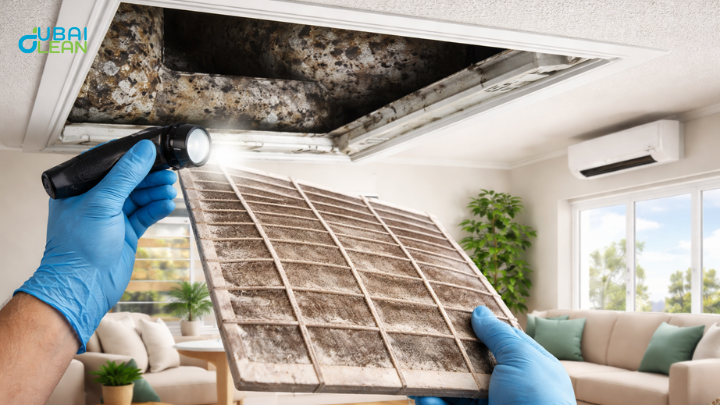
- Visible black or green particles near vents: Small specks around vents or on grilles may be mold colonies forming in the duct system.
- Uneven airflow or blocked vents: Mold growth can partially obstruct ducts, reducing airflow or causing temperature differences between rooms.
- Frequent allergy-like symptoms indoors: Sneezing, itchy eyes, or respiratory irritation that occurs primarily when the AC is running may signal airborne mold spores.
Regularly inspecting vents, filters, and airflow can help detect problems early, before they affect indoor comfort and air quality.
3. AC Duct Mold Health Risks for Families in Dubai
Mold in AC ducts may not always be visible, but it can release spores that circulate through indoor air, potentially affecting residents over time. Understanding these risks helps families maintain a safer home environment, especially in Dubai where AC systems run almost year-round. Regular inspections, proper filter replacement, and timely duct cleaning can reduce exposure and keep indoor air healthier for everyone.
Respiratory Irritation and Allergies
Airborne mold spores can irritate the respiratory tract, causing coughing, throat discomfort, sneezing, itchy eyes, or runny noses. Sensitive individuals, including children and the elderly, may be more affected. Maintaining clean AC ducts, proper ventilation, and regular filter changes can help minimize these health risks indoors.
Worsening Asthma Symptoms
People with asthma may experience more frequent or severe attacks when exposed to mold spores. Early detection and proper duct maintenance can reduce these risks and improve indoor comfort. Scheduling regular AC inspections, cleaning ducts thoroughly, and controlling indoor humidity are essential steps to protect sensitive individuals from mold exposure.
Headaches, Fatigue, and Air Quality
Poor indoor air quality from mold-contaminated ducts may contribute to headaches, fatigue, or difficulty concentrating. Regular inspections and cleaning help maintain healthier air for all occupants. Using high-quality filters, monitoring airflow, and addressing moisture promptly can further reduce mold risks and improve indoor comfort.
This information is for awareness only and is not a medical diagnosis. Consult healthcare professionals if symptoms persist, and ensure ducts are checked by licensed HVAC technicians.
4. Who Is Most at Risk from Mold in AC Ducts?
While mold in AC ducts can affect anyone, certain groups are more sensitive to airborne spores. Being aware of who is most at risk helps residents take precautionary measures without panic. Children, the elderly, and people with respiratory conditions are more likely to experience irritation, so monitoring indoor air quality is essential. Regular maintenance and professional inspections can help minimize exposure and keep living spaces safe for everyone.
- Children and infants: Developing respiratory systems make them more susceptible to irritation from airborne particles.
- Elderly residents: Age-related changes in lung function can make older adults more vulnerable to indoor air contaminants.
- People with asthma or allergies: Individuals with pre-existing respiratory conditions may experience stronger reactions, such as sneezing, itchy eyes, or wheezing.
- Office workers exposed for long hours: Spending extended time in air-conditioned offices with poor duct maintenance increases the chance of repeated exposure to mold spores.
This section is intended to raise awareness about potential risk groups, not to provide medical advice. For persistent symptoms, consulting healthcare professionals and ensuring proper AC duct maintenance are recommended.
5. Why Mold in AC Ducts Is More Common in Dubai Homes
Mold inside AC ducts is a frequent issue in Dubai due to the city’s hot, humid climate and building designs. Long AC usage, limited ventilation, and dust accumulation create ideal conditions for hidden mold growth, making regular maintenance essential. Being proactive with inspections and cleaning helps prevent mold from spreading and keeps indoor air safe for families and office occupants.
Constant AC Usage: Most Dubai apartments, villas, and offices run air conditioning 8–10 months a year. Continuous cooling keeps ducts cold, causing condensation that supports mold growth over time.
High Humidity and Moisture: Coastal humidity and sudden weather changes increase moisture entering AC systems. This provides the perfect environment for spores to settle and grow inside ducts.
Sealed Buildings and Limited Ventilation: Many Dubai buildings are designed to stay closed for energy efficiency. Reduced airflow allows mold spores to recirculate indoors, increasing the risk of exposure.
Dust and Sand Accumulation: Fine sand and dust, combined with skin cells and debris, accumulate in ducts. These particles act as food for mold, making even small amounts of moisture a potential problem.
Regular inspections and cleaning by licensed HVAC professionals are the most effective way to prevent mold from spreading in Dubai home.
6. How Mold Spreads from AC Ducts Into Indoor Air
Mold in AC ducts can silently affect indoor air long before it becomes visible. Understanding how spores spread helps Dubai residents take proactive steps to protect air quality and maintain healthier indoor environments. Check your AC system regularly to catch early signs of mold. Regular duct inspections and proper AC maintenance prevent spores from circulating. Monitoring airflow and dust buildup also ensures safer, cleaner indoor air for families and offices.
Air Circulation Spreads Spores
When the AC runs, air moves through ducts and vents, carrying microscopic mold spores to every connected room. Even small mold colonies can release thousands of spores, which circulate continuously if left unchecked. Maintaining clean ducts, changing filters regularly, and ensuring proper airflow can greatly reduce spore circulation indoors.
Impact on Indoor Air Quality
Airborne spores can create musty odors and reduce overall air quality. Sensitive individuals may notice allergy-like symptoms or mild respiratory irritation when exposed to contaminated indoor air. Poor indoor air quality from mold can worsen fatigue, trigger headaches, and reduce overall comfort for all occupants.
Why Mold Often Goes Unnoticed
Mold typically grows in hidden corners of ducts, away from visible vents or grilles. Without regular inspections or professional maintenance, spores can spread silently throughout indoor spaces. Hidden growth allows spores to circulate daily, making early detection through inspection and maintenance crucial for safe indoor air.
Monitoring airflow, odors, and dust buildup, along with periodic professional duct checks, is the most effective way to limit mold spread and maintain healthier indoor air in Dubai homes and offices.
7. How to Reduce Mold in AC Ducts
Preventing mold in AC ducts is easier when small, consistent steps are followed. Dubai’s hot and humid climate makes proactive care essential for maintaining clean indoor air. Regular monitoring, timely maintenance, and professional inspections help keep ducts mold-free and improve overall indoor comfort. Following simple, practical steps can prevent hidden mold from affecting your family or office environment.
- Maintain proper indoor humidity levels: Keep humidity around 40–50% using dehumidifiers or AC settings to reduce moisture that supports mold growth.
- Replace air filters regularly: Clean or replace filters every 1–3 months to trap dust, sand, and organic debris before they enter the ducts.
- Keep vents clean and unobstructed: Ensure supply and return vents are free from dust buildup or blockages to maintain proper airflow.
- Schedule periodic system inspections: Professional HVAC technicians can identify hidden mold, condensation issues, or duct damage before problems worsen.
- Avoid DIY chemical spraying inside ducts: Spraying chemicals without proper expertise can damage ducts or spread spores further. Professional cleaning is safer and more effective.
Combining these steps with regular monitoring of airflow, odors, and dust accumulation ensures that AC ducts remain mold-free and indoor air stays healthy for all family members.
Conclusion
Maintaining clean indoor air in Dubai starts with understanding the risks of mold in AC ducts and recognizing early warning signs. Awareness helps residents take proactive steps to protect their families and workspaces. Controlling humidity, replacing filters, keeping vents clean, and scheduling regular inspections can significantly reduce mold risks. This guidance is based on recognized HVAC best practices, offering trustworthy advice without medical diagnosis.