


Moisture-damaged wood poses a hidden threat to homes and villas in Dubai, as prolonged exposure to humidity, rain, or leaks can cause warping, cracking, and rot, compromising safety and property value. Ignoring these issues may lead to costly repairs, mold growth, and health risks. Early detection and intervention by certified home inspectors, licensed carpenters, or property maintenance professionals can help identify hidden moisture problems and protect both your investment and family’s well-being.
1. How Moisture Damages Wooden Structures
Wood is naturally porous: which makes it susceptible to water infiltration. When moisture penetrates wooden beams, floors, or furniture, it causes the wood fibers to swell. Over time, repeated cycles of swelling and drying lead to cracking, warping, and weakening of the structural integrity. Prolonged exposure to moisture can also trigger wood rot and fungal growth, further compromising safety.
In Dubai: the combination of high humidity, occasional rain, and indoor condensation intensifies the risk of wood damage. Even modern villas and apartments with climate-controlled interiors are not completely immune, as leaks from plumbing or poorly sealed areas can create localized moisture pockets.
According to building: standards and expert studies, maintaining a moisture content below 12% is critical to preserve wood durability. Certified carpentry and property maintenance professionals recommend regular inspections and the use of moisture-resistant treatments to prevent structural damage. These measures not only extend the lifespan of wooden elements but also protect the overall safety and value of your property.
2. Early Warning Signs of Wood Moisture Damage
Detecting moisture damage early is crucial for protecting both the safety and value of your Dubai home. Visible signs such as warping, discoloration, cracks, and soft spots indicate that wood fibers are weakening. However, some damage remains hidden, posing risks to structural integrity and health. Regular inspections and professional assessments help identify these issues before they escalate.
| Type of Sign | Examples | Recommended Action |
| Visible Signs | Warping or cupping of floors, discoloration, cracks, soft spots | Inspect wooden floors, beams, and furniture monthly |
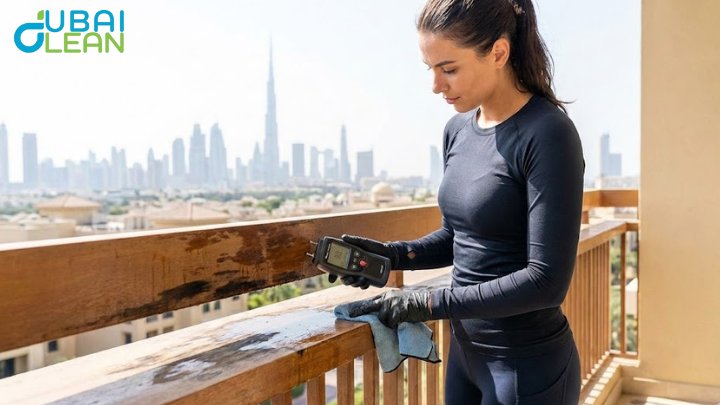
| Hidden Signs | Musty or damp odors, mold/mildew growth, weakening joints | Consult certified building inspectors or maintenance professionals; use moisture meters or infrared scanners |
| Preventive Measures | Regular checks in humid areas, early professional intervention | Schedule inspections and remediate any detected damage promptly |
3. Risks to Home Safety and Property Value
Moisture-damaged wood is more than an aesthetic issue; it directly affects the safety and value of your Dubai property. Weakening of floors, beams, doors, and stairs can lead to structural failures, while hidden damage often encourages mold growth, posing health risks. Ignoring these problems can result in costly repairs, medical issues, and liability concerns. Early detection and professional intervention are essential to protect both your family and your investment.

Safety Hazards
Weakened wooden structures increase the risk of accidents and collapses, especially in high-traffic areas of villas and apartments. Mold growth from moisture-damaged wood can trigger respiratory problems, allergies, and other health issues, making timely assessment and remediation critical for resident safety.
Financial Impact
Moisture-damaged wood can significantly reduce a property’s market value. Buyers in Dubai are cautious about homes with visible or hidden structural damage. Early detection and professional repairs help preserve property value, ensure safer resale, and protect long-term investment in your home.
4. Effective Prevention Strategies
Protecting your Dubai home from moisture-damaged wood requires proactive measures and regular maintenance. Using the right materials, controlling indoor humidity, and scheduling inspections can prevent costly repairs and health hazards. Following expert-recommended strategies ensures both safety and long-term property value.
- Use treated or moisture-resistant wood for new construction and renovations.
- Maintain optimal indoor humidity with air conditioning and dehumidifiers.
- Ensure proper ventilation in bathrooms, kitchens, and enclosed areas.
- Inspect wooden floors, beams, doors, and furniture regularly.
- Address plumbing leaks and water seepage immediately.
- Apply protective coatings or sealants on wooden surfaces.
- Follow Dubai Municipality building guidelines for maintenance.
- Hire certified property maintenance experts for periodic assessments..
5. Cost Implications and Investment Perspective
Real-Life Example: A villa in Dubai Hills showed early signs of wood moisture damage in its floors and beams. The homeowner hired a certified maintenance company for inspection, which cost AED 1,200. Minor repairs and replacement of damaged panels totaled AED 4,000. By addressing the issue promptly, the property avoided more extensive structural damage that could have exceeded AED 15,000, preserving both the home’s safety and its market value.
Conclusion:
Moisture-damaged wood is a hidden threat that can compromise both the safety and value of your home, with warning signs like warping, discoloration, cracks, soft spots, musty odors, and mold growth. Homeowners can reduce risks by using treated wood, maintaining proper humidity, and conducting regular inspections. When damage is detected, consulting certified carpentry and home maintenance professionals in Dubai ensures effective assessment, repair, and long-term protection. Timely action safeguards your property, prevents costly repairs and health hazards, and protects both your investment and family’s well-being.