


A chandelier is more than just a light fixture, it’s often the statement piece of a room, adding elegance and luxury to Dubai’s homes, hotels, and event spaces. But over time, even the most stunning chandelier loses its sparkle under layers of dust, dirt, and grime. The challenge? Cleaning it safely without damaging delicate crystals or risking injury from height-related hazards.
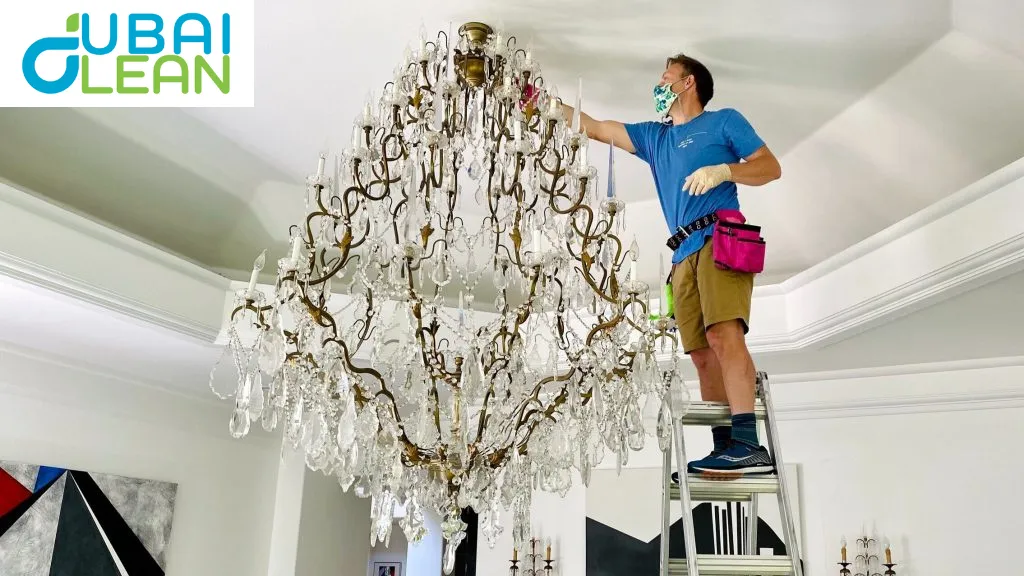
In Dubai, where high ceilings and intricate designs are common, there are generally two primary cleaning approaches: lift access and manual cleaning using ladders or scaffolding. Each method has its pros and cons, and the choice often comes down to safety, efficiency, and the type of chandelier. This guide compares both options to help you decide what’s best for your space, with practical tips to ensure a safe and sparkling result.
Why Chandelier Cleaning Is a Unique Challenge in Dubai
Several factors make chandelier cleaning in Dubai particularly challenging:
- High ceilings in villas, mosques, ballrooms, and lobbies.
- Complex designs with hundreds or even thousands of glass or crystal pieces.
- Climate and dust – fine desert sand can settle quickly on surfaces.
- Hard water stains from air conditioning or humidifiers.
- Lighting safety – handling delicate electrical fittings.
Skipping regular cleaning can dull the chandelier’s brilliance and even shorten its lifespan.
Two Main Approaches to Chandelier Cleaning
1. Lift Access Cleaning
This involves using a mechanical lift (such as a scissor lift, boom lift, or spider lift) to reach the chandelier safely without dismantling it completely.
Pros:
- Reduces strain from awkward positions.
- Stable platform for tools and cleaners.
- Quicker for large chandeliers in open spaces.
Cons:
- Requires space for lift movement.
- May need special permits in commercial settings.
- Higher operational cost.
2. Manual Cleaning (Ladders/Scaffolding)
This traditional approach uses ladders or mobile scaffolding to reach the chandelier.
Pros:
- Lower equipment rental cost.
- Works in tight spaces where lifts can’t fit.
- A familiar method for many cleaners.
Cons:
- Greater risk of falls or instability.
- More physically demanding.
- Slower for very high or large chandeliers.
Quick Safety Comparison
| Factor | Lift Access Cleaning | Manual Cleaning (Ladder/Scaffolding) |
| Fall Risk | Low if used correctly | Higher |
| Physical Strain | Low – platform supports movement | High – extended reaching required |
| Access to All Angles | Excellent | Limited without frequent repositioning |
| Time Efficiency | High | Moderate to low |
| Cost Efficiency | Medium | High for small jobs |
| Space Requirements | Needs room for lift operation | Works in narrow areas |
Safety Risks to Consider
Regardless of the method chosen, chandelier cleaning comes with hazards:
- Height-related accidents – The most obvious risk, especially with tall fixtures.
- Electrical hazards – Live wiring or faulty insulation can cause shocks.
- Crystal breakage – A single slip can damage expensive components.
- Neck and back strain – Awkward angles and prolonged cleaning sessions.
When Lift Access Is the Better Option
Lift access is typically recommended for:
- Chandeliers located over staircases or large foyers.
- Fixtures above 15-20 feet in height.
- Heavy chandeliers that cannot be lowered for cleaning.
- Commercial spaces (hotels, ballrooms, malls) – requiring quick turnaround.
With a lift, cleaners can move around the chandelier at a safe distance without stretching or leaning dangerously.
When Manual Cleaning Makes Sense
Manual methods are better suited for:
- Smaller chandeliers in compact spaces.
- Areas where lifts can’t be maneuvered.
- Quick maintenance cleans rather than deep cleans.
However, strict ladder safety protocols must be followed – always use stabilizers and work with a partner.
Suitability Guide by Chandelier Size and Location
| Chandelier Type/Location | Recommended Method |
| Small (below 10 feet high) | Manual |
| Medium (10–15 feet high) | Manual or Lift |
| Large (15–25 feet high) | Lift |
| Grand (>25 feet high) | Lift |
| Over staircases | Lift |
| Tight hallway or corridor | Manual |
Best Practices for Safe Chandelier Cleaning in Dubai
- Turn Off Power – Always switch off the light and breaker before starting.
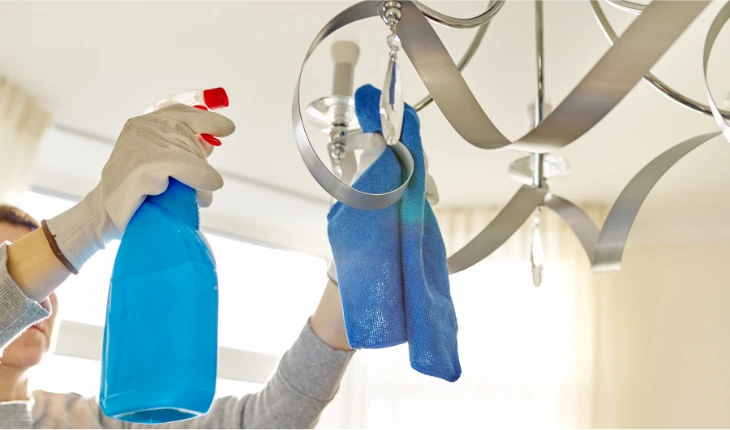
- Use the Right Cleaning Products – Avoid harsh chemicals; use ammonia-free glass cleaner or mild soap solution.
- Work in Sections – Clean one section at a time to avoid confusion or missed spots.
- Wear Protective Gear – Gloves to protect against fingerprints, goggles to guard against dust.
- Secure the Area – Block off the cleaning zone to prevent accidental bumps or interference.
The Dubai Factor: Climate and Maintenance Frequency
Dubai’s dust-heavy environment means chandeliers need more frequent cleaning, typically every 3-6 months, depending on location and usage. High-traffic areas like hotels may require monthly wipe-downs in between deep cleans.
Regular cleaning not only improves the look but also prevents buildup that could make future cleaning riskier and more time-consuming.
DIY vs. Professional Cleaning
While some homeowners attempt chandelier cleaning themselves, the risks- especially at height – make professional cleaning services a safer choice. Skilled teams use specialized lifts, secure harnesses, and proven cleaning techniques to protect both the chandelier and the cleaner. If you’d rather not take chances, you can book a trusted professional who’s experienced in Dubai’s unique conditions.
FAQs
Conclusion
Choosing between lift access and manual chandelier cleaning comes down to safety, accessibility, and the chandelier’s size and placement. For very high or complex fixtures, lift access offers a stable, efficient, and safer option. For smaller or harder-to-reach areas, manual cleaning can work, provided strict safety protocols are followed. In Dubai’s climate, regular cleaning is essential to maintain brilliance and prevent long-term damage. If in doubt, leaving the job to an experienced professional ensures your chandelier shines without putting anyone at risk.