


Keeping water tanks clean is crucial in Dubai’s hot and humid climate, where heat, dust, and sediments can quickly lead to bacterial growth and water contamination, posing health risks such as digestive issues and skin problems. Cleaning a water tank without fully draining it offers the benefits of saving time and water, allowing the tank to remain partially functional, and reducing disruption to daily household use. However, this method must be done carefully, as improper techniques or unsafe chemical use can worsen contamination, making it essential to follow proper cleaning steps and safety precautions to ensure the water stays clean, safe, and hygienic.
1. Understanding Water Tank Contamination in Dubai
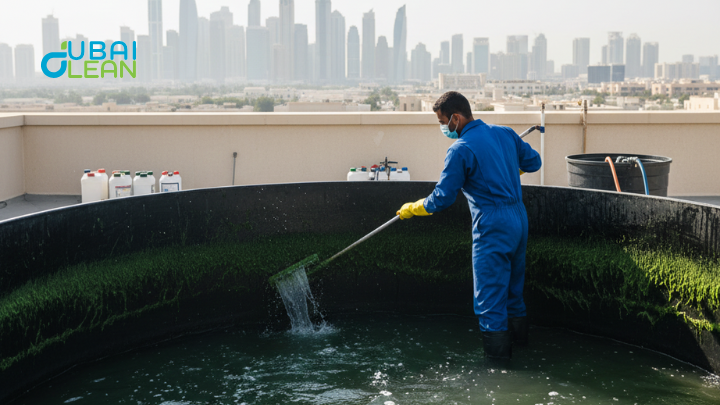
Water tanks in Dubai can easily become contaminated due to environmental factors. Dust, dirt, and debris can enter through openings, while standing water encourages the growth of bacteria, algae, and other microorganisms. Mineral-rich water in the region also contributes to sediment buildup, creating grime at the bottom of tanks. To maintain safe and hygienic water, homeowners should know how to clean a water tank without draining water, which helps remove contaminants without wasting water. Contaminated water can cause digestive issues, skin irritations, foul smells, and unpleasant taste, and it may even damage plumbing and filtration systems.
Sources of Contamination
Water tanks in Dubai are exposed to several contamination sources. Dust, dirt, and debris can enter tanks through openings or during maintenance, while standing water provides an ideal environment for bacteria, algae, and other microorganisms to grow. Additionally, Dubai’s mineral-rich water supply often leads to sediment accumulation at the bottom of the tank, creating layers of grime that are difficult to remove without proper cleaning.
Health Risks of Contaminated Water
Contaminated water tanks can pose serious health risks for households. Exposure to bacteria and algae may cause digestive issues, skin irritations, and other health problems. Foul smells and unpleasant taste make the water unsuitable for drinking, while prolonged contamination can damage plumbing and filtration systems, reducing their efficiency and increasing maintenance costs. Maintaining regular cleaning and proper tank hygiene is essential to ensure safe and healthy water in Dubai homes.
2. Is Cleaning Without Draining Water Safe?
Cleaning a water tank without fully draining it can be safe if done correctly, but it comes with both advantages and risks. It saves time and water while allowing the tank to remain functional during maintenance, making it convenient for Dubai households. However, incomplete cleaning may leave harmful residues, and improper use of chemicals can contaminate the water. Hard-to-reach areas may also harbor bacteria if not scrubbed properly. Following proper cleaning steps and safety precautions is essential to ensure the water stays clean and hygienic.
Advantages
Cleaning a water tank without fully draining it offers several practical benefits. It saves both time and water, reducing unnecessary wastage, and allows the tank to remain partially functional during maintenance, so households can continue using water with minimal disruption. This method is especially convenient in Dubai, where water conservation and efficiency are important in residential and commercial settings.
Potential Risks
However, cleaning without draining also comes with risks. Incomplete cleaning can leave behind harmful residues, while improper use of chemicals may contaminate the water instead of disinfecting it. Additionally, hard-to-reach corners and corners may harbor bacteria if they are not scrubbed properly, which can compromise water quality. To ensure safety, it’s essential to follow proper cleaning techniques and use safe disinfectants.
3. Methods to Clean Water Tanks Without Draining
Cleaning a water tank without fully draining it can be done using several effective methods. Manual scrubbing with brushes or scrubbers removes slime, sediment, and debris from walls and corners. Chemical treatments, such as safe disinfectants or chlorine tablets, can sanitize the water while keeping it in the tank, but proper dosing is essential. For larger tanks, advanced techniques like ultrasonic cleaning or high-pressure systems provide thorough cleaning efficiently. Many professional cleaning services in Dubai use these methods to maintain hygiene without wasting water.
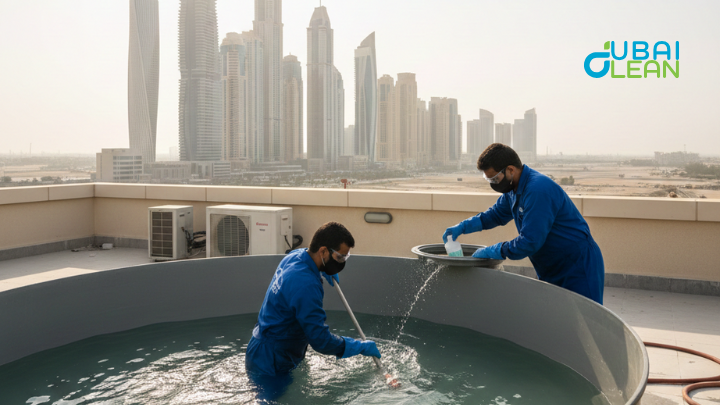
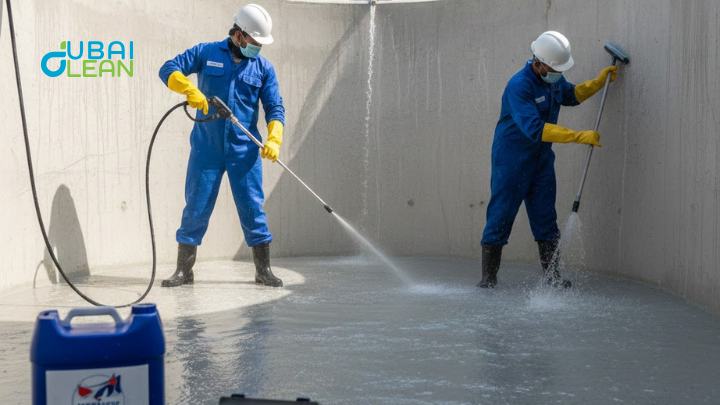
Manual Scrubbing: Manual scrubbing involves using brushes or scrubbers to clean the walls, corners, and bottom of the tank. This method removes slime, sediment, and debris without the need to fully drain the water, making it a simple and cost-effective solution for smaller tanks.
Chemical Treatment: Safe disinfectants or chlorine tablets can be used to sanitize water while keeping the tank partially filled. It is important to follow proper dosing instructions to prevent harmful residues and ensure the water remains safe for household use.
Advanced Cleaning Solutions: For larger tanks, advanced methods like ultrasonic cleaning or high-pressure systems provide thorough and efficient cleaning. Many professional cleaning services in Dubai use these modern techniques to maintain hygiene and save time, even without fully emptying the tank.
4. Safety Precautions
When cleaning a water tank without draining, safety should be a priority. Always wear gloves, masks, and protective clothing to avoid contact with bacteria, algae, or chemicals. Ensure proper ventilation in rooftop or enclosed tanks to prevent inhaling fumes. Handle plumbing and valves carefully to avoid leaks or cross-contamination. Following these precautions helps keep both the water and the cleaner safe during the process.
Protective Gear: Always wear gloves, masks, and protective clothing when cleaning a water tank to avoid direct contact with dirt, bacteria, or chemicals.
Proper Ventilation: Ensure the tank is well-ventilated, especially for rooftop or enclosed tanks, to reduce exposure to fumes from cleaning agents and maintain safety during the process.
Handle Plumbing Carefully: Avoid disturbing plumbing, valves, or connections to prevent cross-contamination and accidental leaks, which can compromise the cleanliness of the water.
5. Step-by-Step Guide to Clean a Water Tank Safely Without Draining
To clean a water tank without draining, start by turning off the water supply and gathering cleaning tools, including brushes and safe disinfectants approved for drinking water. Scrub the tank walls, corners, and bottom thoroughly to remove debris, slime, and sediment. Apply disinfectant carefully and allow it to sit for the recommended time before rinsing while leaving some water inside. After cleaning, check and clean filters, inspect for remaining dirt or algae, and test the water quality to ensure it is safe for drinking. Regular maintenance prevents future contamination and keeps the tank hygienic.
Preparation
Begin by turning off the water supply and gathering all necessary cleaning tools, such as brushes, scrubbers, and safe disinfectants approved for drinking water. Ensure the area around the tank is clear and that you have proper protective gear like gloves and masks. Proper preparation sets the foundation for an efficient and safe cleaning process.
Cleaning Process
Scrub the walls, corners, and bottom of the tank thoroughly to remove slime, sediment, and any visible debris. Carefully apply disinfectant and allow it to sit for the recommended time to kill bacteria and algae. Rinse the tank carefully while keeping some water inside to maintain partial functionality and avoid disruption to household use.
Post-Cleaning Maintenance
Once cleaning is complete, inspect and clean filters if necessary, and check the tank for any remaining debris or algae buildup. Test the water quality to ensure it is safe for drinking and free from chemical residues. Establish a regular maintenance schedule to prevent future contamination and ensure the tank remains hygienic throughout the year.
Conclusion
Cleaning a water tank without fully draining it is a practical and efficient option when done safely using the right methods and disinfectants. Regular maintenance, scheduled inspections, and professional help when needed are essential to prevent contamination and ensure the tank remains hygienic. Following proper cleaning techniques protects against bacteria, algae, and sediment buildup, keeping water safe for daily household use. These practices also improve the efficiency and lifespan of the tank and connected plumbing. For Dubai homeowners, combining DIY precautions with professional services when necessary ensures consistently clean and safe water all year round.