


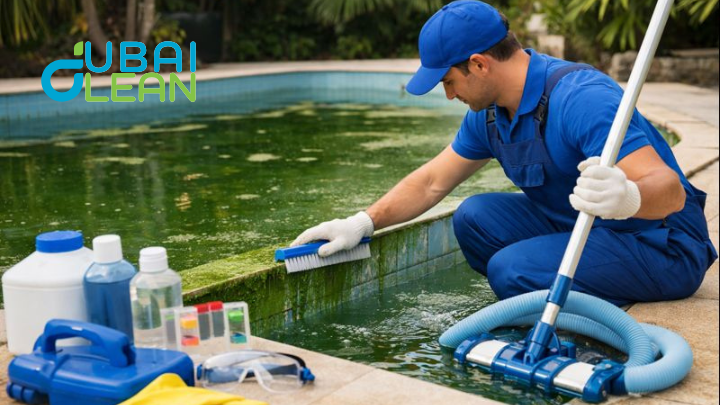
Algae can grow rapidly in Dubai’s swimming pools due to the city’s intense heat, high humidity, and frequent dust, creating an ideal environment for bacteria and other microorganisms to thrive. When algae develops, it not only turns pool water green or cloudy but also makes surfaces slippery, increasing the risk of accidents, and can cause skin and eye irritation, making proper pool maintenance a serious health concern. Left unchecked, algae can affect water quality, reduce the efficiency of filtration systems, and even damage pool surfaces over time. With the right tools, expert guidance, and safe cleaning methods, pool owners can effectively remove algae, prevent its regrowth, and maintain sparkling, safe, and hygienic swimming water throughout the year.
1. Understanding Swimming Pool Algae and Its Risks
Swimming pools in Dubai are highly prone to algae growth due to the city’s hot climate, high humidity, and frequent dust. Algae can make pool water cloudy, slippery, and unsanitary, affecting both water quality and swimmer safety. Different types of algae green, black, and brown require specific removal methods to prevent regrowth. To maintain clear and healthy water year-round, it is essential to safely remove swimming pool algae through regular maintenance and timely treatment. Proper pool algae removal and swimming pool algae treatment ensure that your pool remains safe, clean, and enjoyable for all swimmers.
Health and Safety Concerns
Algae growth in pools is not just an aesthetic issue; it poses serious health and safety risks. Algae can harbor bacteria and other microorganisms, leading to skin and eye irritation, especially in children or frequent swimmers. Slippery surfaces caused by algae buildup also increase the risk of accidents and falls, making regular cleaning a critical safety measure.
Why Regular Maintenance Matters
Consistent maintenance is the key to keeping a pool free of algae and safe for swimmers. Regular brushing, vacuuming, and chemical monitoring prevent algae buildup and keep water clear. Proactive maintenance also reduces long-term repair costs, as unchecked algae can damage pool surfaces, filtration systems, and water quality. By following expert-backed cleaning routines, pool owners can ensure a safe, hygienic, and enjoyable swimming environment throughout the year.
Types of Algae Found in Dubai Pools
Swimming pools in Dubai can experience different types of algae due to the hot climate and high humidity, most commonly green, black, and brown algae. Green algae appear as a slimy, bright green coating and can quickly cloud pool water, making surfaces slippery and reducing overall water clarity. Black algae forms dark, stubborn spots on walls and floors and often embeds into rough surfaces, making it harder to remove. Brown algae creates a brownish film, particularly on shaded areas, and can coat the pool floor, creating a slippery surface that is unsafe for swimmers.
Types of Algae vs. Appearance vs. Removal Method
| Algae Type | Appearance | Removal Method |
| Green | Slimy, bright green | Brushing + chlorine/algaecide |
| Black | Dark spots on walls/floor | Scrubbing + specialized algaecide |
| Brown | Brownish film, slippery | Vacuuming + chemical treatment |
2. Tools and Equipment for Safe Algae Removal
Keeping your swimming pool algae-free requires the right tools and equipment. Pool brushes and skimmers help scrub walls and remove floating debris, loosening algae for easier cleaning. Specialized pool algae vacuums efficiently remove algae from floors and corners, ensuring a thorough clean. Using these tools properly, along with safety precautions when handling chemicals, makes pool algae removal safe, effective, and keeps your water healthy and clear.
Pool Brushes and Skimmers
Pool brushes and skimmers are essential tools for keeping swimming pools clean and algae-free. Brushes help scrub walls, floors, and corners, loosening algae that may be clinging to surfaces, while skimmers efficiently remove floating debris before it settles. Using these tools properly ensures that algae is dislodged effectively and prepares the pool for vacuuming, making the cleaning process faster and more efficient.
Safety Equipment and Precautions
When handling pool chemicals such as chlorine or algaecides, it is important to wear safety equipment including gloves, goggles, and masks. Proper chemical handling prevents skin irritation, eye damage, and respiratory issues, ensuring that the algae removal process is both safe and effective.
Pool Algae Vacuums
Specialized pool algae vacuums are designed to remove algae from floors, corners, and hard-to-reach areas. These vacuums work best after brushing the pool surfaces, ensuring that loosened algae is completely removed from the water. Proper use of these vacuums is critical for effective pool algae removal and overall cleaning algae from the pool.
Recommended Pool Cleaning Tools
| Tool | Purpose | Tips |
| Pool Brush | Scrub walls/floors | Use firm bristles for stubborn algae |
| Skimmer | Remove floating debris | Clean regularly |
| Pool Vacuum | Remove algae from floor | Use after brushing |
3. Step-by-Step Guide to Removing Algae Safely
Removing algae from your swimming pool safely requires a systematic approach. Start by testing chlorine and pH levels to ensure proper chemical balance. Next, scrub walls, floors, and corners to loosen algae, then use a pool algae vacuum to remove it from hard-to-reach areas. Apply safe chlorine or algaecides to kill any remaining algae and prevent regrowth. Finally, monitor water quality after cleaning to maintain clear, healthy, and safe pool water. This step-by-step method ensures effective pool algae removal and keeps your pool ready for swimming.
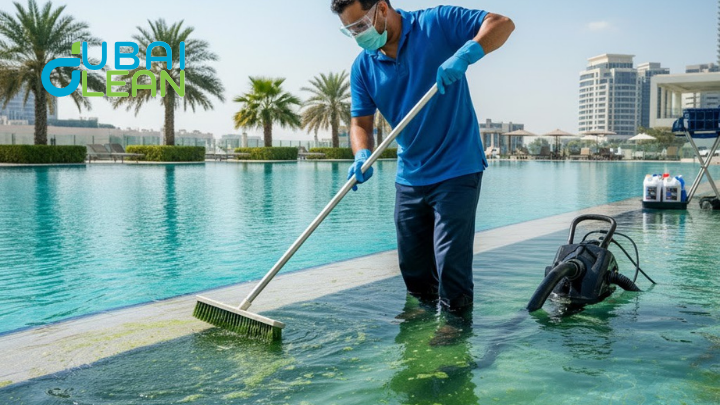
Testing Water Chemistry
Before beginning algae removal, it’s essential to measure your pool’s chlorine and pH levels. Proper chemical balance ensures that cleaning is effective and safe, preventing damage to pool surfaces and reducing health risks for swimmers. Testing the water first is a critical step in how to remove algae from swimming pool water safely.
Brushing and Dislodging Algae
Scrubbing the walls, floors, and corners of the pool helps loosen algae clinging to surfaces. This step prepares the pool for vacuuming and ensures that algae can be removed completely, making your cleaning efforts more efficient and effective.
Vacuuming and Removing Algae
After brushing, use a pool algae vacuum to remove algae from the pool floor and hard-to-reach areas. This step guarantees thorough cleaning and supports long-term pool algae removal by preventing leftover algae from spreading.
Applying Chlorine or Algaecides
Treat any remaining algae with safe chemical solutions such as chlorine or pool-approved algaecides. Proper application kills residual algae and prevents regrowth, ensuring the pool stays clean and safe. Keywords naturally included: how to remove algae from swimming pool, pool algae removal, cleaning algae from pool.
Monitoring Water Quality Post-Cleaning
Once cleaning is complete, retest the pool water to ensure chemical levels are safe for swimming. Maintaining proper balance of chlorine and pH reduces health risks and keeps water clear, making it suitable for daily use.
4. Health Risks and Safety Concerns
Algae in swimming pools poses serious health and safety risks if left untreated. It can harbor bacteria, leading to skin rashes, eye irritation, and other infections, particularly in children and frequent swimmers. Algae also makes pool surfaces slippery, increasing the risk of slips and falls. Regular cleaning and proper maintenance are essential to prevent these hazards, ensuring that the pool remains safe, hygienic, and enjoyable for all users.
Algae-Related Health Issues
Algae in swimming pools can create serious health risks if not properly treated. It can harbor bacteria and other microorganisms, leading to skin rashes, eye irritation, and other infections, especially in children or frequent swimmers. Maintaining clean water through regular algae removal is essential for a safe swimming environment.
Safety Hazards
Algae buildup makes pool surfaces slippery, increasing the risk of slips and falls. Even small patches of algae on floors, steps, or walls can be hazardous. Timely cleaning and proper maintenance not only protect swimmers but also prevent accidents, making pool safety a top priority.
5. Quick Fixes for Persistent Algae Problems
Persistent algae problems in Dubai pools can be effectively managed with quick, targeted solutions. Stubborn green algae often respond well to a rapid chlorine shock treatment, which kills the algae and restores water clarity. Black and brown algae may require scrubbing combined with specialized algaecides to remove them completely. Regular monitoring, proper filtration, and consistent water circulation help prevent algae from returning. By following these expert-backed methods, pool owners can safely remove swimming pool algae and maintain clean, clear, and hygienic water year-round.
Shock Treatment for Green Algae
Stubborn green algae can be effectively removed using a rapid chlorine shock treatment. This method quickly kills algae, restores water clarity, and prevents it from spreading further, ensuring safe swimming conditions.
Addressing Black and Brown Algae
Black and brown algae are more resistant and may require scrubbing combined with specialized algaecides. Using the right chemicals and techniques ensures complete pool algae removal and helps maintain a hygienic pool environment.
Preventive Measures
Preventing algae regrowth is easier than treating it. Regular cleaning schedules, proper filtration, and maintaining water circulation reduce algae buildup over time. Following these expert-backed preventive steps supports long-term pool health and keeps water clear and safe for swimmers.
Conclusion
Keeping your swimming pool algae-free in Dubai requires safe, expert-backed cleaning methods and consistent attention. By regularly testing water chemistry, brushing and vacuuming pool walls and floors, and applying chlorine or algaecides, you can effectively remove algae and prevent future growth. Understanding the types of algae and using the right tools ensures that the pool remains hygienic and safe for all swimmers. Regular maintenance, proper filtration, and continuous monitoring are essential for maintaining clear, healthy, and sparkling water. By implementing these expert-backed methods, you safeguard swimmers’ health, prevent damage to pool surfaces and equipment, and maintain a clean, safe, and enjoyable pool all year round.