


A greasy kitchen wall, burnt food stuck on pans, and stubborn counter stains are more than just an eyesore; they can harbor bacteria and compromise your family’s health. Maintaining a clean kitchen isn’t just about looks; it’s essential for hygiene, safety, and a healthier home environment. In this expert-backed guide, we reveal safe and effective methods to tackle grease, stains, and burnt food without harmful chemicals. From walls and cabinets to counters and pans, discover professional tips that make deep cleaning simple and reliable.
1. How to Remove Grease from Kitchen Walls
Grease from cooking oils and fumes easily sticks to kitchen walls, creating a sticky layer over time. Left unattended, it can attract bacteria, promote mold growth, and make surfaces slippery. Regular cleaning not only keeps your kitchen looking fresh but also ensures a safer, healthier environment for your family.
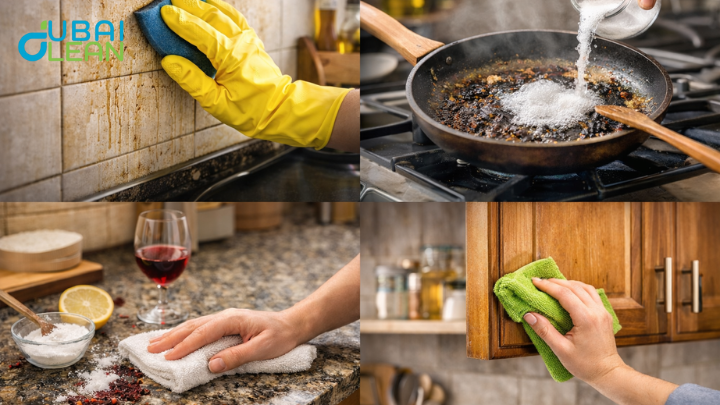
Use a mild detergent or vinegar-based solution to safely break down grease without damaging your walls. Apply the solution with a soft cloth or sponge, scrubbing gently in circular motions. For tough spots, let the solution sit for a few minutes before wiping clean. Understanding this helps you tackle the problem effectively before it worsens.
Improve kitchen ventilation and use exhaust fans or windows while cooking. Install splash guards near stoves and wipe walls regularly to prevent accumulation. A quick weekly wipe-down keeps walls looking fresh and hygienic. Regularly check and clean vents and filters to ensure optimal airflow and reduce grease buildup over time.
2. How to Clean Burnt Food from Pans
Burnt food on pans is a common kitchen frustration that can ruin cookware if not treated properly. Different pan materials non-stick, stainless steel, or cast iron require specific cleaning methods to avoid damage. Using safe, expert-recommended techniques like baking soda, vinegar, or specialized cleaners can restore pans effectively. Following proper cleaning and maintenance ensures your pans last longer while keeping your meals safe and hygienic
| Pan Type | Recommended Cleaning Method | Safety Tip |
| Non-stick | Soak in warm water with baking soda, gentle scrub | Avoid metal scrubbers to protect coating |
| Stainless Steel | Boil water with baking soda or vinegar, scrub | Do not use harsh abrasives that scratch |
| Cast Iron | Scrub with coarse salt and warm water, dry immediately | Re-season after cleaning to prevent rust |
- Avoid cooking on high heat for long periods to prevent food from sticking and burning.
- Maintain pan coatings by seasoning cast iron and using non-stick-safe utensils.
- Always soak pans immediately after cooking to make burnt food easier to remove, reducing the need for harsh cleaners and protecting your health.
3. Remove Stains from Kitchen Counters
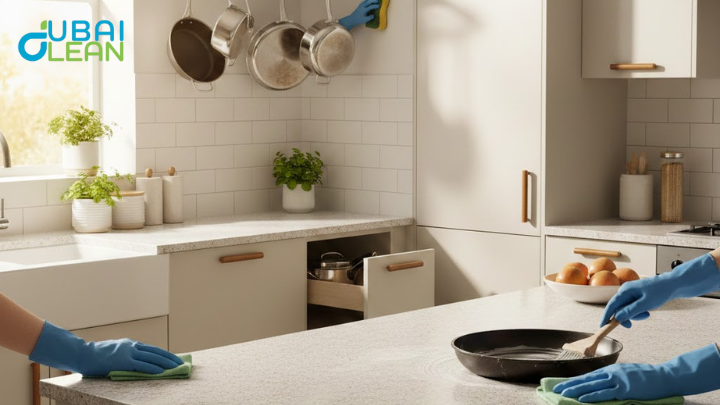
Kitchen counters: come in a variety of materials granite, marble, laminate, and quartz each requiring specific cleaning care to prevent damage. Identifying your counter type is the first step to choosing the right stain removal method and protecting your investment. Stains like coffee, tomato sauce, oil, or wine can quickly become stubborn if not treated properly. Knowing which cleaners are safe for your specific countertop ensures both effectiveness and long-term durability.
Expert-recommended techniques: include using natural remedies like baking soda or vinegar for mild stains, and safe commercial cleaners for tougher marks. Regular cleaning, prompt stain removal, and sealing natural stone surfaces help maintain counters’ appearance and longevity, ensuring a hygienic and safe food preparation area.
4. Cleaning Greasy Kitchen Cabinets
Kitchen cabinets often accumulate grease from cooking aerosols, oils, and fingerprints, making them look dull and unhygienic. Regular cleaning is essential to maintain their appearance and prevent bacterial growth. Using safe, non-toxic methods ensures your cabinets stay clean without compromising your health.
- Use a non-toxic degreasing spray or mild detergent for daily cleaning.
- Wipe cabinets with a microfiber cloth to avoid scratches.
- Make a homemade solution of vinegar and water for stubborn grease.
- Clean cabinet handles and edges regularly where grease builds up fastest.
- Install cabinet liners to prevent future grease accumulation and simplify cleaning.
Maintaining clean cabinets is easier when you follow a regular wipe-down routine and address spills immediately. Safe cleaning practices protect both your family’s health and the longevity of your cabinets. With consistent care, your kitchen will stay fresh, hygienic, and visually appealing.
5. Safety & Health Considerations
- Always use non-toxic, food-safe cleaners for surfaces where food is prepared.
- Wear gloves to protect your skin from harsh chemicals or prolonged exposure.
- Ensure proper ventilation while cleaning to avoid inhaling fumes.
- Avoid mixing different chemical cleaners, which can create harmful reactions.
- Use separate cloths or sponges for raw food areas to prevent cross-contamination.
- Rinse surfaces thoroughly after cleaning to remove any chemical residue.
- Store cleaning agents in labeled containers and follow manufacturer instructions for safe use.
Conclusion
As you wrap up your kitchen cleaning journey, it’s worth noting that maintaining a spotless home is more than a chore; it’s a commitment to health, hygiene, and peace of mind. DubaiClean Deep Cleaning Services stands out in Dubai for professional kitchen and home cleaning, backed by hundreds of satisfied customers and a strong reputation for thorough, detailed‑oriented service. Choosing a reputed service like DubaiClean not only keeps your kitchen shining but also supports a healthier home environment you can feel confident about.