


Machine sofa cleaning is popular in Dubai homes because it offers a quick and effective way to remove deep dust, stains, and allergens while keeping sofas fresh in a city where indoor living is common year-round. At the same time, many homeowners worry about risks such as fabric shrinking, color bleeding, or surface damage when machines are used incorrectly. This guide promises safe, step-by-step, fabric-first guidance to help you clean your sofa without compromising its quality.
1. Understanding Sofa Fabric Types Before Machine Cleaning
Understanding your sofa’s fabric type is essential to clean sofa with machine without damaging fabric effectively. Natural fabrics like cotton, linen, and wool absorb more water, making them prone to shrinkage and heat sensitivity, while synthetic materials such as polyester and microfiber tolerate machines better but may develop static or residue if not cleaned properly. Delicate fabrics like velvet, silk, or suede are extremely sensitive, and attempting machine cleaning on them can cause permanent damage. By knowing your fabric type and following safe cleaning methods, you can protect your sofa’s texture, color, and durability while keeping it fresh and hygienic.
Natural Fabrics
Natural sofa fabrics are highly absorbent, which means they can soak up excess water during machine cleaning and take longer to dry. This increases the risk of shrinkage, fabric stiffness, and unpleasant odors if moisture is not controlled properly. These materials are also heat-sensitive, so using hot water or steam can cause fibers to tighten, distort, or lose their original texture.
Synthetic Fabrics
Synthetic fabrics generally tolerate machine cleaning better because they absorb less water and dry faster than natural fibers. However, improper cleaning can still lead to static buildup, fabric dullness, or sticky residue if too much detergent is used. Using low-moisture settings and upholstery-approved solutions helps maintain softness and appearance.
Delicate & Premium Upholstery
Delicate and premium upholstery materials are highly sensitive to water, friction, and heat, making machine cleaning risky. Even gentle machines can flatten piles, cause water marks, or permanently alter the fabric’s look and feel. In these cases, professional-only cleaning is the safest option, as specialists use fabric-specific, low-risk methods designed to protect high-value sofas.
2. Is Machine Sofa Cleaning Safe in Dubai’s Climate?
Dubai’s hot and humid climate can make drying a freshly cleaned sofa more challenging. High humidity slows evaporation, leaving moisture trapped in cushions and fabric. If not dried properly, this can lead to mold growth, unpleasant odors, and even weakened fibers over time. Ensuring proper airflow and allowing sufficient drying time is essential to maintain both hygiene and the sofa’s durability.
Additionally, fine sand and dust common in Dubai homes can quickly settle back onto damp surfaces after cleaning, reducing effectiveness. Misusing air-conditioning such as blowing cold air directly onto a wet sofa can also interfere with drying, stiffen fabric, or even fade colors. Being mindful of these local conditions helps protect your sofa while keeping it fresh and clean.
3. Choosing the Right Sofa Cleaning Machine
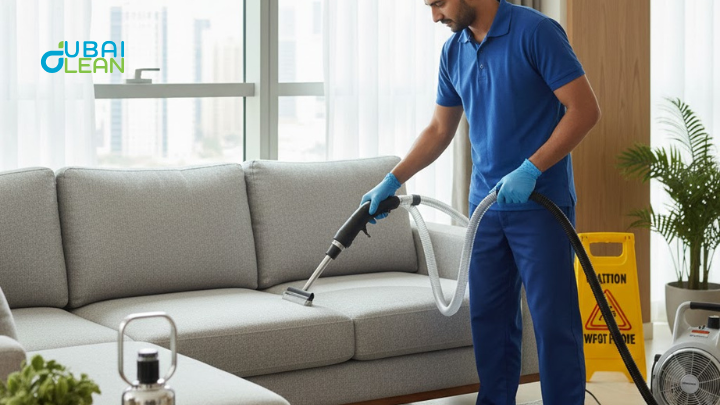
Selecting the right machine is essential for cleaning your sofa safely and effectively. Using the wrong equipment can soak cushions, weaken stitching, or damage the fabric, resulting in costly repairs. Different machines vary in water flow, suction strength, and pressure control, which directly affect cleaning results and drying time. Upholstery-specific machines are designed to remove dirt and stains gently while protecting the sofa’s structure. Choosing the right equipment ensures a deep, thorough clean, preserves the fabric’s texture and color, and extends the life of your sofa.
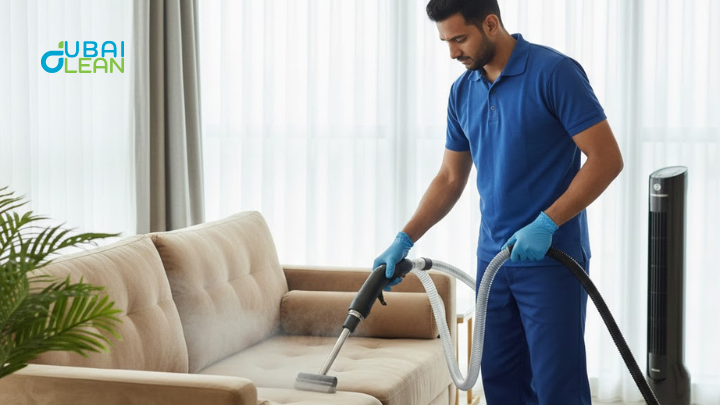
Upholstery Extractor vs Carpet Cleaner
Carpet cleaning machines are generally not suitable for sofas because they release too much water and create excessive agitation. This can soak cushions, weaken stitching, and leave fabrics prone to shrinking or color bleeding. Upholstery extractors, on the other hand, are designed for sofas with controlled water flow and stronger suction to safely remove dirt and stains without over-saturating the fabric.
Steam Cleaners – Safe or Risky?
Steam cleaners can be effective for some synthetic fabrics when used with low-moisture settings, helping sanitize and lift dirt. However, high-heat steam can shrink natural fibers, flatten piles, or cause permanent marks. Using the correct temperature and moisture level is key to avoiding heat damage while still achieving a deep clean.
Portable Home Machines vs Professional Equipment
Portable home machines are convenient and cost-effective but may have limited pressure control and weaker suction, which can leave moisture behind or fail to remove deep dirt. Professional equipment offers stronger suction, adjustable pressure, and precise moisture control, reducing the risk of fabric damage and ensuring faster drying, making it ideal for high-value or heavily used sofas.
| Feature | Portable Home Machines | Professional Equipment |
| Convenience | Easy to use at home, lightweight | Requires trained operator, less portable |
| Cost | Affordable, lower upfront cost | Higher cost but more effective |
| Suction Power | Limited, may leave moisture behind | Strong, removes deep dirt efficiently |
| Pressure Control | Basic, less precise | Adjustable for different fabrics |
| Drying Time | Slower due to residual moisture | Faster, controlled drying |
| Fabric Safety | Moderate, risk of damage if misused | High, reduces risk of shrinking or color fading |
| Best Use | Small sofas or light cleaning | High-value, large, or heavily used sofas |
4. Step-by-Step: How to Clean Sofa With Machine Safely
Cleaning a sofa with a machine requires careful preparation to protect the fabric, cushions, and overall structure. Proper steps help remove dust, dirt, and allergens without causing shrinkage, color fading, or fiber damage. By understanding your sofa’s fabric, using the right cleaning solution, and controlling moisture and suction, you can achieve a deep, safe, and effective clean. Following a structured approach ensures your sofa stays fresh, hygienic, and long-lasting.
Step 1 – Read Fabric Labels & Manufacturer Codes: Before starting, always check the fabric care label. Most sofas use one of four codes: W (water-based cleaners safe), WS (water or solvent-based cleaners safe), S (solvent-only cleaners), and X (vacuum only, no liquid). Using the wrong method for each code can cause shrinking, color bleeding, or permanent damage, so avoid applying water or chemicals to fabrics not designed for it.
Step 2 – Pre-Vacuum to Remove Sand & Dust: Vacuuming the sofa thoroughly before machine cleaning removes dust, sand, and debris that can scratch fibers during cleaning. Skipping this step can cause abrasion, fabric pilling, or scratches, especially on delicate upholstery, reducing both the appearance and lifespan of your sofa.
Step 3 – Patch Testing: Always perform a patch test on an inconspicuous area before full cleaning. Check for signs of color bleeding, texture changes, or fabric distortion. This step ensures the cleaning solution and method won’t damage your sofa, giving you confidence to proceed safely.
Step 4 – Use Minimal Water & Correct Solution: Over-wetting the fabric can lead to shrinkage, mold, or prolonged drying times. Use a pH-neutral, upholstery-approved cleaning solution in small amounts to protect fibers. Avoid strong chemicals or excessive liquid, which can leave residues and attract dust.
Step 5 – Controlled Machine Movement: Move the machine gently and steadily across the fabric, avoiding over-scrubbing. Maintain proper suction and avoid lingering too long in one spot, which can saturate the cushions or damage the surface. Controlled, even movements ensure thorough cleaning without harming the fabric.
5. Expert Tips to Extend Sofa Life After Machine Cleaning
Maintaining your sofa after machine cleaning is just as important as the cleaning itself. Proper care helps preserve fabric quality, prevent damage, and keep cushions in shape. Simple habits like ensuring complete drying, rotating cushions regularly, and applying fabric-safe protection sprays can significantly extend your sofa’s lifespan. In Dubai, where dust, sand, and constant air-conditioning can affect fabric durability, following these tips not only keeps your sofa looking fresh but also ensures it remains hygienic and comfortable for years to come.
Proper Drying Airflow Methods
Ensure sofas dry completely by promoting good airflow. Use fans or open windows to circulate air around cushions and seams. Avoid direct sunlight or hot AC vents, which can fade colors or stiffen fabric. Proper drying prevents mold, odor, and fiber damage.
Cushion Rotation
Flip and rotate cushions regularly to ensure even wear and maintain their shape. This reduces sagging, maintains shape, and prevents certain areas from becoming worn or discolored faster than others. For sofas in high-traffic areas, rotation every few weeks is ideal.
Fabric Protection Sprays
Using a non-chemical, fabric-safe protective spray can help repel dust, dirt, and minor spills. These sprays maintain fabric softness and prevent stains from setting, reducing the need for frequent deep cleaning while keeping your sofa looking fresh.
Conclusion
When done correctly, machine cleaning is a safe and effective way to keep your sofa fresh, clean, and hygienic. Knowing your sofa’s fabric type and controlling moisture carefully are essential to avoid shrinkage, color fading, or fiber damage. Following proper cleaning steps and avoiding shortcuts ensures a thorough clean while maintaining the sofa’s comfort and longevity. For delicate fabrics, heavily soiled cushions, or high-value furniture, hiring professional cleaning services adds extra safety and delivers lasting results, giving you peace of mind while protecting your investment in home comfort.