



Mold growth in bathrooms, particularly in moist climates such as that in Dubai, is a perennial problem. It thrives in warm, moist places, and showers and is quick to spread when it goes untreated. Mold is unpleasant to look at and can be a health hazard; inhaling mold spores can cause respiratory problems and allergies. If you’ve got mold in your shower, no need to worry this expert guide will show you how to get rid of it (and how to prevent it in the future).
Why Does Mold Grow in the Shower?
Mold needs the moisture of course to grow the shower is an ideal place. The high humidity in Dubai, particularly in the summer, is the perfect environment for molds growth. Lack of ventilation–mold often grows in bathrooms which do not have proper ventilation because steam gets trapped in small spaces after a bath or shower. Knowing these causes will help you target the reason and avoid the mold coming back.
Materials You’ll Need for Cleaning Mold in Shower:
Before diving into the cleaning process, gather the following items:
- White Vinegar: Known for its antifungal properties, vinegar is a natural and effective mold remover.
- Baking Soda: A gentle abrasive that helps scrub away stubborn mold.
- Spray Bottle: For applying cleaning solutions directly to affected areas.
- Scrub Brush: A non-abrasive brush for scrubbing away mold without damaging tiles.
- Gloves: To protect your skin from mold spores.
- Mask: To avoid inhaling mold spores while cleaning.
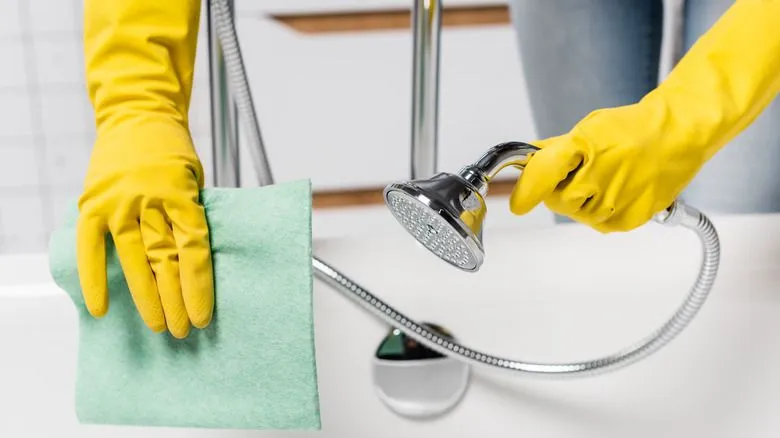
Step-by-Step Guide to Cleaning Mold in the Shower
Step 1: Remove Excess Moisture
Begin with a dry bathroom. ”Open the windows or use the exhaust fan to better ventilate. That way the mold doesn’t spread as you clean.
Step 2: Apply Vinegar Solution
Fill a spray bottle with white vinegar and douse the moldy areas. Let it rest for roughly 30 minutes. The vinegar will be acidic enough to stop and break down the mold from growing further.
Step 3: Mold Scrubbing with Baking Soda
Let it sit for a minute, then sprinkle baking soda over the muddy patch. Lightly scrub the tiles and grout with a scrub brush. The vinegar/baking soda mixture should expedite the removal of mold from surfaces.
Step 4: Rinse and Dry Well
After you’ve scrubbed away the mold, simply rinse the shower with warm water to remove any lingering residue. Ensure the surfaces are dry, either with a towel, to avoid any moisture.
Step 5: Apply a Mold-Resistant Sealant If you have mold problems already, you’ll need to kill and remove it first before applying a sealant.
You can even coat the grout and tile junctures with a mold-resistant sealant after removing the mold. This is an extra step to prevent mold from re-growing.
Preventing Mold Growth in the Shower
To keep your shower mold-free, follow these preventive measures:
1. Improve Ventilation:
Proper ventilation is crucial in preventing mold growth. Always use an exhaust fan or open a window after taking a shower to let out steam and moisture.
2. Keep the Shower Dry:
Wipe down the walls and tiles after each use to reduce moisture buildup. A quick wipe-down can prevent mold from taking hold.
3. Use Mold-Resistant Materials:
When remodeling your bathroom, consider using mold-resistant grout, tiles, and paints. These materials are designed to withstand moisture and reduce the risk of mold growth.
4. Regularly Clean Your Shower:
Make a habit of cleaning your shower at least once a week. This will not only keep it looking fresh but also prevent mold buildup in hard-to-reach corners.
FAQS
FINAL WORD
Mold in the shower is one of those little annoyances that pops up regularly in Dubai, thanks to the humid climate.But with the proper cleaning regimen in place and some preventive measures, you can be sure to keep your bathroom clean of mold. Some natural methods using vinegar and baking soda can neutralize the buildup, and ensuring good air circulation will help protect your health and keep your shower free of dirt and mold. As always, prevention is key to avoiding mold, so try to make these habits part of your routine and you’ll have a healthier, cleaner bathroom.