



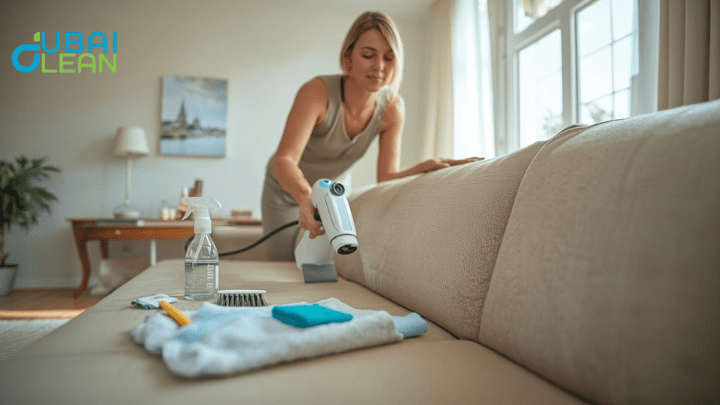
Fabric sofas collect dust, sweat, crumbs, and germs over time, and because the material absorbs dirt quickly, stains become difficult to remove if not cleaned regularly. Cleaning your sofa at home is budget-friendly, keeps your home smelling fresh, reduces allergens, and helps the fabric last longer. The best part is that you can safely clean upholstery using natural products like vinegar, baking soda, mild soap, and gentle sprays, making the process easy, effective, and safe for kids and pets.
1. How to Clean Fabric Sofa with Vinegar
Cleaning a fabric sofa with vinegar is a natural and effective way to remove stains, dirt, and odors. Vinegar is safe for most fabrics and helps sanitize while keeping your sofa fresh. Using this method regularly can prolong your sofa’s life and maintain its appearance.It also helps neutralize lingering smells and maintain a clean appearance.Using this method regularly can prolong your sofa’s life and keep it looking new.
Start by vacuuming the sofa thoroughly to remove dust, crumbs, and pet hair.Mix equal parts of white vinegar and water in a spray bottle for a gentle cleaning solution.Test it on a hidden area first to ensure the fabric doesn’t discolor.For stubborn stains, add a few drops of mild liquid detergent for extra cleaning power.
Lightly spray the solution on the stained areas and gently blot with a soft cloth.Avoid scrubbing, as harsh rubbing can damage delicate fibers and spread stains.Work from the outside of the stain toward the center to lift it effectively.Repeat the process if necessary until the stain is fully removed and the area is clean.
2. How to Disinfect Sofa at Home
Disinfecting your sofa at home keeps it free from germs, bacteria, and allergens. Regular cleaning improves hygiene and maintains the fabric’s freshness. Using safe and effective methods ensures your sofa stays both clean and healthy for your family.
Use a Natural Disinfectant
A simple and effective way to disinfect your sofa is with a natural solution of white vinegar and water. Mix equal parts in a spray bottle, lightly spray the surface, and let it sit for 5–10 minutes to kill bacteria. Wipe down the fabric with a clean cloth, focusing on high-contact areas like armrests and cushions. For added cleaning power, you can add a few drops of tea tree oil, which has natural antibacterial properties.
Steam Cleaning for Deep Disinfection
For deeper cleaning, steam cleaning is highly effective against bacteria, dust mites, and viruses. Use a handheld or professional steam cleaner, following your sofa’s fabric care instructions. Move the steamer slowly over the entire surface, then allow the sofa to dry completely in a well-ventilated room. This prevents moisture buildup and reduces the risk of mold or mildew forming inside the cushions.
3. Dry Clean Upholstery at Home
Dry cleaning your upholstery at home helps remove dirt, stains, and odors without soaking the fabric. It’s a safe way to maintain delicate materials like velvet, linen, or microfiber. Regular dry cleaning keeps your furniture looking fresh, clean, and long-lasting.
Simply sprinkle a generous: amount over the sofa, gently brush it in, and leave it for about 20–30 minutes. During this time, baking soda pulls out smells and dust from deep inside the fabric. After it sits, vacuum the surface thoroughly to remove the powder along with the dirt it collected. You can also use dry upholstery cleaning powders designed for sofas, which work similarly but may contain stronger deodorizing ingredients.
4. How to Clean the Sofa Fabric Safely
Before cleaning any sofa, it’s important to read the fabric label and check the cleaning code. These codes tell you which method is safe for your upholstery. A W code means the fabric can be cleaned with water-based solutions, while S means only solvent-based cleaners should be used. WS allows both water and dry-solvent cleaning methods. If the fabric has an X code, it should only be vacuumed and brushed no liquids at all. Understanding this helps prevent damage, shrinking, or discoloration.
- Check the Care Label: Always read the manufacturer’s instructions to know which cleaning methods are safe for your sofa fabric.
- Vacuum First: Remove dust, crumbs, and debris using a vacuum with a soft brush attachment to prevent dirt from embedding in the fibers.
- Test Cleaning Solution: Before applying any solution, test it on a hidden area to ensure it won’t discolor or damage the fabric.
- Use Mild Cleaners: Opt for gentle cleaners like diluted white vinegar, mild dish soap, or upholstery-specific products.
- Blot, Don’t Rub: When treating stains, gently blot with a cloth instead of rubbing to avoid spreading the stain or damaging fibers.
- Avoid Excess Water: Use minimal moisture to prevent water stains, shrinkage, or mold growth inside cushions.
- Air Dry Properly: Ensure the sofa dries completely after cleaning to prevent mold, mildew, and lingering odors.
- Regular Maintenance: Vacuum and spot clean regularly to maintain hygiene and prolong the life of your sofa.
5. Final Tips for Long-Lasting Upholstery
To keep your fabric sofa looking new for years, it helps to add a few simple protective measures to your cleaning routine. Using sofa covers, throws, or armrest protectors prevents direct contact with dust, sweat, and food spills. You can also apply fabric-protection sprays that create a thin shield over the upholstery, making it easier to remove stains and reducing the chances of liquids soaking into the fabric.There are times when calling professional sofa cleaning services is the best choice. If the fabric is heavily stained, has strong odors, or has not been cleaned in a long time, professionals have special machines and safe chemicals to restore it. They can also handle delicate fabrics you might not feel confident cleaning on your own. With the right care and maintenance, your sofa will stay comfortable, clean, and long-lasting.
Conclusion
A clean and fresh fabric sofa makes your home look better, smell better, and feel more comfortable. With simple methods like vinegar cleaning, dry upholstery cleaning, and regular disinfection, you can maintain your sofa without spending money on professional services. By protecting the fabric, avoiding harsh chemicals, and cleaning regularly, your upholstery will stay soft, bright, and long-lasting. A little care goes a long way keeping your sofa beautiful, hygienic, and family-friendly.