


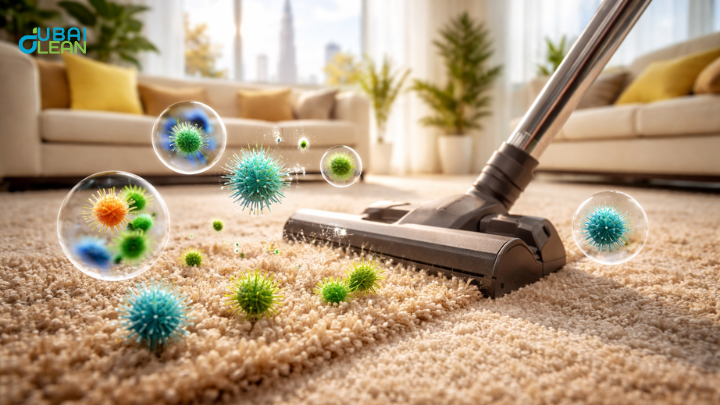
Dubai homes face unique challenges in keeping carpets clean, as dust, high coastal humidity, and constant AC use create ideal conditions for bacteria to thrive. This is especially important for families, children, pets, and allergy sufferers, since carpets can harbor hidden germs that affect health and indoor air quality. Bacteria can survive from hours to months depending on moisture, temperature, and fiber type, so this guide offers science-based prevention and cleaning strategies for Dubai homeowners.
1. What Are Bacteria & How Do They Enter Carpets?
Bacteria are microscopic organisms found almost everywhere in the air, on surfaces, and even on our skin. While many are harmless, some can cause allergies, infections, or respiratory issues when they accumulate in carpets. In Dubai, dusty outdoor conditions, high humidity, and indoor AC usage make carpets an ideal place for bacteria to settle and multiply. Understanding their sources and types helps homeowners maintain cleaner, healthier homes.
Common Sources of Carpet Bacteria in Dubai Homes
Bacteria enter carpets through outdoor sand brought in on shoes, food spills and moisture, pet dander, AC condensation leaks, and even ventilation systems in high-rise apartments. These everyday factors allow microbes to accumulate and thrive in fibers, especially if carpets are not cleaned regularly.
Types of Bacteria Found in Carpets
Carpets can harbor skin bacteria shed from humans, foodborne bacteria from spills, moisture-related bacteria from damp conditions, and pet-related microbes. Knowing the types helps Dubai residents target cleaning and moisture control to reduce bacterial buildup effectively.
2. How Long Can Bacteria Live in Carpet Fibers?
Even when carpets appear clean, microscopic bacteria can survive from hours to months, depending on moisture, temperature, and fiber type. In Dubai’s humid coastal climate and AC-cooled homes, carpets can provide ideal conditions for bacteria to thrive. Knowing how long bacteria persist helps homeowners target high-risk areas and maintain a healthier home environment.
Survival Timeline (Science-Based Explanation)
On dry carpets, bacteria survive hours to a few days, but moisture can extend their life. Humid environments, like coastal apartments, allow bacteria to persist weeks to months, especially in damp spots. Deep fibers with dirt, crumbs, or pet dander can harbor bacteria for months. Unlike bacteria, viruses don’t reproduce in carpets, while fungi (mold) thrive in damp fibers and may worsen indoor air quality.
Factors That Affect Survival Time
Bacterial lifespan depends on several factors: humidity (coastal areas like Dubai Marina increase survival), temperature (warm damp spots accelerate growth), sunlight (UV reduces survival), carpet material (synthetic traps moisture longer, wool resists bacteria), and cleaning frequency (regular vacuuming and steam cleaning greatly reduce bacteria). Understanding these conditions helps Dubai homeowners prevent bacterial buildup and protect their family’s health.
3. Dubai Climate Impact on Carpet Bacteria
Dubai’s hot, humid summers and dusty desert winds create ideal conditions for bacteria to survive in carpets. High humidity, AC condensation, and sand entering homes can increase bacterial growth, especially in apartments with limited airflow. Understanding these factors helps homeowners take proactive steps to maintain clean, healthy carpets and protect their family’s health.
Humidity & Mold Growth Risk
Coastal areas like Jumeirah and Dubai Marina experience high summer humidity, which settles in carpet fibers and encourages bacteria and mold growth. AC condensation can create hidden damp spots under carpets or in corners, prolonging bacterial survival. Practical measures like dehumidifiers, proper AC drainage, and thorough drying help prevent microbial buildup.
Sand & Fine Dust as Bacteria Carriers
Dubai’s sandy environment means fine particles often enter homes via shoes, pets, or open windows, trapping bacteria in carpet fibers. In high-rise apartments, limited airflow slows drying and allows microbes to persist longer. Regular HEPA-filter vacuuming and occasional professional deep cleaning remove dust, sand, and bacteria effectively.
4. How to Test or Identify Bacterial Contamination in Carpets
Bacterial contamination isn’t always visible, but it can affect allergies, infections, and overall indoor health. In Dubai’s humid, dusty environment, early detection is key. By combining visual checks, odor assessment, and moisture detection, homeowners can identify bacterial growth and take preventive action before it becomes a health risk. For more guidance on indoor air quality and biological contaminants, including how moisture and carpets contribute, refer to the EPA’s expert recommendations.
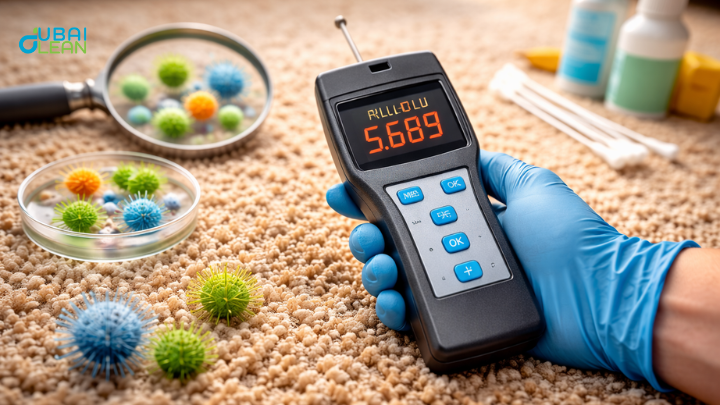
Signs of Contamination: Look for musty or sour odors, persistent damp spots, or stains that don’t fade with regular cleaning. These are common indicators that bacteria or mold may be present in carpet fibers.
When to Call a Professional: Call a professional if odors persist, mold is visible, family members experience health reactions, or carpets have been exposed to large spills or flooding. Inspectors use specialized tools to detect hidden moisture and microbial buildup.
Visible Dirt vs Microbes: Visible dirt like dust, sand, crumbs, or pet hair can usually be removed with vacuuming, while microbial contamination survives in fibers even when carpets appear clean, requiring deep cleaning or professional sanitization.
Importance of Moisture Detection Tools: Tools like moisture meters or infrared sensors help find hidden damp spots that support bacterial growth. Early detection, especially after AC leaks, spills, or humid days, prevents long-term contamination and protects your family’s health.
Combining these checks allows Dubai homeowners to keep carpets cleaner and safer year-round.
5. How to Reduce Bacteria in Carpets
Keeping carpets in Dubai homes clean and bacteria-free requires a combination of daily care, monthly maintenance, and professional sanitization. High humidity, dust, and AC use create ideal conditions for microbes, so following practical routines helps protect your family’s health and maintain fresh carpets year-round.
Daily Prevention Tips: Encourage a shoe-free policy, clean spills immediately, and vacuum 3–4 times a week with a HEPA-filter vacuum to remove dust, sand, and microbes before they settle deep in the fibers.
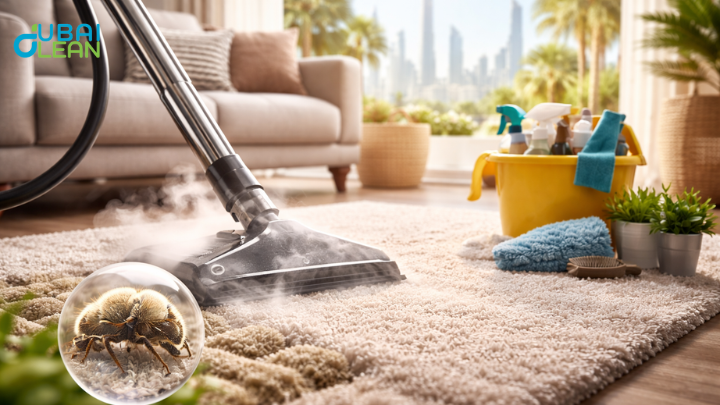
Monthly Maintenance: Perform steam cleaning once a month to kill bacteria and allergens, use deep extraction cleaning for trapped dirt, and ensure carpets dry completely in Dubai’s humid climate using fans or dehumidifiers.
Professional Carpet Sanitization in Dubai: Homes should schedule professional sanitization every 6–12 months, with more frequent cleaning for villas, pets, or high-traffic areas. Professional deep cleaning removes bacteria, moisture, and dust that regular maintenance can’t reach, ensuring long-term health protection.
By combining daily, monthly, and professional care, Dubai residents can significantly reduce bacterial buildup and maintain a clean, safe, and healthy home environment.
6. Carpet Material Comparison: Which Traps More Bacteria?
The type of carpet you choose can directly affect bacterial survival. Different fibers, pile heights, and materials hold dust, moisture, and microbes differently. Understanding this helps Dubai homeowners make informed decisions and maintain healthier homes.
Carpet Types and Bacterial Risk
Synthetic Carpets: Made of nylon, polyester, or polypropylene. Durable, resistant to stains, but can trap dust and moisture in dense fibers, allowing bacteria to survive longer if not cleaned regularly.
Wool Carpets: Naturally resistant to some bacteria due to lanolin content, but high humidity or spills can reduce this protection. Wool fibers absorb moisture, so drying is crucial in Dubai’s humid climate.
Carpet Material Comparison Table
| Carpet Type | Bacteria Risk | Cleaning Ease | Best For Dubai Homes | Notes |
| Synthetic | Medium-High | Easy | Apartments, high-traffic areas | Needs frequent vacuuming |
| Wool | Medium | Moderate | Villas, living rooms | Dry immediately after spills |
| Low-Pile (any material) | Low | Very Easy | High-traffic areas | Ideal for daily hygiene |
| High-Pile (any material) | High | Hard | Low-traffic areas | Regular deep cleaning required |
Combining low-pile carpets with regular vacuuming and professional deep cleaning provides the best balance of hygiene, durability, and comfort.
Conclusion
Bacteria can survive in carpets from hours to months, especially in Dubai’s humid, dusty, and AC-cooled homes, making regular cleaning, moisture control, and professional cleaning essential. Use low-pile or well-maintained carpets, vacuum frequently with a HEPA filter, and watch for odors or damp spots as signs of contamination. Maintaining proactive carpet hygiene protects your family’s health and ensures carpets stay clean, safe, and long-lasting.