



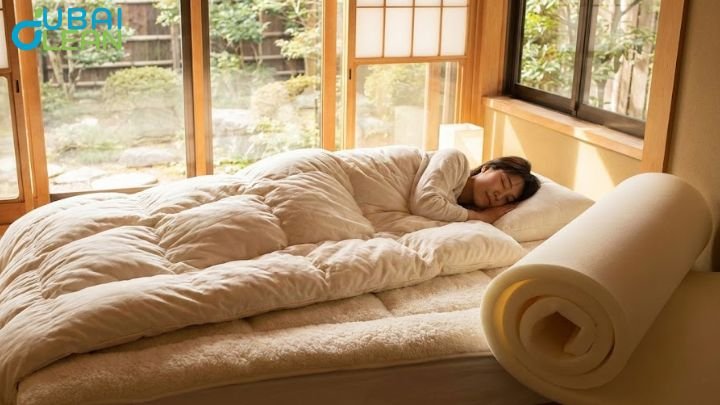
It’s a frustratingly common scenario for Dubai residents: you purchased what felt like a “plush cloud” in the showroom, only to find that back home in your JLT or Marina apartment, that same mattress feels like sleeping on a concrete slab. This phenomenon, known as Temperature Sensitivity Hardening, occurs when viscoelastic memory foam reacts to the powerful air-conditioning (often set below 20°C) required to combat the desert heat, causing the cellular structure of the foam to stiffen dramatically. While this might seem like a mere annoyance, this “frozen” mattress effect creates severe pressure points that disrupt your REM cycles and compromise spinal alignment directly impacting the deep, restorative sleep you need to maintain peak focus and performance during your high-stress workdays.
1. Why Your Mattress Hardens in Dubai
Mattresses, especially memory foam types: can feel noticeably harder in Dubai homes due to the science behind their material properties. Memory foam is made of viscoelastic cells that respond directly to temperature. When these cells are warm, they become soft and pliable, contouring easily to the body. Conversely, cooler temperatures cause the foam cells to contract and stiffen, resulting in a firmer sleeping surface. This temperature-dependent behavior is why a mattress that feels luxurious in one setting can feel uncomfortably hard in another.
The concept of viscoelasticity is key to understanding: this phenomenon. Memory foam is designed to absorb and distribute weight evenly, but its performance is highly sensitive to ambient temperature. In warmer conditions, the foam flows more freely, providing the familiar “sink-in” comfort. In cooler conditions, the same foam resists movement, creating a sensation of rigidity. This explains why a mattress in a cooler bedroom can feel so different from the same mattress in a warmer environment.
A small difference in room temperature can have: a surprisingly large effect. Showrooms often maintain temperatures around 23–24°C, creating an ideal condition where memory foam feels soft and luxurious. However, a typical bedroom, like Elias’s, might be closer to 19–20°C. That seemingly minor 4-degree difference can tighten the foam cells enough to noticeably increase firmness. As the foam contracts in the cooler environment, the mattress feels harder, illustrating why temperature control is essential for maintaining optimal comfort in memory foam beds.
2. Signs Your Mattress Needs Immediate Attention
A mattress that has lost its softness can silently affect your sleep quality and overall health. Recognizing the warning signs early can help prevent chronic discomfort, poor posture, and restless nights. Paying attention to these cues ensures you take timely action before the problem worsens.
Morning Back Stiffness or Neck Pain
Waking up with aches in your back, neck, or shoulders is a clear indication that your mattress is no longer providing adequate support. Over time, a hard or uneven mattress can strain your spine, causing stiffness and discomfort that lingers throughout the day. Addressing this early can improve your sleep posture and reduce chronic pain risks.
Sagging, Uneven Surfaces, or Hard Spots
Visible dips, lumps, or hard areas on your mattress suggest the internal padding and foam have compressed or degraded. Such irregularities prevent even weight distribution, leading to pressure points and restless sleep. Identifying these problem areas allows you to consider solutions like rotation, professional cleaning, or adding a mattress topper to restore comfort.
3. Solutions to Restore Softness
Restoring your mattress’s softness doesn’t have to be complicated. There are practical home remedies for quick relief and professional solutions for long-term comfort. Following expert advice ensures both effective results and better sleep hygiene, keeping your mattress safe and healthy for daily use.

| Methods / Actions | Benefits |
| Rotate and flip your mattress regularly | Prevents uneven wear and maintains softness |
| Use mattress toppers or padding | Adds temporary cushioning for immediate comfort |
| Light vacuuming to remove dust & debris | Reduces allergens and keeps the mattress hygienic |
| Deep mattress cleaning services | Removes sweat, oils, dust mites, improving hygiene |
| Steam or foam rejuvenation treatments | Restores the internal padding and comfort layers |
| Fiber or foam replacement options | Long-term solution to restore mattress softness fully |
Home remedies provide a quick fix by redistributing weight and refreshing the surface layers of your mattress. For deeper issues like compressed foam or accumulated dirt, professional cleaning and rejuvenation treatments target the internal layers, removing allergens and restoring softness. Combining these approaches ensures your mattress remains comfortable, hygienic, and supportive for years to come.
4. Prevent Hardening in the Future
Maintaining a soft and comfortable mattress requires consistent care and mindful habits. Preventing hardening not only extends the life of your mattress but also ensures better sleep quality and overall health. Simple daily routines, protective measures, and environmental adjustments can make a significant difference. By adopting these practices, you can enjoy restful nights and a mattress that feels like new for years.
- Establish a regular cleaning schedule, including vacuuming and dust removal.
- Rotate and flip your mattress every 3–6 months to prevent uneven wear.
- Use protective covers or breathable mattress pads to shield against sweat, oils, and dust.
- Maintain optimal room humidity and temperature to prevent foam or fiber compression.
- Ensure proper ventilation in the bedroom to reduce moisture buildup.
- Avoid standing or jumping on the mattress, which can damage its layers.
- Address spills or stains immediately to prevent long-term fabric and padding damage.
5. things to Keep Your Mattress Soft
- Rotate and Flip Regularly – Turn your mattress every 3–6 months to prevent uneven wear and sagging.
- Use a Mattress Topper – Add a breathable foam or fiber topper for extra cushioning and temporary softness.
- Keep It Clean – Vacuum regularly and spot-clean spills immediately to prevent dirt, oils, and dust buildup.
- Control Room Environment – Maintain moderate humidity, proper ventilation, and a cool temperature to protect mattress fibers.
- Avoid Heavy Pressure – Don’t jump or place heavy objects on your mattress, as it can create permanent hard spots.
Conclusion
Restoring and maintaining your mattress’s softness is essential for a good night’s sleep and overall health. By combining simple home remedies, professional cleaning solutions, and preventive habits, you can keep your mattress comfortable, hygienic, and supportive for years. A soft mattress not only reduces back and neck pain but also promotes better sleep quality, improves daily energy, and safeguards your well-being making it a crucial investment in both comfort and health by calling dubaiclean.