



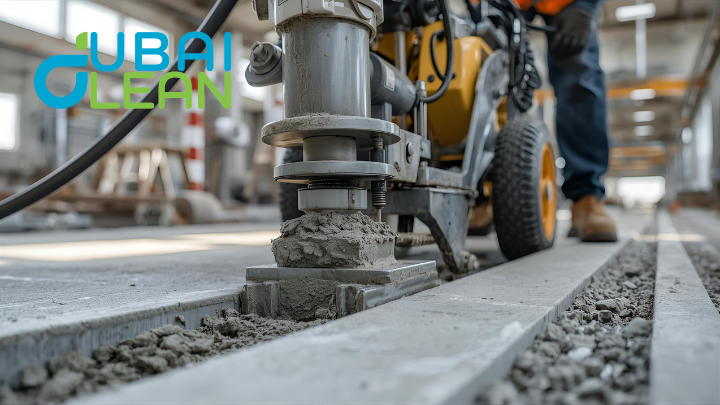
Grouting is a crucial process in construction where materials like cementitious, epoxy, or chemical-based grout are applied to fill gaps, seal joints, strengthen structures, or stabilize soil.
It plays a vital role in ensuring durability, stability, and safety, whether in tile installation, foundation reinforcement, or structural maintenance.
Beyond filling spaces, grouting enhances load distribution, prevents water leakage, minimizes vibrations, and extends the lifespan of structures by repairing cracks and restoring deteriorating concrete.
Depending on project needs, methods such as cement grouting, epoxy grouting, and pressure chemical grouting are used, often with advanced grouting machines that provide greater precision, consistency, and speed compared to manual applications, making modern grouting an essential part of efficient and reliable construction.
1. Understanding Grouting Work
Grouting work involves filling gaps, cracks, or voids with specialized materials to strengthen structures, improve stability, and protect against water or chemical penetration.
Definition and Meaning of Grouting Work
Grouting work refers to the process of filling gaps, cavities, or voids in construction materials with a flowable substance called grout. This procedure not only bonds surfaces together but also enhances the stability and strength of the structure. Whether used between tiles, under base plates, or in foundation repair, grouting ensures a firm, long-lasting finish.
Types of Grout Materials Used in Construction
The choice of grout depends on the type of project and its specific requirements, such as strength, durability, and resistance to moisture or chemicals. For example, cementitious grout is commonly used for tiles, epoxy grout is preferred for areas exposed to heavy loads or chemicals, and non-shrink grout is ideal for base plates and structural applications.
- Epoxy Grout – Highly durable and resistant to chemicals, stains, and water; commonly used in industrial and wet areas.
- Furan Grout – Resistant to chemicals and extreme temperatures, often used in factories and heavy-duty environments.
- Chemical Grout – Polyurethane and other resins injected to stabilize soil, seal cracks, or prevent water seepage.
If you are dealing with tile grout maintenance, professional care is just as important as proper installation. Services like grout cleaning in Dubai help keep grout lines fresh, hygienic, and long-lasting.
Applications of Grouting in Flooring, Tiles, Foundations, and Structural Repairs
Grouting has a wide range of applications across the construction industry, such as filling tile joints, strengthening foundations, sealing cracks, stabilizing soil, and providing waterproofing in tunnels and underground structures.
- Flooring and Tiles – Filling joints between tiles to prevent moisture penetration and improve aesthetics.
- Foundations – Strengthening weak soil or stabilizing foundations using pressure grouting.
- Structural Repairs – Sealing cracks in concrete, walls, and tunnels to extend the life of the structure.
- Waterproofing – Preventing leakage in basements, dams, and water tanks.
Benefits of Grouting for Durability, Strength, and Water Resistance
Grouting offers numerous advantages that make it essential in construction, including improved structural strength, enhanced durability, effective waterproofing, and long-term protection against cracks and leaks.
- Durability – Extends the lifespan of floors, tiles, and foundations.
- Strength – Reinforces structural integrity by filling voids and stabilizing surfaces.
- Water Resistance – Prevents moisture penetration, reducing risks of mold and deterioration.
- Low Maintenance – Once properly applied, grout provides long-lasting protection with minimal upkeep.
2. Grouting Machines: Modern Solutions for Efficiency
A grouting machine is a specialized tool used to mix and inject grout into cracks, voids, or foundations with precision, making it far more efficient than manual methods.
These machines come in three types: manual grouting machines, which are ideal for small-scale projects like tile installations; semi-automatic machines, which combine manual operation with pumps for medium-scale jobs; and fully automatic machines, equipped with digital controls for large projects requiring high accuracy.
Compared to manual grouting, machines save time, reduce labor, ensure consistent mixing, and handle large volumes with ease.
By delivering controlled pressure and flow rates, they improve accuracy, speed, and overall quality, ensuring grout fills even the smallest voids for stronger, longer-lasting results.
Today, grouting machines are widely used in construction for base plates and foundations, in mining and tunneling for crack sealing and waterproofing, in infrastructure projects like bridges and dams, and in industrial maintenance for repairing floors, pipelines, and machinery foundations.
3. Pressure Chemical Grouting Explained
Pressure chemical grouting is a specialized technique where chemical solutions are injected into soil, rock, or concrete under controlled pressure. This method strengthens weak ground, seals cracks, and prevents water leakage by filling voids with durable, hard-setting materials. It is widely used in foundation stabilization, tunnel construction, and waterproofing projects due to its precision and long-lasting results. More technical details about this process can be found in pressure grouting.
Definition of Pressure Chemical Grouting
Pressure chemical grouting is a specialized technique where liquid grout, often chemical-based, is injected under pressure into soil, rock, or concrete voids. The purpose is to fill cracks, stabilize weak soil, or seal water leaks. Unlike traditional grouting, this method relies on high pressure and chemical reactions to strengthen the treated area, making it highly effective for repair and reinforcement.
How Pressure Grouting Works in Soil Stabilization and Crack Repair
In soil stabilization, grout is injected into loose or weak soil under controlled pressure. As the material penetrates the voids, it hardens and increases the soil’s load-bearing capacity.
For crack repair in concrete structures, the grout flows into fine cracks and voids, bonding with the surface and preventing further expansion. This process not only restores strength but also protects the structure from water damage, vibration, and long-term deterioration.
Types of Chemicals Used in Grouting (Epoxy, Polyurethane, Cementitious Materials)
Different chemicals are used in grouting depending on the project needs. Epoxy grout is highly durable and resistant to chemicals, making it ideal for industrial and heavy-duty applications. Polyurethane grout is flexible and effective for sealing leaks or waterproofing. Cementitious grout is the most common type, widely used in tile installation and general construction for its strength and affordability.
Epoxy Grout: Known for its strong bonding and chemical resistance, ideal for crack injection and industrial repairs.
Polyurethane (PU) Grout: Expands on contact with water, making it effective for waterproofing and leak sealing.
Cementitious Grout: A cement-based mixture, widely used for soil stabilization and structural strengthening.
Acrylic and Other Resins: Provide fast-setting and flexible solutions, especially in underground and mining applications.
4. Purpose of Grout Under Base Plates
Grout under base plates ensures even load transfer, prevents vibration and misalignment, and enhances the stability and durability of structures.
Why Grout is Placed Under Base Plates
Grout under base plates ensures a solid and even load transfer from the structure to the foundation. It fills gaps, prevents vibration, enhances stability, and protects against long-term settlement or misalignment.
Grout is placed under base plates to ensure a smooth, level surface between the steel plate and the concrete foundation. Since concrete surfaces are rarely perfectly even, grouting fills the small gaps and voids, creating full contact and transferring loads effectively from the base plate to the foundation.
Importance in Load Distribution and Structural Stability
One of the primary purposes of grouting under base plates is load distribution. Without grout, uneven contact points may lead to localized stress, which can weaken the structure over time. By providing uniform support, grout enhances the structural stability of columns, machinery, and heavy equipment anchored to the foundation.
5. Best Practices and Safety in Grouting Work
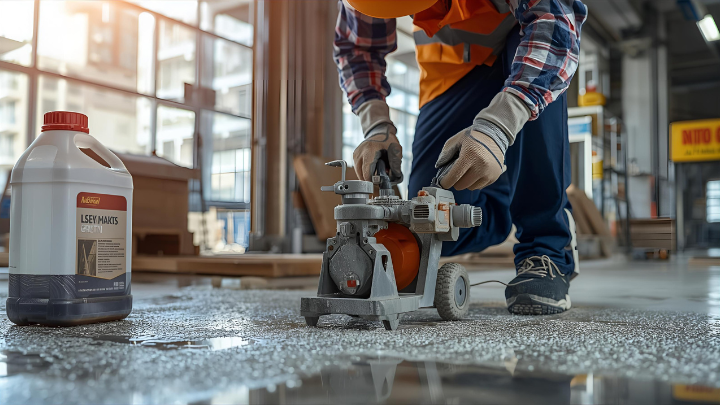
Proper preparation is the foundation of successful grouting, and it begins with ensuring that the surface is clean, free of dust, oil, or loose particles, and properly roughened for strong bonding, especially in base plate applications. For professional surface cleaning before grouting, services like DubaiClean can help ensure optimal results.
Choosing the right grout material is equally important: cementitious grout works best for tiles and flooring, epoxy or non-shrink grout is ideal for industrial equipment, while chemical grouts like polyurethane or acrylic resins are suited for soil stabilization and waterproofing.
Safety must always be prioritized workers should wear protective gear, maintain good ventilation, follow machine safety protocols, and handle chemicals according to manufacturer guidelines.
For long-lasting results, regular inspections, timely repairs, and proper cleaning are essential, along with protective coatings in high-moisture or chemically exposed environments to extend durability and structural performance.
Conclusion
Grouting is more than just filling gaps—it is essential for the strength, stability, and durability of structures, from tiles to heavy foundations. With modern innovations like automated machines, advanced chemical mixes, and eco-friendly materials, grouting is becoming faster, more precise, and sustainable. While it may appear simple, proper grouting requires expertise and the right materials to ensure long-lasting performance. Professional grouting guarantees quality, durability, and cost savings by preventing future structural issues and extending the life of buildings and infrastructure.