




Fireproof painting, also known as fire-resistant or intumescent coating, is a specialized paint that slows the spread of fire and protects a building’s structural integrity. Unlike regular paint, it forms a protective barrier when exposed to high heat, giving occupants extra time to evacuate and reducing property damage.
In industrial buildings, fire safety is crucial for protecting employees, machinery, and valuable inventory. Factories, warehouses, and production facilities often store flammable materials, making them highly vulnerable to fires. According to the National Fire Protection Association (NFPA), industrial fires cause billions in property damage each year and affect thousands of workers. Fireproof painting helps mitigate these risks while ensuring compliance with safety standards.
1. What is Fireproof Painting?
Fireproof painting, also called fire-resistant or intumescent coating, is specially designed to slow fire spread and protect a building’s structure. It forms a heat-resistant barrier, giving occupants more time to evacuate and reducing damage to industrial facilities.
Definition of Fireproof Painting
Fireproof painting, also known as fire-resistant or intumescent coating, refers to a type of paint specifically formulated to resist high temperatures and slow the spread of fire. These coatings are designed to protect structural elements like steel, wood, and concrete in industrial buildings, reducing the risk of collapse and giving occupants more time to evacuate during a fire incident.
The Science Behind Fire-Resistant Paints
Fireproof paints contain special chemical compounds that react when exposed to extreme heat. For example, intumescent paints expand and form a thick insulating char layer, which acts as a barrier between the fire and the structural material. This reaction significantly slows down heat transfer, preventing structural weakening and limiting fire damage.
Difference Between Regular Paint and Fireproof Paint
Unlike standard decorative paints, which offer no resistance to heat or flames, fireproof paints are engineered for safety. Regular paints may burn or emit toxic fumes when exposed to fire, whereas fire-resistant paints are formulated to withstand high temperatures, provide thermal insulation, and maintain the integrity of industrial structures.
2. Types of Fireproof Paint
Fireproof paints come in different types to suit various industrial needs. Intumescent coatings expand under heat, cementitious paints offer durable protection for steel, and epoxy-based paints combine fire resistance with corrosion protection.
Intumescent Coatings
Intumescent paints are among the most popular fireproof coatings for industrial buildings. When exposed to high temperatures, they expand and form a thick, insulating char layer. This layer slows heat transfer to structural elements, protecting steel, wood, or concrete from fire damage. Intumescent coatings are ideal for areas requiring both safety and aesthetic appeal, as they can be applied in thin layers without compromising appearance.
Cementitious Coatings
Cementitious fireproof paints are made from cement-based materials and are highly durable. They are particularly effective for steel structures, providing excellent thermal protection while also resisting moisture and corrosion. These coatings are commonly used in warehouses, factories, and industrial plants where long-term durability is essential.
Epoxy-Based Fire-Resistant Paints
Epoxy-based fireproof paints combine corrosion resistance with fire protection, making them suitable for environments with high humidity or chemical exposure. These coatings provide long-lasting protection and are often used on machinery, pipelines, and structural steel components in industrial settings.
Comparison of Cost, Effectiveness, and Application Areas
- Cost: Cementitious coatings are generally more affordable, while intumescent paints are higher in cost due to their advanced fire-protection properties.
- Effectiveness: Intumescent paints offer the fastest response to fire and the most efficient thermal insulation. Epoxy-based paints provide moderate fire resistance with additional corrosion protection.
- Application Areas: Intumescent coatings suit visible steel structures, cementitious paints work well for large structural frameworks, and epoxy-based paints are ideal for areas exposed to moisture or chemicals.
3. Benefits of Fireproof Painting
Slows Down Fire Spread and Enhances Evacuation Safety: One of the most significant benefits of fireproof painting is its ability to slow down the spread of flames. By providing an insulating barrier, it gives occupants more time to evacuate safely, reducing the risk of injuries and fatalities during industrial fire incidents.
Minimizes Structural Damage: Fire-resistant coatings protect critical structural elements, such as steel beams and concrete walls, from heat and flame exposure. This helps minimize damage to the building during a fire, reducing repair costs and preventing potential collapse.
Enhances Building Longevity and Integrity: By safeguarding the structural framework from extreme heat, fireproof paints contribute to the long-term durability of industrial buildings. Protecting these vital components ensures the facility remains safe, functional, and compliant with fire safety standards for years to come.
Improves Building Aesthetics Alongside Safety: Modern fireproof paints are available in a variety of finishes and colors, allowing industrial facilities to maintain a professional and polished appearance while prioritizing safety. This dual functionality makes fireproof painting a practical solution for both protection and visual appeal.
4. Cost Considerations
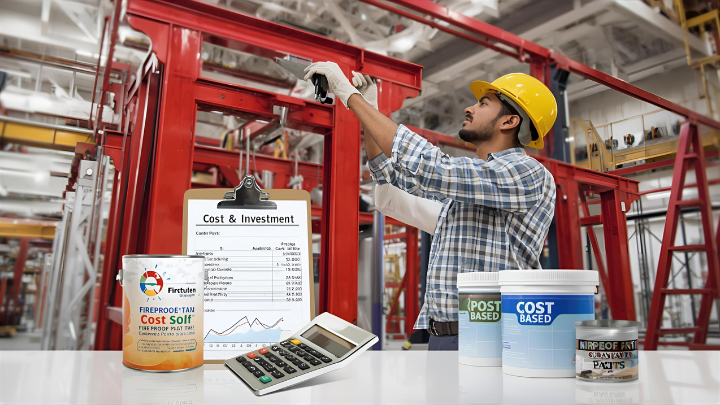
The cost of fireproof painting varies depending on the type of coating and the size of the area. Intumescent coatings typically range from $20–$50 per square meter, cementitious coatings from $10–$25, and epoxy-based paints from $15–$35. Prices can also vary based on regional factors and supplier rates, as well as the complexity of the application and the skill level required for proper coverage.
Despite the upfront cost, fireproof painting offers significant long-term benefits. It helps minimize fire damage, protect machinery and inventory, reduce production downtime, and ensure compliance with safety regulations. Many businesses also qualify for lower insurance premiums, making fire-resistant coatings a smart investment in both safety and financial protection.
5. Common Myths About Fireproof Paint
There are many wrong ideas about fireproof paint. It doesn’t stop fire completely and not all types work on every surface. This section explains the truth about fire-resistant paint.
Myth 1: Fireproof Paint Completely Prevents Fire
Many people assume that fireproof paint makes a building entirely fireproof. In reality, fire-resistant coatings are designed to slow down the spread of fire and protect structural elements, not to stop fire completely. They provide crucial extra time for evacuation and reduce damage but must be combined with other fire safety measures, such as sprinklers and alarms, for comprehensive protection.
Myth 2: Any Fireproof Paint Works on All Surfaces
Not all fireproof paints are suitable for every material. For example, intumescent coatings are ideal for steel structures, cementitious paints work best on concrete, and epoxy-based coatings are suited for areas exposed to moisture or chemicals. Using the wrong type of paint can reduce effectiveness and compromise safety.
Myth 3: DIY Application is Enough for Industrial Safety
While some fire-resistant paints can be applied by DIY enthusiasts, industrial buildings require professional application to ensure uniform coverage, proper thickness, and compliance with fire safety standards. Incorrect application may result in uneven protection, leaving critical areas vulnerable to fire.
6. Conclusion
Fireproof painting is an essential safety measure for industrial buildings, offering protection to both people and property. By slowing down the spread of fire, minimizing structural damage, and enhancing the longevity of industrial facilities, fire-resistant coatings play a critical role in creating safer work environments. Additionally, implementing fireproof paint helps businesses comply with fire safety regulations and may lead to reduced insurance premiums.
Investing in professional fireproof painting solutions is not just a precaution it’s a strategic decision to safeguard your workforce, valuable machinery, and assets. Consult certified experts to choose the right type of fire-resistant coating for your facility and ensure proper application for maximum effectiveness.