


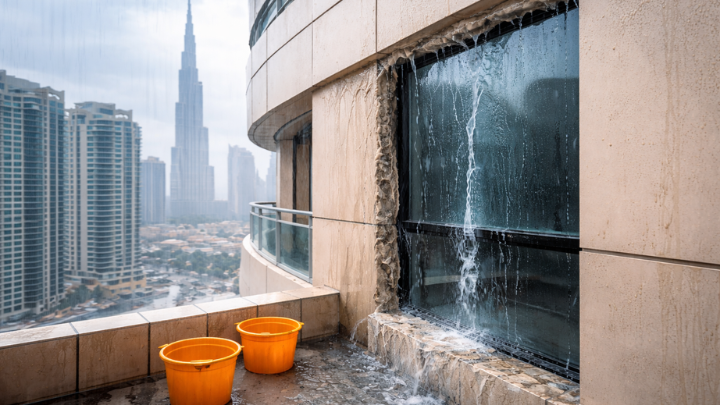
In Dubai, facade water leakage is more than a surface issue it can weaken structures, damage interiors, and affect indoor air quality. Factors like sudden rainfall, coastal humidity, and high-rise designs make facades vulnerable, allowing water to enter through cracks, sealant gaps, and joints. Trapped moisture may cause damp walls, corrosion, and mold growth, often without visible signs, so early detection and professional assessment are essential to protect building safety and long-term property value.
1. What Is Facade Water Leakage and Why It Happens in Dubai
Facade water leakage occurs when water enters a building through its exterior walls instead of flowing safely away from the structure. This happens when gaps, cracks, or weak points in the facade allow rainwater or moisture to pass through the outer surface and reach internal layers of the wall. While the damage may start on the outside, the real impact often develops inside the building where it is harder to detect.
In Dubai, facade water leakage is often caused by location-specific factors such as poorly applied waterproofing, which can fail under sudden rain or prolonged humidity. Extreme temperature changes also play a role, as intense heat makes building materials expand and contract, gradually creating cracks in concrete and weakening joints around windows, balconies, and cladding systems.
Aging sealants are another major contributor. Sealants around glass panels, cladding joints, and concrete connections can dry out, shrink, or lose elasticity due to UV exposure and heat, allowing water to penetrate the facade. Facade water leakage is not just cosmetic beyond stains or peeling paint, it can damage insulation, reduce structural strength, promote mold growth, and affect indoor air quality.
2. Moisture Problems in Facade and Their Hidden Impact
Moisture problems in facade systems begin when water or humid air penetrates the building envelope and settles within the wall layers. This moisture can enter through cracks in concrete, failed sealants, poorly sealed window frames, porous cladding materials, or weak points around expansion joints. In Dubai, wind-driven rain and high humidity increase the pressure on these areas, allowing moisture to move beyond the surface of the facade.
Why Moisture Gets Trapped: In modern buildings, moisture that enters the facade often becomes trapped because airtight designs and dense materials slow natural drying. Insulation, cladding, and decorative finishes can hide dampness, allowing water to persist inside walls for long periods. This makes proper moisture management in wall systems essential to protect structural integrity and maintain a healthy indoor environment.
Corrosion and Structural Damage: Over time, trapped moisture can lead to corrosion of steel reinforcements embedded within concrete. When moisture reaches these steel components, it accelerates rust formation, which expands and places internal pressure on surrounding concrete. This process weakens structural elements and can contribute to cracking and surface deterioration.
Mold and Indoor Air Quality Risks: Moisture problems in facade areas also increase the risk of mold growth inside wall cavities. Mold thrives in damp, enclosed spaces and may affect indoor air quality when spores migrate indoors. While the presence of mold varies depending on conditions, prolonged moisture exposure raises potential health concerns for occupants, particularly in residential and office environments.
Reduced Energy Efficiency: Another long-term consequence is reduced thermal efficiency. Damp insulation loses its ability to regulate indoor temperatures effectively, forcing air conditioning systems to work harder to maintain comfort. In Dubai’s climate, this often results in higher energy consumption and increased electricity costs, adding a financial burden alongside building maintenance concerns.
3. Damp Facade Walls – Early Warning Signs You Should Not Ignore
Damp facade walls often signal that moisture is entering the building envelope and affecting more than just the surface. Identifying early signs helps prevent deeper structural and indoor environment issues, especially in Dubai’s high-rise buildings.
Visible Signs of Damp Facade Walls
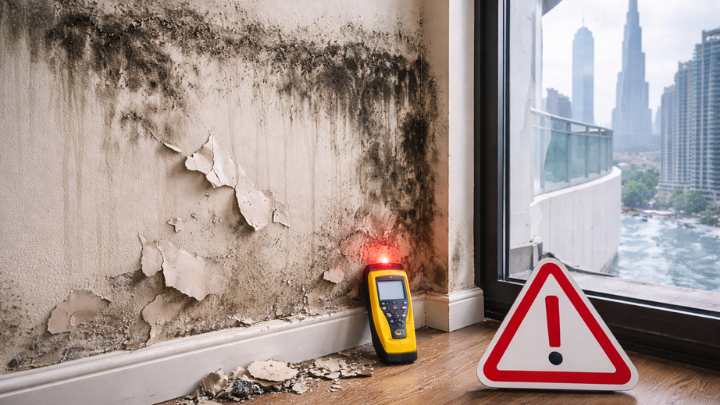
The first indicators are usually visual. Discoloration on exterior walls, such as dark patches or uneven stains, suggests prolonged moisture exposure. Peeling or bubbling paint occurs when trapped moisture pushes coatings away from the wall surface. In some cases, efflorescence appears as a white, powdery residue, formed when moisture draws salts from within the wall and deposits them on the surface as it evaporates.
Structural Changes That Indicate Moisture Damage
Beyond surface appearance, damp facade walls can cause physical changes in building materials. Soft or weakened plaster near affected areas indicates long-term moisture absorption. Cracks forming around windows, balcony edges, or facade joints often result from repeated moisture exposure combined with thermal expansion and contraction common in Dubai’s climate.
Why Damp Facade Walls Are Risky in High-Rise Dubai Buildings
In tall buildings, moisture issues can spread vertically due to gravity and wind-driven rain. Dampness on an upper level may affect multiple floors below, increasing repair scope and cost. Additionally, moisture trapped within facade systems can reduce insulation performance and contribute to indoor air quality concerns. Addressing damp facade walls early helps limit structural stress and supports safer, more efficient building performance.
4. Rainwater Penetration in Facade During Dubai’s Sudden Storms
Rainwater penetration in facade systems is a serious concern in Dubai, where sudden storms can overwhelm building exteriors. Understanding how and why water enters facades helps property owners and facility managers take timely preventive measures.
Why Short but Intense Rainfall Is More Damaging
Dubai’s rainfall is often brief but heavy, unlike the steady rains seen in temperate climates. This sudden deluge can exceed the drainage and waterproofing capacity of exterior walls. When water accumulates quickly, it can find and exploit even minor cracks or gaps, penetrating deeper into wall layers before evaporating.
Weak Points in Facade Systems
Certain areas of a building facade are naturally more vulnerable to water entry. Window joints, expansion joints, and balcony edges are common entry points where sealants or construction tolerances may be insufficient. Even minor deterioration in these areas allows water to seep in, causing dampness, material decay, or mold development inside the walls.
How Wind Pressure Increases Penetration in Tall Buildings
In high-rise buildings, wind-driven rain adds an additional challenge. Wind can push water horizontally and upward, forcing it into small gaps that would remain dry under calm conditions. The combination of sudden rainfall and high wind pressure makes tall structures particularly susceptible to facade water penetration, emphasizing the need for regular inspections and preventive maintenance.
5. Health, Safety, and Property Value Risks
Facade water leakage and trapped moisture can have consequences that go beyond visible damage, affecting indoor environments, safety, and long-term property value. Understanding these risks is essential for Dubai property owners, where high-rise buildings and premium real estate demand proactive maintenance.
Indoor Environment and Safety Concerns
Moisture infiltration can degrade indoor air quality over time. Damp walls and hidden leaks create conditions conducive to mold and mildew growth. While individual sensitivity to mold varies, prolonged exposure to indoor dampness can contribute to respiratory discomfort or allergic reactions. Moisture can also reach electrical systems within walls, creating potential hazards. Early detection and professional intervention are critical to ensure safety and maintain a healthy indoor environment.
Impact on Property Value and Maintenance Costs
Persistent moisture issues can reduce the structural integrity of facades and compromise interior finishes, leading to higher repair costs. In Dubai’s competitive real estate market, visible signs of damp walls or water penetration can negatively influence property valuation and resale potential.
Addressing facade water leakage early not only protects building performance but also preserves long-term investment value. Regular inspections, timely waterproofing, and professional repairs are key preventive measures that safeguard both safety and financial interests.
6. How Professionals Diagnose Facade Moisture Issues Accurately
Identifying moisture problems in facades requires specialized knowledge and tools. Professional inspections go beyond surface-level observation, providing accurate insights into the condition of exterior walls and hidden layers. In Dubai, where high-rise buildings and unique construction materials are common, relying on professional assessment ensures both safety and long-term building performance.
Non-Destructive Testing Methods
Experts use non-destructive testing (NDT) techniques to detect moisture without damaging the facade. Tools like infrared thermography, moisture meters, and ultrasonic testing allow inspectors to locate damp areas, water ingress paths, and insulation wetness behind walls. These methods provide precise information about moisture distribution, helping professionals identify problems early before they escalate.
Moisture Mapping and Sealant Inspections
Moisture mapping involves systematically measuring and recording moisture levels across the facade to pinpoint high-risk zones. Professionals also evaluate the condition of sealants and waterproofing layers, checking for cracks, shrinkage, or failed adhesion. These inspections highlight weak points where water could enter during heavy rainfall or high humidity periods common in Dubai.
DIY inspections often miss these hidden issues. Without the right tools and technical knowledge, subtle moisture accumulation and compromised sealants can go unnoticed, allowing damage to progress over time. Professional assessment combines experience, accurate measurement, and understanding of material behavior under local climatic conditions, providing actionable insights to protect building integrity.
7. Preventive Measures for Long-Term Facade Protection in Dubai
Protecting facades from water damage in Dubai starts with applying proper waterproof coatings designed for extreme heat, UV exposure, and occasional heavy rainfall. Regular, scheduled facade inspections help identify early signs of moisture infiltration before they develop into structural issues, while using climate-appropriate materials such as durable sealants, high-quality cladding, and corrosion-resistant reinforcements enhances long-term performance.
Compliance with UAE building standards ensures that construction and maintenance practices meet local regulations for safety and durability, reducing the risk of water penetration, structural deterioration, and costly repairs. By combining these measures, property owners can maintain facade integrity, indoor comfort, and building value over time.
8. When Facade Water Leakage Requires Immediate Action
While some facade moisture issues develop slowly, certain situations require urgent attention to prevent structural damage, safety hazards, or costly repairs. Recognizing these warning signs helps building owners make responsible decisions and prioritize professional intervention.
Rapid Spread of Damp Patches and Interior Damage
If damp patches appear suddenly or expand quickly across exterior walls, it indicates active water infiltration. When moisture reaches interior walls, ceilings, or finishes, it can compromise plaster, paint, and insulation. Early detection and immediate assessment by professionals are crucial to prevent further deterioration and maintain structural integrity, especially in Dubai’s high-rise buildings where damage can propagate across multiple floors.
Water Near Electrical Points or High-Risk Areas
Water intrusion near electrical outlets, wiring, or distribution panels poses serious safety risks. Even small leaks can create conditions for short circuits or electrical hazards if left unchecked. Prompt action including turning off affected circuits and arranging professional inspection is essential to protect both occupants and property value. Prioritizing these high-risk areas reinforces responsible, safety-focused building management.
Conclusion
Early awareness of facade water leakage and moisture problems is essential for maintaining building safety and long-term value in Dubai’s challenging climate. Prompt detection of damp patches, rainwater penetration, or structural weaknesses not only saves on costly repairs but also helps prevent health and safety risks. Professional assessment ensures that issues are accurately identified and addressed before they escalate, allowing property owners to protect both their buildings and occupants with confidence.