


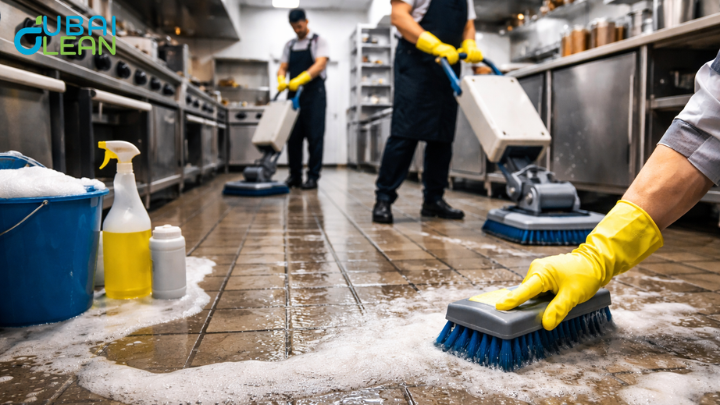
Accumulated grease, sticky floors, and hidden food debris are common challenges in restaurant kitchens, creating unsafe working conditions and unhygienic surfaces. These hazards can lead to slips, injuries, and contamination risks, putting both staff and customers at risk. Maintaining clean, debris-free floors is essential for compliance with Dubai’s food safety regulations and to uphold high hygiene standards. Regular restaurant deep cleaning not only prevents accidents and pest infestations but also enhances the overall efficiency and reputation of your kitchen.
1. Dangers of Accumulated Grease in Restaurants
Grease and food debris often accumulate in hard-to-reach areas, creating hidden hazards that are easy to overlook but difficult to clean properly. Sticky floors increase the risk of slips and injuries, threatening both staff safety and customer well-being. Regular restaurant deep cleaning is essential to remove these hidden dangers, prevent bacteria growth, deter pests, and ensure full compliance with Dubai’s strict food safety standards.
Hidden grease and food debris not only damage kitchen surfaces over time but also create fire hazards in commercial cooking areas. Ignoring these hard-to-clean spots can lead to costly repairs, regulatory fines, and a tarnished reputation, emphasizing the need for professional-grade cleaning practices.
Unclean floors and corners provide the perfect environment for bacteria growth and pest infestations, directly impacting food safety and customer health. By addressing these risks proactively, restaurant owners can ensure compliance with Dubai’s food hygiene regulations while maintaining a safe, trustworthy dining environment.
2. tips for Restaurant Floor Maintenance
Grease often accumulates behind appliances and under counters, while high-traffic areas develop sticky, slippery floors that increase accident risks. Many restaurants struggle with inefficient cleaning methods that leave residue, reducing hygiene and safety. Additionally, deep-cleaning can be challenging without disrupting daily kitchen operations, making professional strategies essential for consistent cleanliness.
- Grease buildup behind appliances and under counters creates hard-to-clean hazards.
- High-traffic areas often develop sticky, slippery floors, increasing accident risks.
- Inefficient cleaning methods can leave residue, compromising hygiene and safety.
- Deep-cleaning is challenging without disrupting daily kitchen operations.
- Professional cleaning strategies ensure consistent cleanliness and compliance.
3. Professional vs DIY Cleaning What Works Best
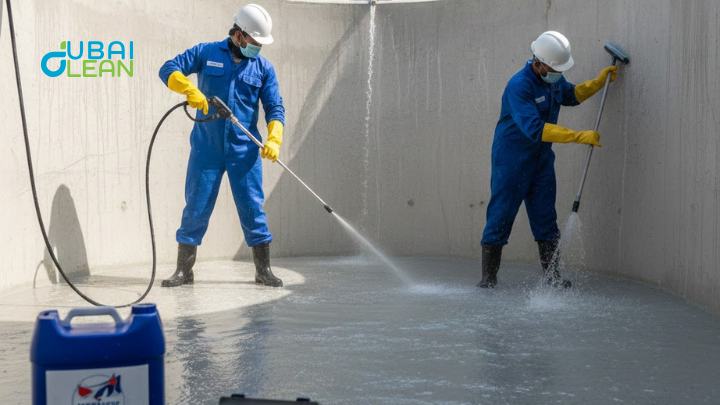
Professional restaurant floor cleaning ensures compliance with health regulations, promotes a safe kitchen environment, and maintains long-term hygiene by effectively removing grease and debris. DIY methods, while tempting, often use incorrect products or techniques that can damage floors and leave bacteria behind. Investing in expert services guarantees thorough cleaning, protects staff and customers, and preserves your kitchen’s operational efficiency.
| Cleaning Approach | Benefits | Risks / Limitations |
| Professional Cleaning | Ensures compliance with Dubai health regulations | Higher upfront cost |
| Thorough removal of grease and debris | Requires scheduling around operations | |
| Maintains long-term hygiene and safety | — | |
| DIY Cleaning | Lower immediate cost | Risk of using wrong products |
| Immediate convenience | Can damage floors or surfaces | |
| Flexible timing | May leave bacteria and hidden debris |
4. Effective Methods to Eliminate Grease & Debris
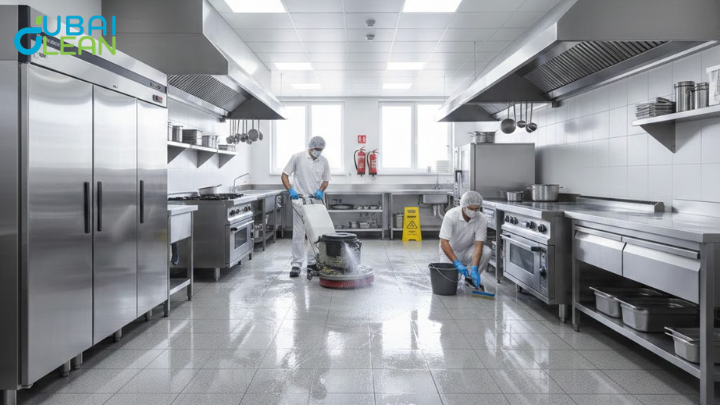
Using high-grade degreasers and safe cleaning chemicals is crucial for removing stubborn grease and food debris without damaging kitchen surfaces. Professional-grade products are specifically designed to tackle hard-to-reach areas behind appliances and under counters, ensuring every corner of your restaurant floor is hygienic and safe. Consistent use of these high-quality cleaning agents helps maintain a spotless kitchen environment, reduces the risk of bacterial growth, and ensures long-term protection for your floors and equipment.
Proper scrubbing techniques and specialized equipment further enhance cleaning effectiveness, targeting sticky floors and hidden debris that conventional methods often miss. Establishing a floor maintenance schedule ensures consistent cleanliness, reduces the buildup of grease over time, and minimizes risks to staff and customers. Integrating regular inspections and staff training into your cleaning routine further ensures that safety standards are consistently met and that your restaurant maintains a hygienic, compliant kitchen.
5. Real Results: Benefits of Clean Floors
Maintaining clean, grease-free floors creates a healthier and safer kitchen environment, reducing risks of slips, injuries, and contamination. Compliance with Dubai’s health regulations ensures your restaurant meets hygiene standards while avoiding legal issues and penalties. Sparkling floors also enhance customer satisfaction, boost staff efficiency, and prevent costly accidents or damage to flooring.
- Healthier work environment by reducing bacteria and germs
- Safer floors that minimize slip and fall accidents
- Compliance with Dubai municipality and food safety regulations
- Improved customer confidence and dining experience
- Enhanced staff productivity and morale
- Extended lifespan of flooring and kitchen equipment
- Reduced cleaning time with consistent maintenance routines
- Cost savings from preventing accidents, injuries, and floor damage
Conclusion
Eliminating stubborn grease and hidden food debris is essential for maintaining a safe, hygienic, and compliant restaurant kitchen. By adopting regular cleaning routines, leveraging professional services, and implementing preventive measures, restaurant owners can protect staff, customers, and their reputation. With DubaiClean’s expertise and professional approach, you can ensure sparkling floors, long-term hygiene, and full compliance with Dubai’s health regulations, making your kitchen both safe and trustworthy