


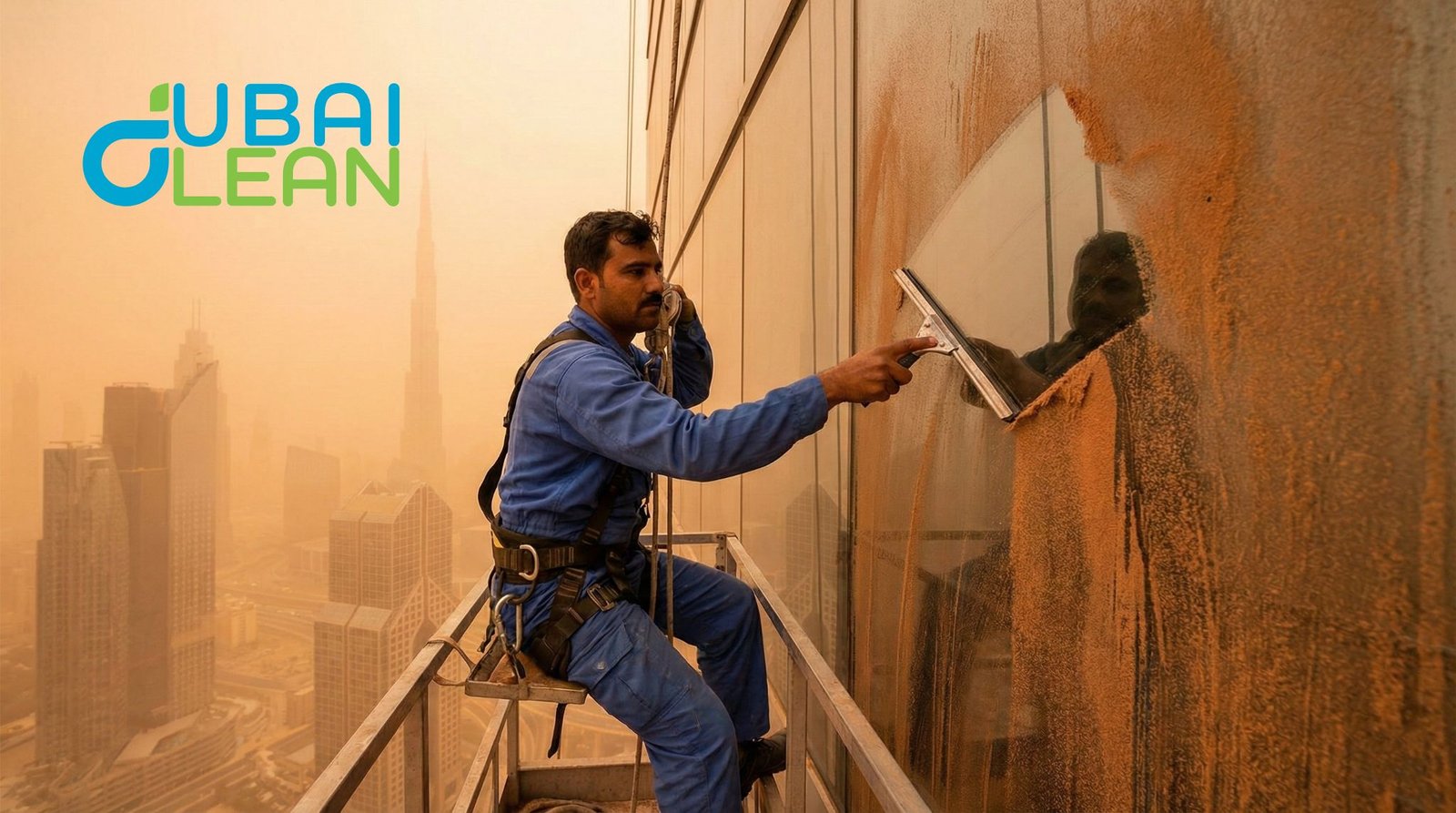
There’s few things more frustrating for Dubai residents and building managers than stepping back to admire a sparkling high-rise, only to notice that sandstorms have left permanent marks or a cloudy film on your windows. Even after wiping and professional cleaning, those stubborn streaks seem impossible to remove. Dubai’s unique desert climate makes this a constant challenge. Frequent sandstorms, driven by the Shamal winds, carry fine, abrasive dust across the city, while high-rise buildings are particularly vulnerable due to their exposure to strong winds and airborne particles.
1. Understanding Dubai’s Sandstorm Phenomenon
Dubai experiences frequent sandstorms, driven mainly by the Shamal winds that blow across the Arabian Desert. These storms carry millions of fine, abrasive dust and sand particles, which can impact high-rise buildings and urban areas. Even modern sealed windows are not completely immune, as tiny gaps allow dust to penetrate and settle on glass surfaces. Over time, this buildup can scratch, etch, or leave permanent marks on untreated windows. The combination of strong winds, fine desert dust, and high-rise exposure makes sandstorm-related window damage a persistent challenge in Dubai.
Shamal Winds and Seasonal Dust
Dubai experiences seasonal sandstorms that are primarily driven by the Shamal winds, which blow from the northwest across the Arabian Desert. These winds can carry millions of fine dust and sand particles at high speeds, reducing visibility and creating hazardous conditions for residents. While sandstorms are often short-lived, their intensity can be enough to impact high-rise buildings, leaving windows and facades coated with abrasive particles.
How Desert Dust Penetrates Urban Spaces
Even modern, sealed high-rise windows are not entirely immune to dust intrusion. Tiny gaps in window frames, ventilation systems, or balcony seals allow fine desert particles to penetrate urban spaces. Over time, this dust settles on glass surfaces and combines with moisture from humidity or morning dew, creating a thin abrasive layer. When left untreated, this layer can scratch or etch the glass surface, leaving permanent marks that are difficult to remove, even with professional cleaning.
2. How Sandstorms Affect Your Glass
Sandstorms in Dubai can cause significant damage to glass surfaces, even on modern high-rise buildings. Fine, abrasive sand particles strike windows with force, creating tiny scratches that accumulate over time. When combined with humidity or morning dew, these particles form a thin abrasive layer that can etch the glass. Untreated windows are especially vulnerable, as repeated exposure leads to permanent marks and cloudiness. Regular cleaning alone often cannot reverse this damage, making preventive care essential.
The Science of Sand Adhesion and Etching
When sand particles collide with glass surfaces during a storm, their hardness and angular shape can create tiny scratches over time. This process, known as sand adhesion and etching, is accelerated when dust combines with moisture or humidity, forming a thin abrasive layer. Even light wind-blown sand can gradually wear down the glass, leaving marks that are difficult or impossible to remove without professional treatment.
Why Untreated Windows Are More Vulnerable
Windows without protective coatings or films are far more susceptible to permanent damage. Untreated glass lacks a barrier to resist abrasive particles, making scratches, clouding, and etching inevitable. Over time, repeated exposure to sandstorms can significantly reduce clarity and aesthetic appeal, especially for high-rise buildings facing open desert areas or coastal zones.
3. The Role of Dubai’s Climate in Glass Degradation
Dubai’s harsh climate plays a major role in accelerating glass damage. Intense heat causes glass to expand, while humidity and occasional condensation mix with desert dust to form a thin abrasive layer. Over time, this combination weakens the surface, making scratches and etching more visible. High-rise and sea-facing windows are particularly vulnerable due to constant exposure to wind, sand, and salt-laden air. Without protective measures, the climate can turn minor marks into permanent damage quickly.
Heat, Humidity, and Sunlight Effects
Dubai’s extreme heat and intense sunlight can accelerate the damage caused by sandstorms. High temperatures expand glass surfaces, while humidity and occasional condensation create a thin abrasive layer when mixed with desert dust. Over time, this combination weakens the glass surface, making scratches and etching more pronounced and harder to remove.
High-Rise and Sea-Facing Windows at Risk
Windows on high-rise buildings and sea-facing properties face additional challenges. Constant exposure to wind, salt-laden air, and airborne dust increases the likelihood of permanent marks. Buildings near open desert areas or the coastline are particularly susceptible, requiring more frequent maintenance and protective measures to preserve glass clarity.
4. Common Signs of Permanent Glass Damage
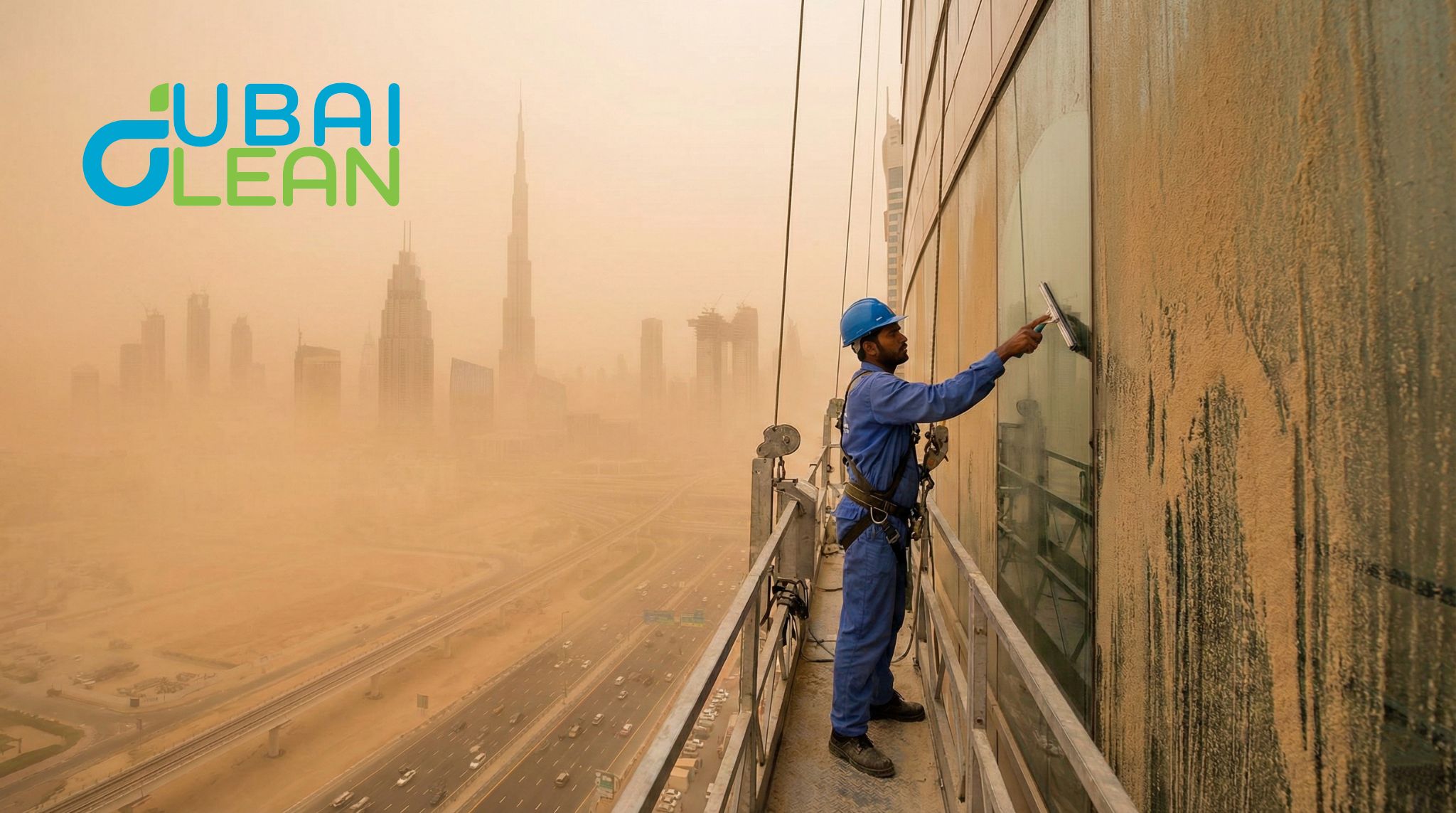
Permanent glass damage from Dubai sandstorms often shows as a cloudy or frosted appearance that regular cleaning cannot remove. Tiny micro-scratches may become visible under sunlight, giving the glass a worn or dull look. Edges and corners are especially vulnerable, as dust tends to accumulate there, causing etching over time. These signs indicate that the glass surface has been compromised and may require professional treatment or replacement.
Cloudy or Frosted Appearance
One of the first signs of permanent glass damage is a cloudy or frosted look that cannot be removed by regular cleaning. Sand particles combined with moisture leave a thin layer that scatters light, reducing transparency and clarity. Over time, this haze becomes more noticeable, especially on windows exposed to frequent sandstorms.
Micro-Scratches Visible Under Sunlight
Tiny scratches on the glass surface, often invisible at first, become apparent when sunlight hits at certain angles. These micro-scratches are caused by the abrasive action of sand particles during storms and can accumulate over repeated exposure, contributing to a dull and worn appearance.
Edge Etching Where Dust Accumulates
The edges and corners of windows are particularly prone to etching, as dust tends to settle in these areas. Over time, this can create permanent marks along the perimeter of the glass, which are difficult to remove and often require professional treatment or replacement.
5. Preventive Measures for High-Rise Windows
Protecting high-rise windows in Dubai requires proactive measures to combat sandstorm damage. Applying protective coatings or films helps reduce sand adhesion and prevents etching, while making cleaning easier. Thoughtful window design, including sloped sills and sealed frames, limits dust accumulation and direct exposure to wind-blown sand. Combining these strategies with regular maintenance ensures long-lasting glass clarity and reduces the risk of permanent marks.
Protective Coatings and Films
Applying protective coatings or window films can significantly reduce sand adhesion and prevent etching. These barriers create a smooth surface that resists abrasive particles and makes cleaning easier. Regularly maintaining these coatings ensures long-term protection and preserves glass clarity, even in areas frequently exposed to sandstorms.
Window Design Considerations
Thoughtful window design can also help minimize damage. Features such as sloped sills, sealed frames, and recessed windows reduce dust accumulation and limit direct exposure to wind-blown sand. High-rise buildings that incorporate these design elements experience less wear on glass surfaces, extending their lifespan and maintaining aesthetic appeal.
6. The Cost of Ignoring Sandstorm Damage
Ignoring sandstorm damage can lead to expensive consequences for high-rise buildings. Permanent scratches and etching may require full glass replacement, which is costly and labor-intensive. Additionally, damaged or cloudy windows reduce a property’s aesthetic appeal, potentially lowering its market value and tenant satisfaction. Proactive maintenance and protective measures are far more cost-effective than repairing or replacing glass after damage occurs.
Glass Replacement Expenses
Neglecting sandstorm damage can lead to costly glass replacements. Once scratches and etching become permanent, regular cleaning is no longer effective, and damaged panels may need to be fully replaced. For high-rise buildings, this can involve significant labor and material costs, especially for large or sea-facing windows.
Decreased Property Appeal and Value
Damaged or cloudy windows also reduce a building’s visual appeal, affecting both residential satisfaction and property value. Tenants and buyers often associate scratched or etched glass with poor maintenance, which can impact occupancy rates and overall investment returns. Preventive care is therefore essential to maintain both aesthetics and long-term financial value.
Conclusion
Dubai sandstorms and the city’s harsh desert climate can leave permanent marks, scratches, and cloudiness on untreated windows, posing a major challenge for high-rise and sea-facing buildings. The combination of abrasive sand, heat, humidity, and sunlight accelerates glass degradation if no protective measures are in place. Implementing preventive strategies such as applying protective coatings or films, designing windows to minimize dust accumulation, and scheduling regular professional maintenance can significantly reduce long-term damage.