


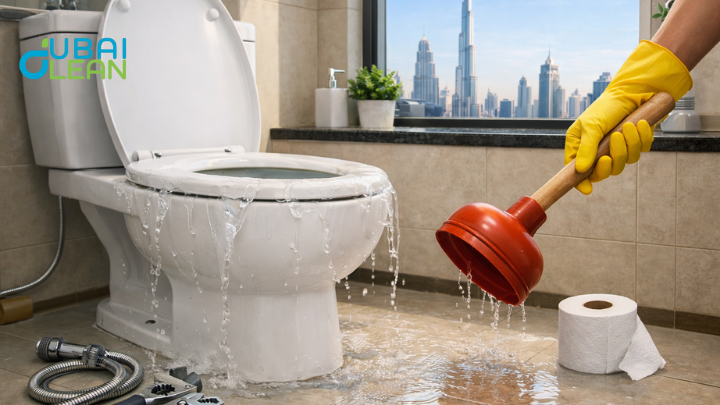
Toilet problems are common in Dubai homes due to hard water, high-rise plumbing, and fluctuating water pressure, which can cause slow flushing, leaks, and clogs. If left untreated, these issues may lead to property damage, hygiene risks, mold growth, and higher DEWA bills. Based on professional experience in Dubai, understanding these local factors helps residents detect problems early and protect both their home and health.
1. Common Toilet Problems Found in Dubai Apartments
Toilets in Dubai homes and commercial spaces often face recurring issues due to a combination of local water conditions, building design, and usage habits. Whether you live in an apartment, villa, or manage a commercial washroom, being aware of common problems can help prevent damage, high water bills, and hygiene risks.
Apartments: In Dubai’s high-rise apartments, shared plumbing systems mean that a blockage or leak in one unit can affect several others. Common issues include slow flushing, minor clogs, and water leakage from the tank or bowl, often caused by hard water deposits or worn-out seals.
Villas: Standalone villas typically experience problems related to older pipe installations, low-quality seals, or infrequent maintenance. Residents often report toilet overflows, persistent slow flushing, and cracked tanks or bowls, especially in properties that rely on well water or desalinated municipal water.
Commercial Washrooms: High-traffic toilets in offices, hotels, and retail outlets face rapid wear and tear, including frequent clogs, overflowing, and continuous leaks. Improper disposal of materials and lack of regular professional maintenance increase these issues.
Impact of Building Age and Plumbing Design: Older buildings in Dubai may have narrower pipes, outdated venting systems, or corrosion from hard water, which can worsen clogging and slow flushing problems. Modern apartments sometimes face unique challenges due to complex high-rise plumbing and shared drainage stacks, making early detection and professional maintenance essential.
By understanding these location-specific factors, Dubai residents can proactively prevent toilet issues, protect property, and maintain proper hygiene standards.
2. Toilet Clogging Reasons in Dubai Bathrooms
Toilet clogs are one of the most common complaints in Dubai homes and apartments, and they are part of the common toilet problems in Dubai that residents face. Understanding the root causes helps prevent costly repairs, water wastage, and hygiene risks. Here are the main reasons toilets get clogged in Dubai bathrooms:
Hard Water Mineral Buildup
Dubai’s desalinated water is high in minerals, especially calcium and magnesium, which over time form limescale deposits inside pipes and toilet tanks. These deposits can narrow the diameter of drain pipes, reduce water flow, and make flushing less effective. Left unchecked, even small mineral accumulations can lead to frequent clogs, forcing residents to call professional cleaners.
Pro tip: Regular professional descaling and flushing of toilet pipes can prevent mineral-related blockages and extend the life of your bathroom fixtures.
Excessive Tissue & Improper Waste Disposal
In many Dubai households, the combination of cultural habits and plumbing limitations can cause blockages. While toilets are designed for human waste and toilet paper, items like wet wipes, sanitary products, cotton swabs, and excessive paper often end up in the bowl.
These items may not cause an immediate clog but can accumulate silently, forming partial blockages that eventually lead to a full obstruction. Residents should adopt proper disposal habits and avoid flushing non-biodegradable items.
Drain Line Design in High-Rise Buildings
High-rise apartments in Dubai often use shared drainage stacks, meaning multiple units are connected to the same vertical pipe. While efficient for construction, this design creates backflow risks if one unit’s drain becomes clogged. A minor clog in one apartment can cause slow flushing, gurgling sounds, or overflow issues in neighboring units.
Poor venting, combined with high water pressure fluctuations common in tall buildings, can make these clogs more frequent. Early detection and professional maintenance are critical to avoid cross-unit plumbing problems.
3. Why Your Toilet Is Flushing Slowly
A toilet that flushes slowly is more than just an inconvenience it can indicate underlying issues that, if ignored, may lead to clogs, leaks, and higher water bills. In Dubai homes and apartments, several factors contribute to slow flushing.
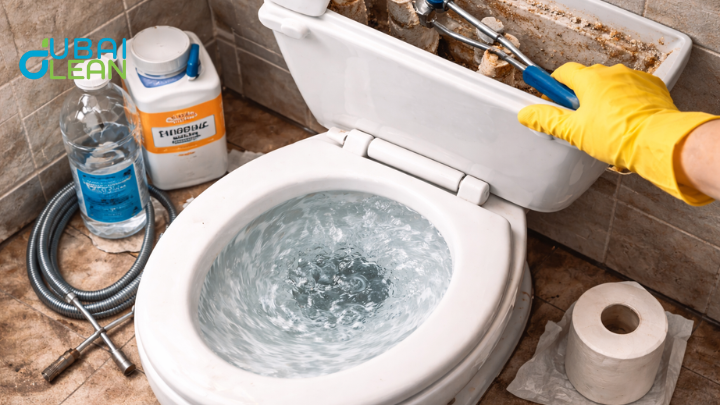
Partial Blockages You Can’t See: Even when a toilet appears to flush normally, partial blockages may be forming inside the drain pipes. Common early warning signs include:
- Delayed bowl emptying
- Gurgling or bubbling sounds during flushing
- Water level rising higher than usual
These hidden blockages often result from gradual mineral buildup, small debris, or paper accumulation. Addressing them early can prevent a complete blockage and the need for costly repairs.
Low Water Pressure & Tank Issues: In older Dubai apartments, low water pressure is a frequent cause of slow-flushing toilets. Issues with the float valve inside the cistern can also prevent the tank from filling properly, reducing the force of the flush.
Additionally, sediment from Dubai’s desalinated water can accumulate at the bottom of the tank or inside pipes, further slowing water flow. Regular maintenance, such as cleaning the tank and checking float mechanisms, helps ensure strong, effective flushing.
Venting Issues in Tall Buildings: Proper airflow is essential for efficient drainage. In Dubai’s high-rise apartments, poor venting or blocked air vents can create suction problems in toilet pipes, causing the flush to slow down. Without adequate venting, water struggles to flow freely, and air pressure imbalances may lead to gurgling sounds or water backup.
4. Water Leakage From Toilet: Hidden Risks for Dubai Homes
Water leakage from toilets is a common but often overlooked problem in Dubai homes and apartments. Left untreated, leaks can cause property damage, health hazards, and higher DEWA water bills. Understanding the causes helps homeowners take proactive steps to protect both their home and family.
Seal & Wax Ring Failures
The wax ring or rubber seal beneath a toilet prevents water from leaking onto the bathroom floor. In Dubai, constant air conditioning and high indoor humidity accelerate the deterioration of these seals, causing water to slowly seep around the toilet base. Even minor leaks can damage tiles, weaken flooring, and create damp conditions that promote mold growth.
Cracked Tanks and Hairline Bowl Leaks
Temperature fluctuations in Dubai from scorching outdoor heat to cool, air-conditioned interiors can lead to cracks in toilet tanks and bowls. Hairline cracks often go unnoticed but allow water to escape gradually, leading to structural damage, water wastage, and costly repairs if ignored. Regular inspection of toilets by professionals can catch these issues early.
Silent Leaks That Increase DEWA Bills
Many leaks are “silent,” running slowly inside pipes or tanks without visible signs. In Dubai, these leaks can waste hundreds of liters of water every day, resulting in significantly higher DEWA water bills. More importantly, the constant moisture creates an ideal environment for mold and bacteria, posing health risks for residents.
5. Toilet Overflow Causes You Should Never Ignore
A toilet overflow is more than an inconvenience it can cause property damage, hygiene risks, and costly water bills. In Dubai, certain factors make overflows particularly common in apartments, villas, and high-traffic commercial spaces. Understanding these causes helps residents prevent emergencies and maintain safe, functional bathrooms.
Severe Drain Blockages
Drain blockages are the most common cause of toilet overflows. In Dubai homes, grease, wet wipes, paper towels, and mineral scale from hard water often accumulate over time. When these materials combine, they can create stubborn obstructions that prevent water from flowing freely, leading to slow draining or sudden overflows.
Sewer Line Pressure Issues
Older buildings and densely populated communities in Dubai can experience sewer line pressure problems. Shared stacks and limited venting may cause water to back up into toilets, especially during peak usage hours. Such issues can trigger frequent overflows, even if the toilet itself is functioning properly.
Faulty Float Mechanisms
Toilets rely on a float mechanism to regulate tank water levels. If the float is misaligned or worn out, the tank may overfill and spill water into the bowl without flushing. In Dubai, this issue is common in older apartments or properties that experience water pressure fluctuations. Regular inspection and maintenance can prevent costly overflows.
6. Health, Hygiene & Safety Concerns
Toilet issues like overflows and leaks pose serious health and safety risks in Dubai homes. Overflowing toilets can spread bacteria, while unnoticed leaks create damp conditions that promote mold growth, affecting indoor air quality. Water on bathroom floors also increases slipping hazards, especially for children and the elderly. Prompt professional intervention is essential to prevent these risks, maintain hygiene, and protect both residents and property.
7. When to Call a Professional Toilet Cleaning Service in Dubai
Knowing when to call a professional toilet cleaning service in Dubai is essential to prevent property damage, health risks, and rising DEWA bills. DIY fixes are often insufficient for persistent clogs, slow flushing, visible leaks, gurgling sounds, or mold growth. Professional services provide specialized tools, pipe descaling, leak detection, and tank inspections that homeowners cannot replicate, ensuring problems are fully resolved.
Local expertise is particularly important in Dubai due to high-rise plumbing systems, hard desalinated water, and fluctuating pressure, allowing technicians to diagnose issues accurately, recommend preventive measures, and restore optimal toilet performance safely and efficiently.
Conclusion
In summary, toilets in Dubai homes and apartments face common issues such as clogs, slow flushing, water leaks, and overflows, which can lead to property damage, hygiene risks, and higher DEWA bills if left unaddressed. Early detection, proper maintenance, and timely professional intervention are essential to prevent these problems and ensure a safe, clean, and functional bathroom. By understanding the risks and taking proactive steps, Dubai residents can maintain high hygiene standards and protect their homes, enjoying the comfort and quality of living expected in the city.