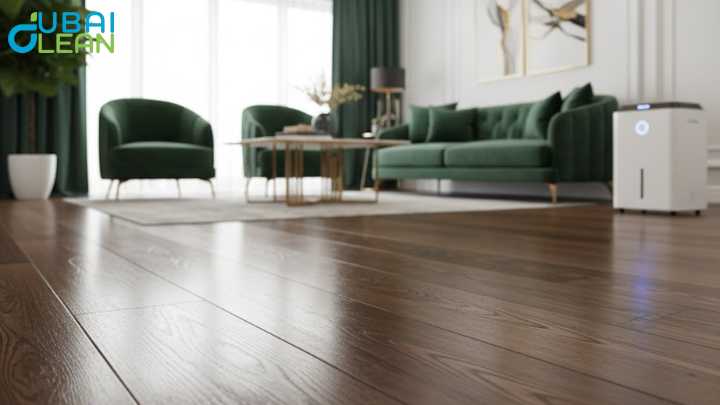



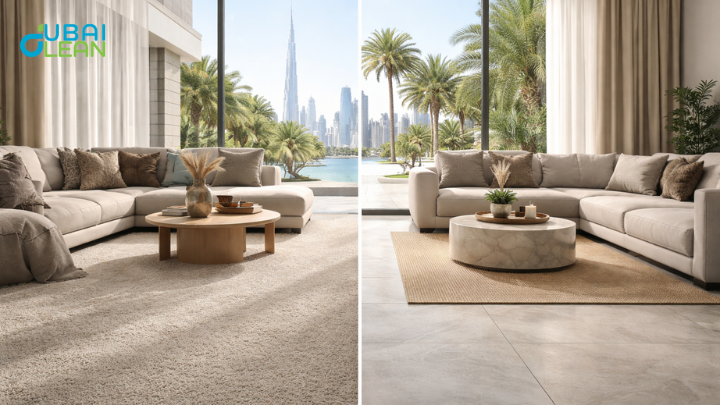
Choosing flooring in Dubai isn’t just about style it affects comfort, cleanliness, family health, and long-term home value. The hot climate, indoor cooling, humidity, and dust impact performance, so homeowners must consider hygiene, air quality, safety, and energy efficiency. This guide provides practical insights to help Dubai residents make confident, informed flooring decisions without guesswork.
1. Why Flooring Decisions Need Expert-Level Guidance in Dubai
Flooring in Dubai is more than a design choice it directly impacts hygiene, respiratory comfort, energy efficiency, and family safety. Desert dust, indoor humidity, and constant air-conditioning affect how carpets and tiles perform, making informed, evidence-based decisions essential for daily comfort and long-term wellbeing.
Experts note that flooring influences dust accumulation, air circulation, and allergen control. Carpets need regular maintenance & cleaning to prevent trapped particles, while tiles interact differently with airflow and cooling. Families with children, elderly residents, or allergy sensitivities benefit most from understanding these factors, ensuring a home that is safe, comfortable, and easy to maintain.
2. Dubai Heat, Humidity & Dust – How They Affect Carpets and Tiles
Dubai’s climate is a major factor that directly impacts how flooring performs in homes. High temperatures, fluctuating humidity levels, and frequent dust storms create unique challenges that homeowners must consider before choosing between carpets and tiles. Understanding how these environmental factors interact with different flooring types is crucial for maintaining comfort, hygiene, and long-term durability.
Carpets in a Dust-Prone Dubai Environment
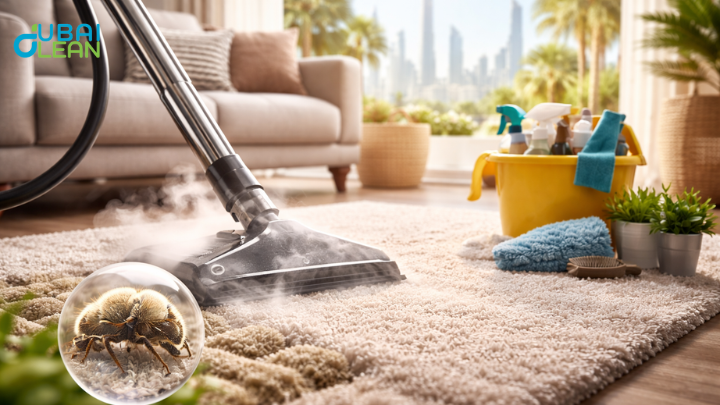
Carpets add warmth and coziness to your home, but in Dubai’s desert climate, they are vulnerable to dust, humidity, and odor retention, requiring frequent vacuuming and periodic deep cleaning to maintain comfort, hygiene, and long-term durability.
- Desert dust accumulation: Fine desert particles easily settle deep into carpet fibers. Over time, this can reduce air quality, trigger allergies, and make cleaning more labor-intensive.
- Odor retention risks: Humidity in summer months or during AC condensation can cause carpets to retain odors if not properly maintained. Moisture can also contribute to mold or mildew in hidden areas.
- Comfort vs. maintenance trade-off: Carpets provide softness and warmth underfoot, creating a comfortable environment for living rooms and bedrooms. However, the comfort comes with the responsibility of regular deep cleaning and vacuuming to maintain hygiene and prolong their lifespan.
Tiles in Dubai’s Hot Climate
Tiles are a practical choice for managing Dubai’s heat and dust challenges, staying naturally cool underfoot and resisting dust, allergens, and spills, making them ideal for high-traffic and air-conditioned spaces.Tiles are a practical choice for managing Dubai’s heat and dust challenges:
- Cooler underfoot: Tiles naturally remain cooler, complementing air-conditioned interiors and helping to maintain comfortable indoor temperatures during scorching summers.
- Allergen- and dust-resistant: Unlike carpets, tiles do not trap dust, pollen, or pet dander. Cleaning is straightforward, reducing the risk of allergens recirculating indoors.
- Potential slip hazards: While tiles are easier to clean and maintain, moisture from spills, AC condensation, or cleaning can make them slippery. Choosing textured or anti-slip tiles mitigates this risk, especially in kitchens, bathrooms, and high-traffic areas.
By understanding these climate-driven factors, Dubai homeowners can make informed decisions that balance comfort, cleanliness, and safety, ensuring that flooring choices support long-term wellbeing rather than just aesthetics.
3. Comfort Showdown – Which Flooring Feels Better for Daily Living?
Choosing the right flooring isn’t just about looks it has a direct impact on daily comfort, family lifestyle, and overall home experience in Dubai. Let’s explore how carpets and tiles compare in terms of feel, usability, and suitability for different spaces. Making the right choice ensures a balance of comfort, safety, and style for every room in your home.
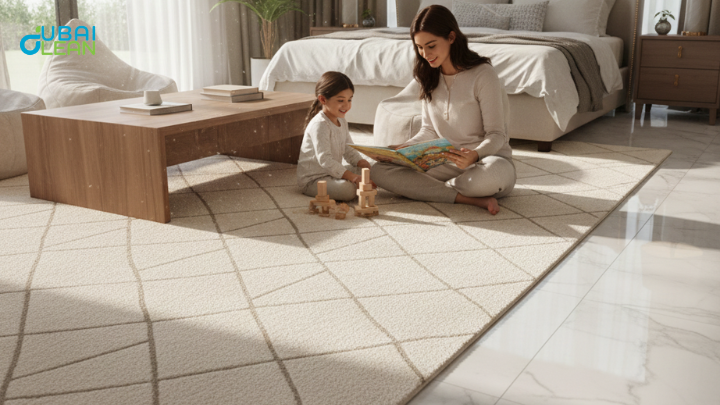
Carpets – Softness, Warmth & Family Comfort: Carpets add warmth and comfort to bedrooms, nurseries, or prayer spaces, providing a soft, safe surface for children and elderly. They reduce noise by absorbing sound, but in Dubai’s dusty climate, regular vacuuming and occasional deep cleaning are essential for hygiene.
Tiles – Modern Look, Spacious Feel & Cooling Effect: Tiles are durable, low-maintenance, and perfect for high-traffic areas like living rooms and kitchens. They stay naturally cool in Dubai’s heat and suit modern interiors, though rugs or heated flooring may be needed in private spaces for extra comfort.
4. Cleaning, Hygiene & Family Health – What’s Safer in Dubai Homes?
Flooring is more than just aesthetics; it directly affects indoor hygiene and family health, especially in Dubai’s dusty and humid climate. Choosing the right flooring can reduce allergens, improve respiratory comfort, and make cleaning easier. For insights on carpets vs tiles for family comfort and hygiene, homeowners often consider both practicality and style before deciding.
Carpets – Cleaning Requirements & Health Considerations: Carpets offer warmth and softness but need regular care in Dubai’s dusty climate. Frequent vacuuming prevents dust mites, and spills or humidity can cause bacteria or mold, which may trigger allergies or respiratory issues for children, elderly, or sensitive family members.
Tiles – Health-Safer & Easier to Maintain: Tiles are a low-maintenance, hygienic alternative, ideal for high-traffic areas and family homes. Sweeping, mopping, or disinfecting tiles prevents dust, germs, and allergens, supporting better respiratory comfort. They are especially practical for kids, elderly residents, or pets, as spills and messes are easy to clean while maintaining indoor air quality.
5. Which Option Is More Cost-Effective in Dubai?
When choosing flooring in Dubai, cost isn’t just about the initial installation—it also includes ongoing maintenance, durability under desert dust and indoor humidity, energy efficiency, long-term replacement, and overall home value. Making an informed choice ensures your investment supports comfort, hygiene, family safety, style, and resale potential without hidden expenses or surprises.
Installation Cost Comparison
When comparing flooring options in Dubai, the initial installation cost is an important factor to consider alongside long-term expenses. Carpets and tiles vary widely in price depending on material quality, design, and professional labor required. Understanding these differences helps homeowners make informed decisions that balance budget, durability, and overall value.
- Carpets: Generally, carpets have a lower upfront cost compared to high-quality tiles. However, luxury carpets or custom designs can increase installation expenses significantly.
- Tiles: Tiles typically have a higher initial cost due to materials and professional installation, especially for premium finishes like porcelain or natural stone. Installation requires skilled labor to ensure proper alignment, durability, and finish.
Long-Term Replacement vs. Durability
When evaluating flooring for Dubai homes, it’s important to consider how long each option lasts and when it may need replacement. Carpets and tiles differ in durability, with factors like foot traffic, dust exposure, and maintenance affecting lifespan. Understanding these differences helps homeowners choose flooring that provides lasting value and reduces future replacement costs.
- Carpets: Depending on quality, carpets may need replacement every 5–10 years, especially in high-traffic areas. Regular cleaning and protection from dust and moisture are essential to extend lifespan.
- Tiles: High-quality tiles are extremely durable and can last 15–25 years or more if maintained properly. They withstand Dubai’s heat and dust with minimal wear, making them a long-term cost-efficient choice.
6. Which Flooring Matches Dubai Home Aesthetics Better?
Beyond comfort, hygiene, and safety, flooring plays a major role in the overall style and interior design of Dubai homes. Choosing the right flooring can elevate your space, complement furniture, and align with the city’s evolving home trends.
Modern Luxury Homes Trend to Tiles: Tiles are popular in contemporary Dubai villas and apartments due to their sleek, polished look. Large-format tiles in neutral tones or marble finishes create a sense of spaciousness and elegance. They complement minimalistic designs, glossy surfaces, and open-plan layouts common in luxury homes.
Cozy Family-Focused Homes Prefer Carpets: Carpets are ideal for bedrooms, nurseries, and living rooms, providing warmth, softness, and a homey feel. Patterns, textures, and vibrant colors add personality, making spaces inviting for children and family gatherings. In air-conditioned interiors, carpets enhance warmth and reduce noise, improving comfort and acoustic balance.
Mixed Flooring Strategy – Best of Both Worlds: Many Dubai homeowners combine tiles and carpets to balance style, comfort, and practicality. For example, tiles in living and dining areas offer durability and easy cleaning, while carpets in bedrooms and prayer rooms provide comfort. This strategy maximizes aesthetics, safety, and functionality, supporting diverse lifestyle needs.
7. Eco-Friendly Flooring Choice in Dubai
Tiles naturally stay cool due to their thermal conductivity, helping reduce air-conditioning use and lowering energy consumption in Dubai’s hot climate. Carpets, while adding warmth in cooler indoor spaces, may slightly affect air circulation, potentially increasing energy needs. Choosing materials wisely also matters: tiles made from clay, stone, or porcelain are durable, long-lasting, and can be locally sourced or eco-certified to reduce environmental impact.
Waste Generation & Material Sustainability
Tiles can last decades with proper care, and broken pieces can often be recycled or repurposed, minimizing waste. Carpets, especially synthetic ones, have a shorter lifespan and contribute more to landfill waste, while natural fiber carpets are biodegradable but require more water and energy to produce.
8. Quick Guide – What Should You Choose?
After exploring comfort, hygiene, safety, cost, and design, it’s helpful for Dubai homeowners to have a clear, practical guide. Flooring decisions should reflect your lifestyle, family needs, and home environment to ensure both functionality and wellbeing.
Choose Carpets if : Carpets are ideal if you want softness and warmth for bedrooms, nurseries, or prayer rooms. They reduce footstep noise and create cozy spaces, especially for children or elderly family members who benefit from cushioned surfaces. Carpets require regular vacuuming and occasional professional cleaning to stay hygienic in Dubai’s dusty climate.
Choose Tiles if : Tiles suit homes that need low-maintenance, hygienic surfaces that resist dust, allergens, and spills. They are perfect for high-traffic areas like living rooms, kitchens, or hallways, and their cooler feel complements Dubai’s hot climate. Tiles also offer durability, long-term investment value, and strong resale appeal.
Best Hybrid Strategy for Dubai Homes: Many homeowners combine tiles and carpets to balance comfort, style, and practicality. Use tiles in common areas for easy cleaning and durability, and carpets in private spaces for warmth and comfort. Adding anti-slip mats in tiled areas and maintaining a regular cleaning routine ensures both flooring types remain safe, hygienic, and long-lasting.
Conclusion
Choosing the right flooring for your Dubai home affects comfort, hygiene, safety, and long-term value. Carpets provide warmth and softness, while tiles offer durability, easy maintenance, and cooler surfaces, with a hybrid approach combining the best of both. Making an informed choice ensures a home that is stylish, safe, family-friendly, and supportive of everyday wellbeing.