


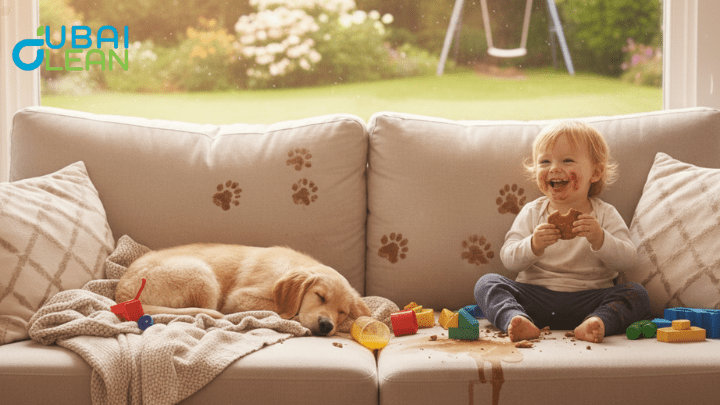
Kids and pets bring love and energy into your home, but they also make your sofa dirty much faster than you realize. From sticky fingers, snack spills, and outdoor dust to pet hair, dander, and muddy paws, your sofa collects layers of dirt every single day. In Dubai’s hot and dusty climate, this buildup becomes even worse, trapping allergens and odors that can affect your family’s health. Understanding how children and pets contribute to sofa dirt is the first step toward keeping your home cleaner, fresher, and more comfortable.
1. Why Sofas Get Dirty Quickly in Homes With Kids and Pets
Sofas in homes with kids and pets: tend to get dirty much faster simply because they’re used more often and more actively. Children snack, play, and relax on the sofa daily, which leads to crumbs, spills, sweat, and dust settling deep into the fabric. Pets add another layer of dirt through shedding, drooling, and rubbing their bodies on the cushions, making the sofa a magnet for bacteria and odors.
Many everyday habits: also contribute to faster dirt buildup without parents even realizing it. Kids often sit on the sofa after outdoor play, bringing in sand, dust, and germs from school or playgrounds. Pets carry outdoor dirt on their fur and paws after walks, which quickly transfers to the fabric. Even simple things like watching TV while eating or allowing pets to nap on the sofa create consistent, hard-to-clean messes.
There are also hidden factors: most families overlook. Body oils, sweat, and humidity slowly seep into the sofa, especially in a hot climate like Dubai. Airborne dust and pet dander settle on fabric surfaces throughout the day, even if the sofa “looks” clean. Plus, soft furnishings trap allergens much faster when kids or pets spend long hours lounging on them. All these factors combined make regular sofa cleaning essential for maintaining hygiene and indoor air quality.
2. Signs Your Sofa Needs Cleaning More Often
Sofas with kids and pets quickly show signs of dirt, including stains, odors, and trapped pet hair.Accumulated dander and allergens can affect your family’s health and indoor air quality.Daily activities like spills, play, and lounging increase wear and tear, signaling it’s time for a deep clean.
Visible Dirt, Stains, and Lingering Odors
Sofas in homes with kids and pets often show obvious signs of wear, such as food stains, spilled drinks, and muddy paw prints. Over time, even if you wipe spills immediately, fabrics can trap odors from sweat, snacks, and pets, making the sofa smell unpleasant. These visible and invisible signs indicate that it’s time for a thorough cleaning.
Pet Hair and Dander Build-Up
Even well-groomed pets shed fur and dander constantly, which sticks to sofa fabric and cushions. This accumulation can make your sofa look messy, trigger allergies, and affect indoor air quality. Regular vacuuming and deep cleaning are essential to keep pet hair under control and maintain a healthy home environment.
Increased Wear and Tear from Daily Activities
Children’s routines, such as snacking, playing, or jumping on the sofa, combined with pets lounging or scratching, accelerate fabric wear and damage. Over time, cushions lose shape, seams weaken, and the sofa looks worn out faster than in homes without kids or pets. Recognizing these signs early helps in scheduling timely cleaning and maintenance.
3. How Kids Contribute to Faster Sofa Dirt Buildup
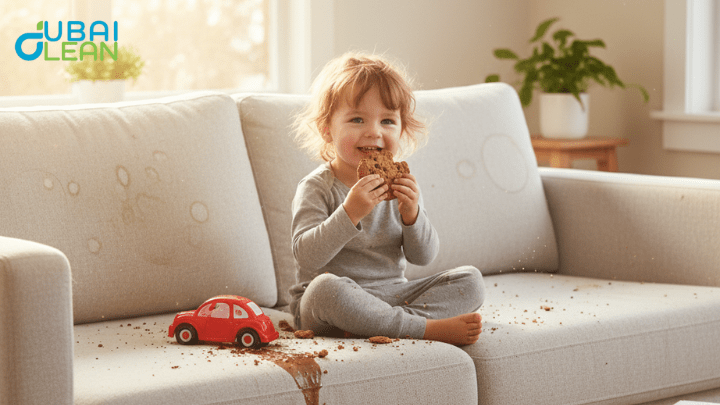
Kids contribute to faster sofa dirt buildup in several ways. Food spills, sticky hands, and crumbs from snacks can leave stains and residues on the fabric. Toys, crayons, and art supplies may scratch or get embedded into cushions, while sweat, body oils, and dirt carried from school or outdoor play gradually accumulate, making regular cleaning essential to maintain a fresh and hygienic sofa.
| Ways Kids Make Sofas Dirtier | Details / Examples |
| Food Spills & Sticky Hands | Snacks, juice, and chocolate can leave stains, sticky residue, and unpleasant odors. |
| Toys & Crayons | Small toys, crayons, and art supplies may scratch the fabric, leave marks, or get stuck in cushions. |
| Sweat & Body Oils | Sweat, natural body oils, and lotions slowly seep into the sofa, causing discoloration and fabric damage over time. |
| Dust & School Dirt | Dust, pollen, and germs brought in from school or outdoor play settle on the sofa every day. |
| Rough Play & Jumping | Kids climbing or jumping on the sofa can weaken seams, flatten cushions, and create uneven wear. |
4. How Pets Make Your Sofa Dirtier — Even If They’re Trained
Even well-trained pets can contribute to a dirty sofa in multiple ways. Shedding hair, dander, natural body oils, and occasional accidents leave stains, odors, and allergens on the fabric. Additionally, dirt, mud, and germs carried from outdoor walks or playtime settle deep into cushions, making regular cleaning essential to maintain a hygienic and fresh living space.
- Pets constantly shed hair that clings to cushions and fabric, making the sofa appear untidy.
- Pet dander builds up over time, triggering allergies and affecting indoor air quality in your home.
- Natural body oils coat the sofa, attracting dust and dirt that lead to stains and odors.
- Muddy paws, drool, and occasional accidents leave marks that can become stubborn if not cleaned.
- Dirt, sand, and germs from outdoor walks or playtime embed deep into cushions and seams.
- Pets’ claws and energetic play can scratch or wear the fabric, reducing the sofa’s lifespan.
5. Health Risks of a Dirty Sofa for Children and Pets
A dirty sofa can pose serious health risks for both children and pets. Over time, allergens such as dust mites, pet dander, and pollen accumulate in the fabric, triggering sneezing, coughing, and allergic reactions. Bacteria and germs from spills, sweat, and pet accidents can also settle into cushions, increasing the risk of infections and skin irritations. For young children who spend a lot of time on the sofa, these hidden contaminants can impact their overall health and wellbeing.
Regular deep cleaning is essential to maintain a safe and hygienic living space. Professional or thorough DIY cleaning removes dirt, bacteria, and allergens that daily vacuuming may miss. By keeping the sofa clean, you not only improve indoor air quality but also reduce the likelihood of skin irritations, respiratory issues, and unpleasant odors, creating a healthier environment for the whole family, including pets.
6. How Often Should You Clean Your Sofa If You Have Kids or Pets?
If you have kids or pets, sofas should be cleaned more frequently to prevent dirt, hair, and allergens buildup.Fabric sofas benefit from vacuuming every few weeks and deep cleaning every 3–6 months.Leather or delicate materials may need professional care less often, but regular maintenance is still essential for hygiene and longevity.
| Sofa Material | Suggested Cleaning Frequency | DIY vs. Professional |
| Fabric Upholstery | Every 3–6 months | Vacuum and spot clean DIY; deep clean professionally annually or for stubborn stains |
| Leather | Every 6–12 months | Wipe with leather cleaner DIY; professional conditioning yearly |
| Microfiber | Every 3–4 months | Spot clean DIY; professional cleaning for heavy stains or odors |
| Velvet / Delicate | Every 6–12 months | Gentle DIY vacuuming; professional cleaning recommended for deep care |
Conclusion
Kids and pets bring joy to your home, but they also make your sofa dirtier faster, trapping hair, spills, dirt, and allergens. Regular cleaning whether DIY or professional is essential to maintain hygiene, prevent health risks, and extend the life of your furniture. By understanding how children and pets contribute to sofa dirt and following a consistent cleaning routine, you can enjoy a cleaner, fresher, and healthier living space for the whole family.