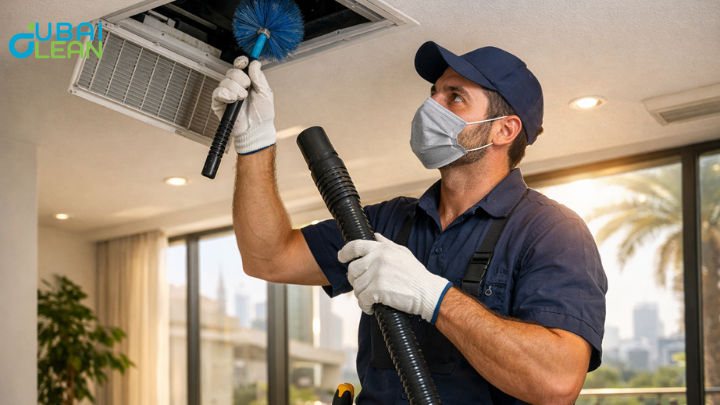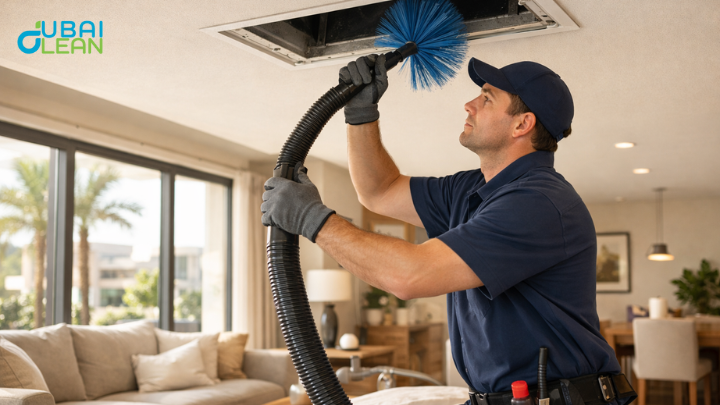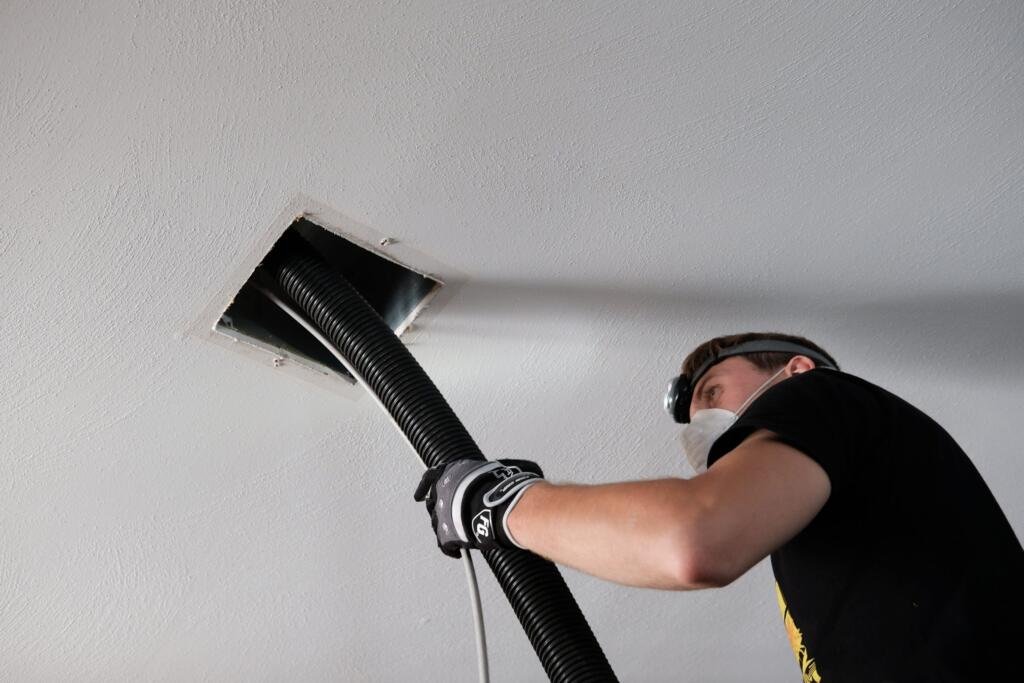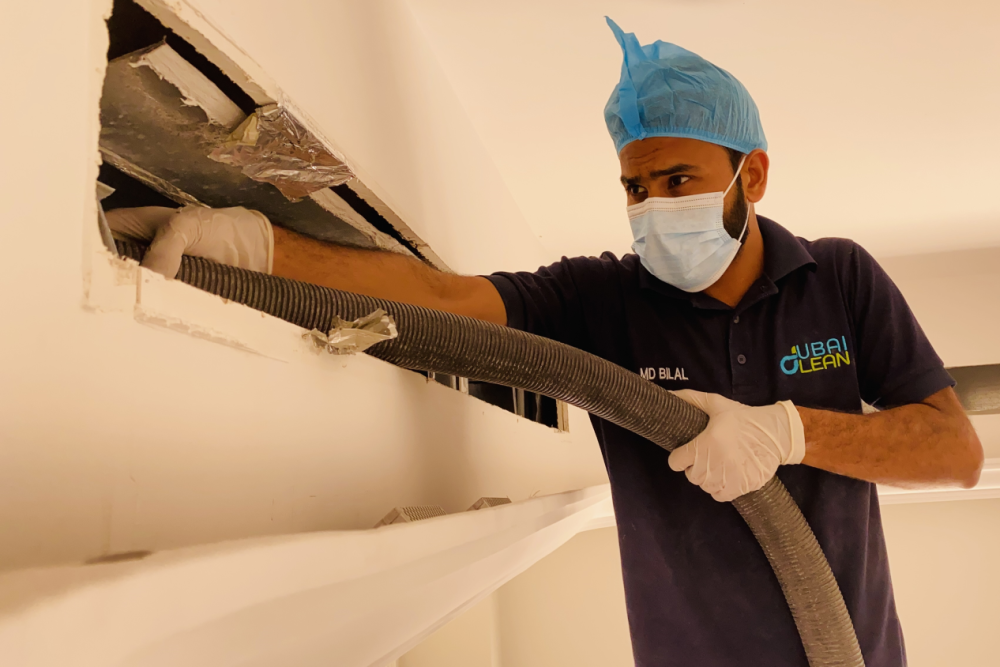



In Dubai’s hot, dusty climate, regular AC duct cleaning is essential to maintain clean, healthy indoor air and protect your family from dust, allergens, and mould. Dirty ducts reduce HVAC efficiency, forcing your AC to work harder, increasing energy bills and wear on the system. Scheduling routine cleaning improves airflow, lowers health risks, and extends the life of your air conditioning unit. With dust and sandstorms common, keeping ducts clean ensures comfort, energy savings, and consistently fresh air throughout your home or office.
Step 1: Inspection and Assessment
The first step is a detailed inspection of your AC Duct Cleaning system, which is crucial for assessing the condition of the ducts and identifying any issues that could affect the cleaning process or overall system performance. A professional technician begins by visually inspecting accessible parts of the ductwork, including supply and return vents, focusing on areas where dust, debris, or mould are likely to accumulate.
The inspection also includes evaluating the overall condition of the system, checking for damaged ducts, poor airflow, or other mechanical problems. Based on this assessment, the technician customizes the cleaning process to meet your system’s specific needs, ensuring a thorough and effective clean. By performing a detailed inspection first, any maintenance needs such as duct repairs or filter replacements can be addressed, keeping your HVAC system running efficiently and prolonging its lifespan.
Step 2: Negative Pressure and Containment
Once the inspection is complete, the next key step is creating negative pressure within the system. This ensures that the dust, dirt, and other contaminants loosened during cleaning are safely drawn into a containment system and don’t escape into your living areas.To do this, technicians use powerful vacuum systems that generate negative pressure within the ducts. These high-powered vacuums are connected to the ductwork and work by sucking air and debris into a secure collection unit. The vacuum pressure is carefully adjusted to avoid damaging the ducts while effectively removing built-up particles.
Technicians also seal the supply and return vents with special covers to prevent dust from spreading inside your home. This containment ensures that all dislodged dirt and pollutants stay trapped and are safely removed. It’s especially important in Dubai, where fine dust is common and clean indoor air is essential. By using negative pressure and proper sealing, technicians protect your home and ensure a thorough, mess-free cleaning process.
Step 3: Agitation of Dust and Debris
After setting up negative pressure and ensuring proper containment, the next step in the AC duct cleaning process is agitating the dust and debris. This is an essential stage, as it loosens stubborn particles that have built up deep inside the ducts over time, making them easier to remove. Without this step, dust, dirt, and other contaminants could remain stuck to the duct walls, even after vacuuming.Technicians use a range of tools to agitate the debris, depending on how much contamination there is and the type of ductwork.
Brushes: These are used to scrub the inside of the ducts, loosening dust and debris that may be stuck to the walls. They help ensure thorough cleaning by reaching areas that simple airflow or suction alone cannot remove.
Air Whips: Air whips are flexible, high-pressure air hoses inserted into the ducts. They blast air into the system, loosening dirt from the surfaces and causing it to become airborne, ready to be sucked up by the vacuum.
Mechanical Agitators: For more stubborn cases or extremely dirty systems, mechanical agitators are used. These tools move through the ducts, scraping away dirt and debris from hard-to-reach areas.
By thoroughly agitating the ducts, the technician ensures that even the most deeply embedded dust, dirt, and allergens are loosened and ready to be removed by the vacuum system. This step is essential for achieving a truly clean system and improving the overall air quality in your home or office.
Step 4: Vacuuming and Debris Removal
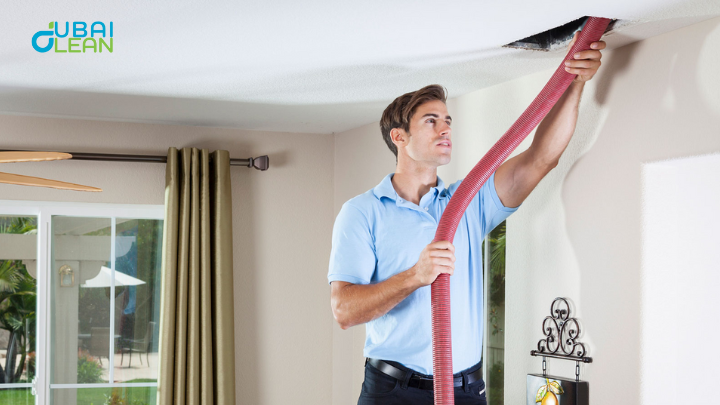
After agitating the dust and debris, the next crucial step is vacuuming and debris removal. This process ensures that all loosened particles, dirt, and contaminants are thoroughly extracted from the ducts, leaving the system clean. The goal is to remove dust, mould, and other allergens to prevent them from circulating back into your indoor environment. Technicians use high-powered HEPA vacuums specially designed for duct cleaning, which create strong suction to pull debris into a secure collection container, capturing even the smallest particles like dust mites and pollen.
Technicians carefully move along the entire ductwork, using specialised tools such as long hoses or nozzles to reach deep into hard-to-access areas. This meticulous vacuuming improves air quality, prevents allergies, and ensures proper air circulation. By thoroughly clearing the ducts technicians prepare the system for the final cleaning stages, leaving your home or office safe, healthy, and ready for optimal HVAC performance.
Step 5: Final Cleaning of Components
Once the ducts are fully cleaned, the next step is the final cleaning of all system components, such as the air filters, blower fans, and coils. This stage is crucial to ensure your AC system is working at its best and that no contaminants remain in the components, which could affect both air quality and system performance.
Air Filters: Technicians will either clean or replace the air filters, as these are one of the first barriers against dust and debris. Clogged filters can restrict airflow, causing your AC unit to work harder and consume more energy.
Blower Fans: The blower fans, which circulate air throughout your home, are cleaned to remove any dust and grime that could block airflow. If left uncleaned, these fans can become less efficient, leading to uneven heating or cooling.
Coils: Both the evaporator and condenser coils are cleaned to prevent dirt buildup, which can reduce the system’s ability to absorb and release heat. Dirty coils can cause the system to overheat, resulting in unnecessary wear and tear.
Step 6: Post-Cleaning Inspection and Testing
Once the cleaning is finished, the final step is a post-cleaning inspection and testing to ensure the AC system is working properly and the ducts are completely clean. This important phase confirms that all contaminants have been removed and that it is running at its best efficiency.
Final Inspection: The technician performs a final visual check of the entire system, ensuring that all ductwork, registers, and components like air filters, blower fans, and coils are clean and free from debris. This inspection ensures no dirt or particles were left behind during the cleaning.
Airflow Testing: Technicians may use specialised tools to measure airflow throughout the system. This confirms that the ducts are clear and air is circulating smoothly. If any airflow issues are detected, adjustments can be made to restore optimal performance.
System Performance Check: A thorough check of the performance is also carried out. This includes testing for consistent temperature, evaluating the blower function, and ensuring the air conditioning unit is cooling or heating the space efficiently, without any unusual noises or issues.
Conclusion
Regular AC duct cleaning is essential in Dubai’s dusty, high-pollution environment to maintain indoor air quality and system efficiency. Following a professional step-by-step cleaning process reduces allergens, dust, and mould, while improving airflow and extending the life of your AC unit. This routine also lowers energy consumption, ensures healthier air, and prevents potential maintenance issues in homes and offices. Investing in professional cleaning provides long-term benefits for comfort, health, and cost savings, keeping your indoor environment safe and efficient year-round.