


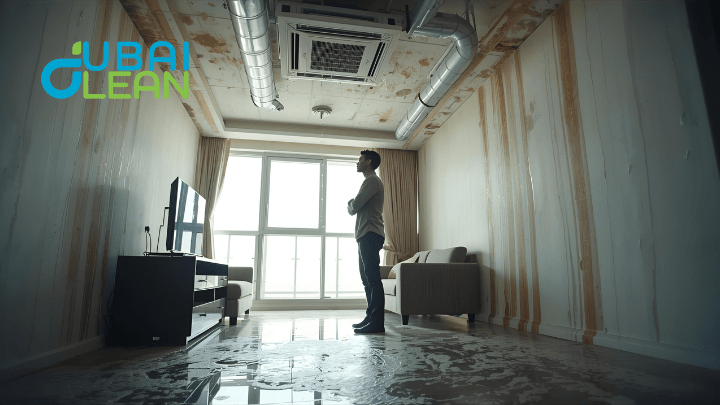
AC water leakage is a common problem in Dubai flats, particularly in high-rise tower-style systems with centralized or ducted units. Continuous use during the hot summer, combined with complex pipes and drainage networks, increases the risk of leaks. If ignored, these leaks can damage walls, ceilings, and furniture, promote mold growth, and affect indoor air quality, potentially causing allergies and respiratory issues.
1. Understanding Tower-Style AC Systems
Tower-style AC systems are common in high-rise Dubai flats and large residential buildings. These centralized chiller units cool water and distribute it through ducts to multiple apartments, making their setup more complex than standard split or window AC units. The chilled water flows through a network of pipes, and air is circulated via ductwork, requiring proper insulation and drainage to prevent water buildup.
Unlike split or window units with localized drainage, tower-style systems rely on shared pipes and drainage channels, so any blockage, misalignment, or insulation failure can quickly cause leaks in multiple apartments. Dubai’s extreme heat and humidity increase condensation in AC pipes, and dust in ducts or filters can block proper drainage. Even minor issues in these systems can lead to significant leaks, damaging walls, ceilings, and furniture while affecting comfort.
2. Common Causes of AC Water Leakage
AC water leakage in Dubai flats often occurs due to blocked drain pipes, dirty filters, low refrigerant, poor insulation, or improper installation.
Clogged or Improperly Installed Drain Pipes
One of the most common causes of AC water leakage in Dubai flats is blocked or improperly installed condensate drain pipes. Over time, dust, dirt, debris, and even algae can build up inside the pipes, restricting the flow of water. In tower-style systems, these drain lines are often shared among multiple apartments, so a blockage in one section can cause water to back up and leak into neighboring units. Such leaks can damage ceilings, walls, flooring, and furniture, and if left unaddressed, may lead to more serious structural issues over time.
Dirty or Blocked Air Filters
Air filters are critical for maintaining proper airflow in your AC system. When filters become dirty or clogged, airflow is reduced, causing the evaporator coils to freeze. Once the ice melts, excess water may overflow the drain pan and leak into the apartment. Additionally, reduced airflow and moisture buildup create a breeding ground for mold and mildew inside the ducts. This can negatively impact indoor air quality, triggering allergies, respiratory problems, and other health issues, especially for children, elderly residents, and individuals with sensitive airways.
Low Refrigerant Levels or System Malfunction
Low refrigerant levels or malfunctions in the AC system can also lead to water leakage. Insufficient refrigerant causes the evaporator coils to freeze, and when the ice melts, excess water can drip into the apartment. Other system malfunctions, such as faulty pumps, compressors, or drainage components, can disrupt normal water flow. Regular professional maintenance is essential to ensure refrigerant levels are adequate and the AC system is functioning efficiently, preventing leaks and maintaining optimal energy consumption.
Poor Insulation of AC Pipes
In tower-style flats, uninsulated or poorly insulated AC pipes are a frequent cause of condensation and leakage. Moisture forms on the surface of exposed pipes, particularly in Dubai’s humid climate, and can eventually drip into living spaces. Because these systems often have shared ducts across multiple apartments, poor insulation in one area can affect several units, causing water to accumulate on ceilings or walls. Proper insulation not only prevents water leakage but also improves system efficiency, reduces energy costs, and protects the property from long-term damage.
3. Signs You Have an AC Water Leakage Problem
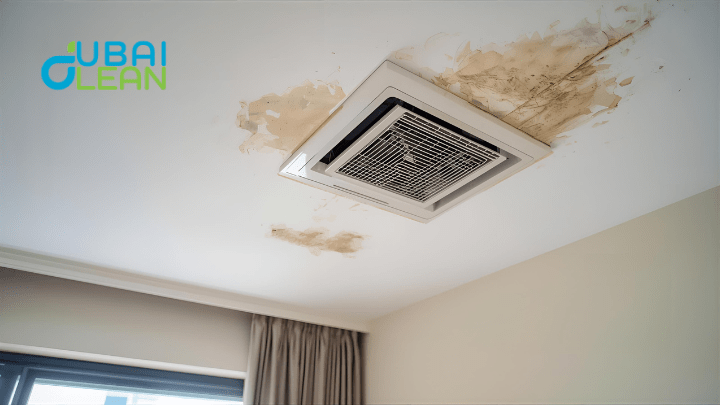
Water Stains on Ceilings or Walls: One of the first visible signs of AC leakage is water stains or discoloration on walls and ceilings. These stains often appear near the AC unit or along the path of shared ducts in tower-style systems. Ignoring them can lead to paint peeling, structural damage, and more severe water issues over time.
Excess Moisture or Dripping from AC Vents: If you notice water pooling on the floor or dripping directly from the AC vents, it indicates that the condensate drainage system is not functioning correctly. In tower-style systems, this can affect multiple apartments if the problem occurs in shared pipes.
Unpleasant Musty Odor from Mold or Mildew Growth: Persistent moisture from a leaking AC can create an ideal environment for mold and mildew. A musty or damp smell inside your apartment is a clear warning that leakage has led to mold growth, which can trigger allergies and respiratory problems.
Increased Electricity Bills Due to Inefficient Cooling: An AC system with leakage often works harder to maintain the desired indoor temperature. This inefficiency can cause a noticeable rise in electricity bills, especially during Dubai’s hot summer months when air conditioning is in constant use.
4. Health and Property Risks of Ignoring AC Leaks
Ignoring AC water leakage in Dubai flats can lead to serious health and property issues, especially in tower-style high-rise buildings.
Mold and Bacterial Growth Affecting Respiratory Health
Persistent AC water leakage creates a consistently damp environment that allows mold, mildew, and harmful bacteria to flourish. These microorganisms can spread throughout the ductwork and living spaces, contaminating indoor air. Prolonged exposure to mold spores and bacteria can trigger a range of respiratory issues, including coughing, sneezing, and allergic reactions, while also aggravating pre-existing conditions such as asthma or bronchitis. Children, elderly residents, and individuals with sensitive airways are particularly vulnerable, making it essential to address leaks promptly to protect both health and overall indoor air quality.
Damage to Walls, Ceilings, and Furniture
Continuous or repeated water leakage from AC units can cause severe damage to the interior of your flat. Moisture seeping into walls and ceilings can weaken structural materials, leading to peeling paint, cracked plaster, and warped surfaces. Wooden furniture and flooring are especially susceptible to water stains, swelling, or long-term warping. Over time, these issues compromise both the aesthetic appeal and functional integrity of your home, often resulting in expensive repairs and replacements if the problem is neglected.
Structural Damage Over Time in High-Rise Flats
In high-rise tower-style flats, AC water leakage is not just a cosmetic concern it can lead to serious structural problems if left unaddressed. Water can seep into shared concrete slabs, beams, and duct casings, gradually weakening the building’s support systems. Even small leaks, when persistent, can compromise the integrity of these critical components, leading to safety risks and costly structural repairs. Early detection, professional inspection, and prompt repair are essential to prevent long-term damage and ensure the safety and longevity of the building.
5. Preventive Measures and Solutions
Preventing AC water leakage in tower-style Dubai flats requires a combination of regular maintenance, proper installation, and timely intervention. Here are the most effective strategies:
Regular AC Maintenance – Scheduling routine maintenance is the first step in preventing leaks. This includes cleaning air ducts, condensate lines, and air filters. Regular servicing ensures that airflow is consistent, prevents ice formation on coils, and keeps the drainage system functioning efficiently.
Check the Drainage System – Ensure that all drain pipes are unclogged and properly sloped to allow condensate to flow freely. In tower-style systems, where multiple units share drainage lines, even minor blockages can lead to significant water accumulation. Regular checks help avoid leaks before they escalate.
Proper Insulation – Insulating AC pipes is critical to prevent condensation, especially in Dubai’s hot and humid climate. Proper insulation not only stops water from forming on pipe surfaces but also improves energy efficiency and reduces the risk of damage to ceilings and walls.
Professional Inspection – Hire certified AC technicians familiar with tower-style systems for periodic inspections. Professional technicians can identify early signs of malfunction, low refrigerant levels, or installation issues. Regular checkups are especially important during Dubai’s intense summer heat, when AC systems are under maximum load.
Immediate Action on Leak Signs – Never ignore early warning signs such as dripping water, musty odors, or water stains. Promptly addressing leaks prevents further property damage, stops mold growth, and safeguards the health of residents. Quick action ensures small problems do not escalate into costly repairs.
6. Conclusion
AC water leakage in tower-style Dubai flats is a common issue caused by factors such as clogged drain pipes, dirty air filters, low refrigerant levels, poor insulation, and improper installation. Left unaddressed, these problems can lead to property damage, mold growth, and health risks for residents.
Preventive maintenance, proper insulation, and regular professional inspections are essential to keeping tower-style AC systems running efficiently and preventing leaks. By acting quickly at the first signs of water leakage, residents can avoid costly repairs, maintain indoor comfort, and ensure a safe, healthy living environment.