


Dubai’s extreme summers, with temperatures exceeding 45°C and high humidity, make choosing the right cooling system essential for comfort, energy savings, and indoor air quality. Inefficient cooling can raise DEWA bills, reduce appliance lifespan, and increase health risks like allergies and respiratory issues. This article compares ACs and heat pumps in Dubai’s climate, highlighting efficiency, costs, and practical tips to help residents make a smart, health-conscious choice.
1. Understanding ACs and Heat Pumps
Choosing the right cooling system in Dubai is essential for comfort, energy efficiency, and cost savings. Air conditioners (ACs) and heat pumps are the most common solutions, each with unique advantages for extreme heat, humidity, and dust.
Understanding their operation, types, and efficiency can help residents make informed decisions for both homes and offices. For reliable performance and long-lasting comfort, consider professional AC cleaning services in Dubai to optimize your system and maintain healthy indoor air quality.
Air Conditioners (ACs)
ACs work by removing heat from indoor air and expelling it outside, creating a cooler environment. In Dubai, common types include split ACs, window ACs, and central ACs, each suited for different spaces. High SEER-rated ACs, as recommended by DEWA, can reduce energy use and electricity bills while maintaining reliable cooling during peak summer.
Heat Pumps
Heat pumps provide both cooling and optional heating, using advanced inverter technology to adjust energy use based on demand. They remain energy-efficient under moderate conditions but may slightly lose efficiency in Dubai’s extreme summer heat. Following international HVAC standards (ASHRAE 90.1), proper sizing and regular maintenance optimize performance and lifespan.
Visual Comparison
A diagram comparing AC and heat pump airflow and heat transfer can help homeowners quickly understand operational differences. Knowing the types, functionality, and efficiency of each system empowers Dubai residents to select the right solution for comfort, energy savings, and long-term performance.
2. Efficiency in Dubai Climate
Dubai’s extreme summer climate, with temperatures often exceeding 45°C and high humidity, makes energy efficiency a key factor in choosing a cooling system. Understanding how air conditioners (ACs) and heat pumps perform under these conditions can save residents money, reduce electricity consumption, and improve indoor comfort.
ACs and heat pumps both provide cooling, but their efficiency, reliability, and operating costs differ in Dubai’s harsh environment. This section explains their performance, maintenance needs, and electricity cost implications.
AC Performance in Extreme Heat
ACs are designed for high heat loads and can maintain stable indoor temperatures even during Dubai’s hottest summer days. Their cooling capacity ensures consistent comfort, making them highly efficient for prolonged peak summer use.
Heat Pump Performance
Heat pumps remain energy-efficient under moderate temperatures but may consume 10–15% more electricity than an AC during peak summer heat. The extra energy is needed to extract heat from extremely hot outdoor air, slightly reducing efficiency in Dubai’s climate.
Maintenance and Efficiency
Regular maintenance directly affects system performance. ACs require filter cleaning and coil inspections at least every 6 months, while heat pumps may need more frequent checks on inverter systems and refrigerant levels to sustain optimal efficiency.
3. Pros and Cons of Each System
Choosing the right cooling system in Dubai requires balancing performance, cost, and energy efficiency. Both air conditioners (ACs) and heat pumps have unique advantages, but knowing their limitations helps residents save on electricity bills and maintain indoor comfort. This section outlines the key pros and cons of each system and provides a quick comparison for easy decision-making.
Air Conditioner (AC) Advantages: ACs offer high cooling capacity, making them ideal for Dubai’s extreme summer temperatures. They are widely available, easy to install, and generally have a lower upfront cost compared to heat pumps.
Air Conditioner (AC) Disadvantages: ACs provide cooling only, with no heating option for winter or moderate months. Continuous operation in extreme heat can lead to higher electricity bills, especially during peak DEWA summer tariffs.
Heat Pump Advantages: Heat pumps deliver both cooling in summer and optional heating in winter. Advanced
inverter technology ensures energy-efficient operation under moderate conditions, and long-term use can result in energy savings when properly maintained.
Heat Pump Disadvantages: Heat pumps may be slightly less efficient than high SEER ACs during Dubai’s peak summer heat. They also have higher installation costs and a more complex system setup.
User-Friendly Comparison Table:
| Feature | Air Conditioner (AC) | Heat Pump |
| Cooling Performance in Extreme Heat | Excellent | Good |
| Heating Capability | ❌ | ✅ |
| Initial Cost | Lower | Higher |
| Energy Efficiency | Moderate | High in moderate conditions |
| Maintenance | 6-monthly filter & coil checks | 6-monthly + inverter checks |
| Best Use | Peak summer cooling | Year-round moderate cooling & heating |
For Dubai homes primarily seeking high summer cooling, a high SEER-rated AC is often the most cost-effective option. Heat pumps are best for buildings requiring both cooling and heating, or for energy-conscious residents who use moderate temperature settings year-round.
4. Health, Comfort, and Indoor Air Quality
In Dubai, where dust, sandstorms, and high humidity are common, maintaining healthy indoor air quality is essential for comfort and well-being. Both air conditioners (ACs) and heat pumps play a critical role in regulating indoor conditions, but their efficiency depends heavily on proper maintenance and filtration.
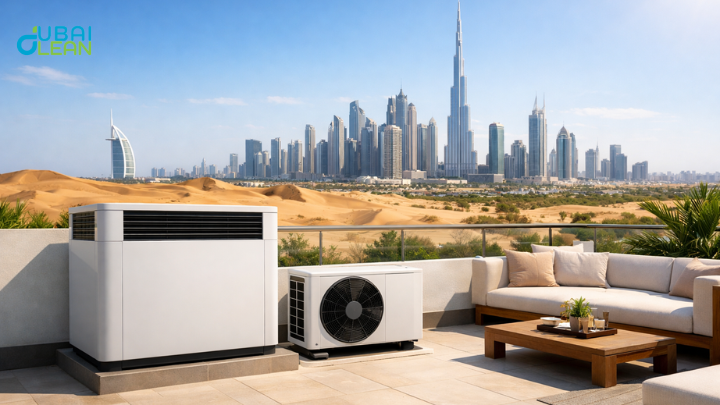
Humidity Control: High humidity makes indoor spaces hotter and can cause mold, but ACs and heat pumps regulate moisture for comfort, with heat pumps providing precise control through inverter technology.
Air Filtration: Dust, pollen, and sand are common in Dubai and can accumulate indoors, causing allergies and respiratory issues. High-quality AC and heat pump filters trap these particles, improving air quality and protecting your family’s health.
Dust Mitigation: Regular cleaning of ducts, coils, and vents prevents dust buildup, which can reduce system efficiency and increase electricity consumption.
Expert Recommendation: Regular maintenance and filter cleaning can improve AC and heat pump efficiency and protect your family’s health. Scheduling professional inspections every 6–12 months ensures optimal performance and helps prevent indoor air quality issues.
By focusing on proper maintenance, Dubai residents can enjoy healthy, comfortable, and energy-efficient cooling, while reducing risks associated with poor indoor air quality.
5. Cost Analysis: Initial vs Long-term Savings
Choosing between an air conditioner (AC) and a heat pump in Dubai requires careful evaluation of both upfront and long-term costs. Energy efficiency, installation expenses, and operational electricity consumption directly impact comfort and monthly bills.
Understanding these factors helps residents make smart, cost-effective decisions while maximizing system performance. This section breaks down initial costs, operational expenses, ROI, and government incentives for Dubai homeowners.
Initial Costs
ACs generally have a lower purchase price than heat pumps, making them more affordable upfront. Installation for heat pumps is higher due to their dual cooling and heating setup. The table below shows approximate costs based on unit size:
| Unit Size | AC Cost (AED) |
| 1 Unit | 750 |
| 2 Units | 1,000 |
| 3 Units | 1,500 |
| 4 Units | 2,000 |
| 5 Units | 2,500 |
| 6 Units | 3,000 |
Operational Costs
ACs consume slightly less electricity during Dubai’s extreme summers, whereas heat pumps may draw more power under peak heat. For example, a 3-ton AC running 10 hours daily costs around AED 450–500 per month, compared to AED 520–580 for a heat pump, based on DEWA tariffs of AED 0.23–0.30 per kWh.
ROI & Government Incentives
Heat pumps offer energy savings in moderate months and provide heating in winter, making them a long-term investment. Dubai’s Shams Dubai and Green Building initiatives provide rebates and programs for high SEER-rated ACs and energy-efficient heat pumps, supporting sustainable choices.
6. Maintenance and Lifespan
In Dubai’s harsh climate, regular maintenance is essential to ensure both air conditioners (ACs) and heat pumps perform efficiently and last longer. High temperatures, humidity, and dust can accelerate wear and reduce energy efficiency if systems are neglected.
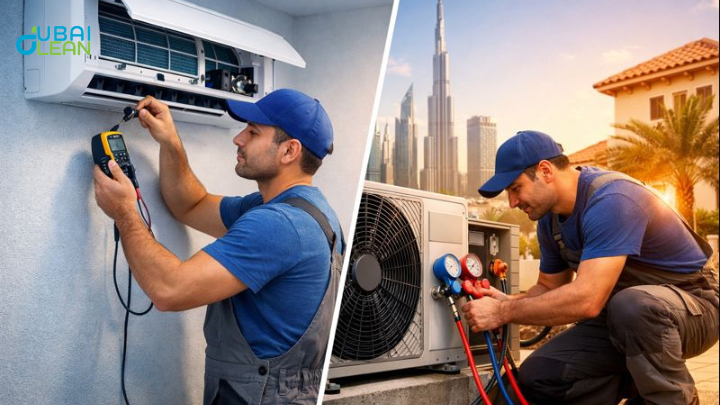
Frequency of Service: ACs typically require filter cleaning and coil inspection every 6 months, while heat pumps may need additional checks on inverter systems and refrigerant levels due to their dual cooling and heating functionality. Professional inspections at least once a year are recommended to detect potential issues early and maintain peak performance.
Tips to Extend Lifespan:
- Keep indoor units and vents clean to prevent dust accumulation.
- Ensure outdoor condenser units are free from sand and debris.
- Monitor refrigerant levels and system pressure regularly.
- Avoid overworking the system during peak heat; use energy-saving modes when possible.
Professional Recommendation: Licensed HVAC specialists in Dubai, following DEWA and Dubai Municipality standards, can provide thorough inspections and preventive maintenance to protect both your investment and indoor air quality.
Conclusion
Choosing the right cooling system in Dubai is essential for comfort, energy efficiency, and indoor air quality. High SEER-rated ACs provide cost-effective summer cooling, while heat pumps offer year-round versatility for homes needing both heating and cooling. Consult licensed Dubai HVAC professionals for personalized recommendations, proper installation, and maintenance to protect your investment and family’s health.